Spiced cauliflower soup with coconut milk and roasted florets
Para 4 1.95 €/pers. 50 kcal/100g.
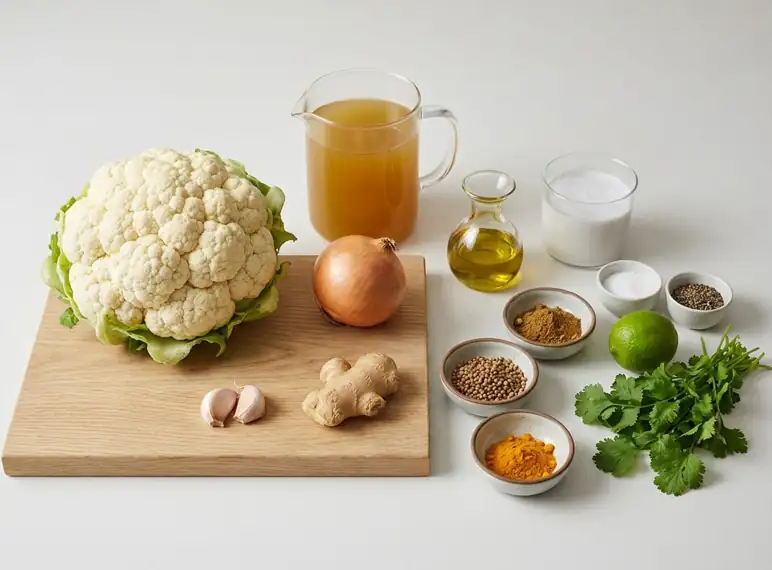
- 800g of cleaned cauliflower, without leaves or hard stem (one piece of about 1.1kg raw weight)
- 25 ml of extra virgin olive oil
- 150g of onion
- 2 cloves of garlic
- 15g of fresh ginger
- 1 teaspoon of ground cumin
- 1 teaspoon of ground coriander
- ½ teaspoon of ground turmeric
- 800 ml of vegetable stock (700 ml for cooking and 100 ml to adjust, if necessary)
- 200 ml of unsweetened canned coconut milk
- 15 ml of lime juice
- 10 g of fresh cilantro
- Salt and freshly ground black pepper to taste
- Preheat the oven to 220°C (425°F), top and bottom heat. Remove the leaves and the toughest part of the cauliflower stalk, separate the florets, wash them, and drain them very well. Weigh out 800g of cleaned cauliflower; the tender stalk can also be used, cut into small pieces for the pot.
- Set aside 200g of medium-sized florets, about 3cm long, for roasting. Cut the remaining 600g into slightly smaller pieces, about 2cm long, so they cook evenly. Spread the 200g from the oven on a baking tray, add 10ml of oil and a pinch of salt, and toss to combine. Arrange them in a single layer, without piling them up.
- We bake them for 20-25 minutes, turning them halfway through. We remove them when the tips are golden brown and the inside is tender, but not blackened. We set them aside on the baking tray while we finish the broth.
- While the cauliflower is roasting, peel and chop the onion; chop the garlic and grate the ginger. Having everything prepared allows you to add the ground spices without them sitting on the heat for too long.
- Place a large pot over medium-low heat with the remaining 15 ml of oil. Add the onion and sauté for 7 minutes, stirring occasionally, until tender and translucent. Stir in the garlic and fresh ginger and cook for another minute, being careful not to let the garlic brown too much.
- Lower the heat and add the ground cumin, ground coriander, and turmeric. Stir for 30 seconds, just enough to release their aroma. If the bottom of the pot seems too dry, remove it from the heat briefly: burnt spices can leave a bitter taste.
- Add the 600g of raw cauliflower to the pot and stir for 1 minute to distribute the sautéed vegetables. Pour in 700ml of vegetable stock, bring to a boil, and then reduce the heat. Simmer gently for 12-15 minutes, until the florets are tender enough to pierce with a fork without falling apart.
- Stir the coconut milk well in its container before measuring it, as the fat may separate. Add the 200 ml of coconut milk, mix carefully, and heat gently for 2 minutes, without letting it boil vigorously. Taste and adjust the salt and pepper, keeping in mind that the broth may already be salted.
- If you prefer a slightly thicker soup, gradually add the reserved 100 ml of stock until you reach your desired consistency. Turn off the heat, stir in the 15 ml of lime juice, and taste again. The soup should be aromatic, with recognizable pieces of cauliflower, and not as thick as a purée.
- We divided the hot soup among four bowls, ensuring each received a similar amount of broth and cooked florets. We then topped each bowl with 200g of roasted cauliflower, approximately 50g per person, without burying it completely: this allows the toasted tips to show through.
- Chop the 10g of fresh cilantro and divide it among the four bowls. Serve immediately to enjoy the contrast between the hot broth, the tender cauliflower, and the golden-brown pieces.
- Whole bouquets today, usable soup tomorrow
Cauliflower doesn't have to end up as a purée to be the star of a soup. In this spiced cauliflower soup, we separate the florets into two groups: some are cooked in the broth until tender, while others are roasted in the oven until golden brown. When you combine them, each spoonful contains broth, vegetables, and a few toasted pieces; it's not just a cream soup disguised with spices.
Cumin, ground coriander, turmeric, and fresh ginger create an aromatic blend that complements cauliflower without overpowering it. This combination also works well in dishes like aloo gobi or cauliflower and potato curry, although potatoes aren't used in those. For more precise control over the proportions, this guide to cooking with spices is helpful.
Roasting a small portion of the vegetable, as we do when preparing roasted cauliflower, concentrates its flavor on the surface. The florets that go into the pot, on the other hand, retain the tenderness needed for the soup. This is a different take on our cauliflower soup with milk and cheese, which is blended until smooth. Here, we don't need a blender: the coconut milk softens the broth, and the lime is added at the end for freshness.
We separate the cauliflower and brown part of it in the oven
We sauté the onion and heat the spices without burning them.
We cook the bouquets in broth and finish with coconut and lime.
We divided the soup and added the roasted cauliflower.
If you only have frozen cauliflower at home, you can use it directly, without defrosting, for the part that goes into the broth; check it with a fork and extend the cooking time a few minutes if needed. For the roasted florets, it's best to use fresh cauliflower: frozen releases more water and it's harder to get those crispy edges. If all the cauliflower is frozen, you can skip the roasting and serve the soup with all the florets cooked, although you'll lose that contrast.
Canned coconut milk is not the same as coconut milk sold in a glass: the latter is usually much thinner and won't have the same body. If you want to make it without coconut milk, you can substitute those 200 ml with more vegetable broth; it will still be a spiced soup, but less rich. When it seems too thick, use the reserved broth and add it little by little, without stirring so vigorously that you break the florets.
Add the lime juice with the heat off. It's best to taste the soup before adding more lime juice: the broth and coconut don't always have the same intensity, and too much acidity would overpower the spices. You can substitute parsley for the fresh cilantro if you prefer a milder flavor, as long as you use the same amount and only add it when serving.
To store the soup, transfer it to shallow containers, cool it down (without leaving it at room temperature for hours), and refrigerate it covered; it's best consumed within 3-4 days. It can also be frozen for 2-3 months for better quality, ideally without the fresh cilantro, and keeping in mind that the cilantro sprigs will be somewhat softer upon thawing. Thaw it in the refrigerator and reheat it gently until piping hot. For more soup options, we have a collection of homemade soups.