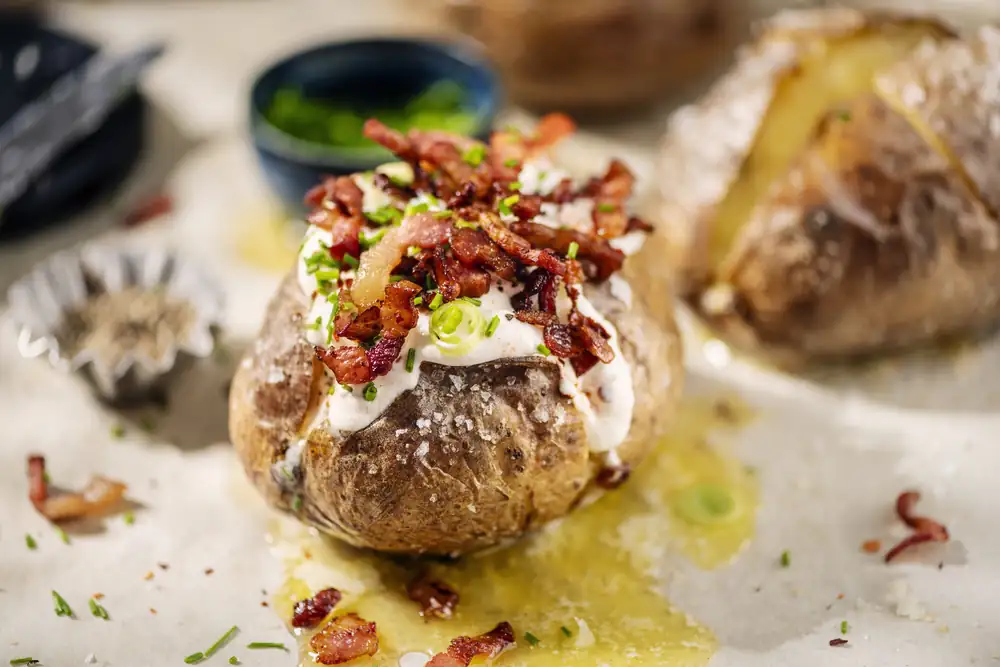
Why you shouldn't bake potatoes in the oven anymore? This method is much faster: we show you step by step
When it comes to baked potatoes, everyone probably thinks the same thing: the oven turns on, the potatoes are washed, we prick them with a fork, and then we wait and wait, because a larger piece of potato needs time for the center to completely soften in the hot oven.
However, if the goal is not a crispy skin, but rather a soft, crumbly, and steaming potato interior, the oven is not necessarily necessary.
The microwave heats the water in the potato faster, so the center softens in less time.
That's why the microwave works so well
A microwave oven heats food in a completely different way than a conventional oven. Microwaves move the water molecules in the food, which creates heat, while an oven heats the food from the outside in through hot air.
Did you know?
Potatoes are a particularly grateful ingredient in this respect: they are dense, contain a lot of water, and reheating the inside of a whole piece in the oven is quite time-consuming. With a microwave, however, you don't have to wait for the entire oven to heat up first and then for the heat to slowly reach the center of the potato.
Another advantage of this method is that the inside of the potato can remain moister and softer, meaning you get exactly the texture you expect from a classic baked potato.
According to Good Housekeeping, a medium sweet potato can be cooked in about 5 to 6 minutes on high power, and a firmer russet potato in about 8 minutes. The exact time will of course depend on the size and variety of the potato, as well as the power of your microwave, so it’s worth checking in shorter intervals.
But then why do we still bake potatoes in the oven?
The microwave is a good choice when you want a soft, baked potato in its skin as quickly as possible. However, the oven is unbeatable when you want the surface of the potato to dry out, brown, and become crispy.
That's why you shouldn't confuse baked potatoes with classic French fries. If you want golden, crispy fries, a completely different technique works: soaking, using the right potatoes, drying, and how the heat is applied are all important. We've previously collected the most important information about the secrets of crispy French fries. That's why there's room for various tricks: for really good French fries, it doesn't matter whether you pre-cook them, soak them, or even fry them twice.
If you want crispy fries, leave the oven on.
The biggest advantage of a microwave is speed and a soft interior. An oven, on the other hand, uses dry, intense heat, which helps the surface brown and crisp, so while a microwave can be particularly practical for a baked potato loaded with toppings, it's not necessarily the best choice for a baked potato.
When the goal is to get crispy on the outside and creamy on the inside, there are still a few basic tricks to perfect French fries that you shouldn't miss.
In fact, if you really want a crispy crust, you can even combine the microwave and oven: first, you can quickly soften the potatoes in it, then briefly fry them at high temperature, so you can take advantage of the benefits of both methods at the same time.
One potato, yet so many ways to prepare it
It can be made into crispy French fries, baked potatoes, baked potatoes in their skins, creamy mashed potatoes, or even a quick side dish. Although we often automatically associate potatoes with heavy, oily side dishes, the way they are prepared also matters a lot in how they fit into a balanced diet. You can about the health benefits of potatoes and dietitian advice here.
Extra tips
- For crispy, fried potatoes: stick to the oven and the classic baking technique.
- On days when you're in a hurry: you can even briefly fry the potatoes that you've softened in the microwave afterwards.