The Turkish city built on “green gold”
Gaziantep is the gastronomic capital of Turkey, and its character has been defined by pistachios for centuries. Referred to as “green gold,” the ingredient is not only the foundation of the local cuisine, but also the main ingredient for the character of the legendary baklava.
At the end of summer, bakers leave the kitchen and travel to the pistachio plantations of the southeastern plains to select the perfectly ripe crop. The distinctive aroma of the early-harvest, emerald-green kernels provides the basis for sweets such as katmer or baklava – which have made the city a major destination for dessert lovers.
Visitors can spend days following the city’s informal “pistachio trail.” The shops of the ancient covered bazaars display pistachios in pyramid-like piles: fresh, still slightly pink in the shell, or roasted, ready to eat.
The stalls at Bakırcılar Çarşısı, the coppersmiths’ bazaar, are lined with pistachio-sprinkled Turkish delight and thick, sweet pistachio paste rolls – the latter almost begging to be put in your suitcase. The neon lights of the bakeries flash the word “fıstık” – meaning pistachio – in bright green letters.
The expression is also present in everyday language: "fıstık gibisin" - literally "you are like a pistachio" - is considered a compliment, and "fıstığım" is a term of endearment.
The harvest is now celebrated with a festival, with workshops and pop-up dinners. More than seventy percent of Turkey's pistachio crop comes from this region. The rocky soil forces the trees to take deep roots, and the summer heat creates ideal conditions for ripening.
Pistachios are not only a staple food here, but also part of everyday life: many families have their own gardens where they spend time on weekends, and once the measure of wealth was the size of the land they owned.
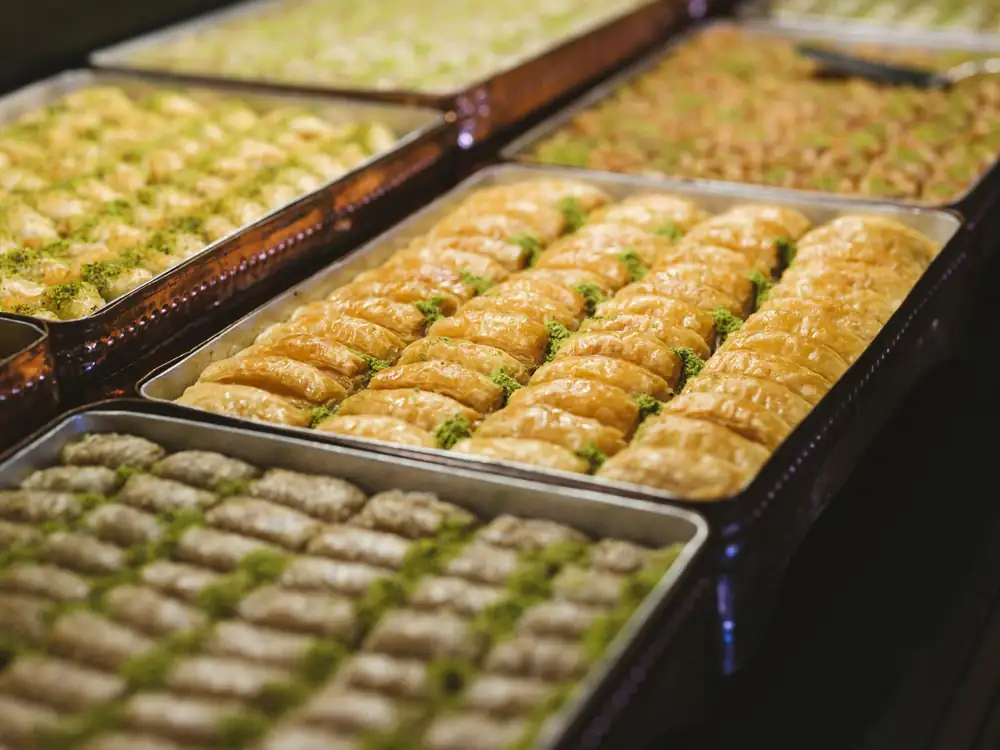
While the range of pistachio sweets is extensive, baklava is arguably the pinnacle of local confectionery. Founded in 1871 and tucked away in the covered aisles of Elmacı Bazaar, Güllüoğlu claims to be the country’s oldest baklava shop. Its window displays classic square baklavas, filled şöbiyet and wedge-shaped havuç dilimi – all oozing with bright green pistachio filling.
In the mid-19th century, during a pilgrimage to Mecca, Güllüoğlu’s founder, Güllü Çelebi, encountered walnut baklava in the sweet shops of Damascus and Aleppo. Upon his return home, he adapted the recipe to the local ingredients: he replaced the walnuts with the abundantly available pistachios. This small modification eventually defined the gastronomic character of the city.
Making baklava in Gaziantep is no longer a simple craft, but a matter of prestige. The approach evokes the discipline of classic artisan workshops: attention to detail and technical knowledge are passed down from generation to generation.
Tradition is part of everyday life. On festive occasions – especially at the end of Ramadan – families treat guests to platters of pistachio baklava and often remain loyal to a chosen pastry shop for many years.
For visitors, this diversity is an opportunity: traditional workshops and more modern spaces live side by side, while in many places the making of baklava is still an open process that can be followed almost up close.
In the workshops, white-coated bakers work in flour-dusted spaces, using thin wooden rolling pins to stretch dough into almost translucent sheets. Metal trays slide into the depths of stone ovens, where morning fires provide even heat and syrup boils in large cauldrons before being poured onto freshly baked baklava.
The craft is the result of a long learning process: many bakers start as children and work in the same workshop for decades. Making a sophisticated baklava requires years of practice.
The role of family businesses goes beyond hospitality: they are also closely connected to important occasions in the life of the city. From births to marriages to holidays and moments of mourning, baklava is often served by them, making it not just a dessert but a part of the tradition that permeates everyday life.