What is Scarpazzone di Carpineti, the mountain cake made with plain rice?
Perhaps someone outside of Emilia-Romagna is familiar with erbazzone reggiano, a savory pie typical of Reggio Emilia, made with spinach sautéed in lard with garlic, parsley, and spring onion, and mixed with an incredible amount of Parmigiano.
The whole thing is held together by two layers of "pasta matta" (a dough made from flour, salt, and lard). Squares of erbazzone are a staple at every buffet, wedding, baptism, baker's, and every self-respecting convivial home meal.
The poor brother of the erbazzone
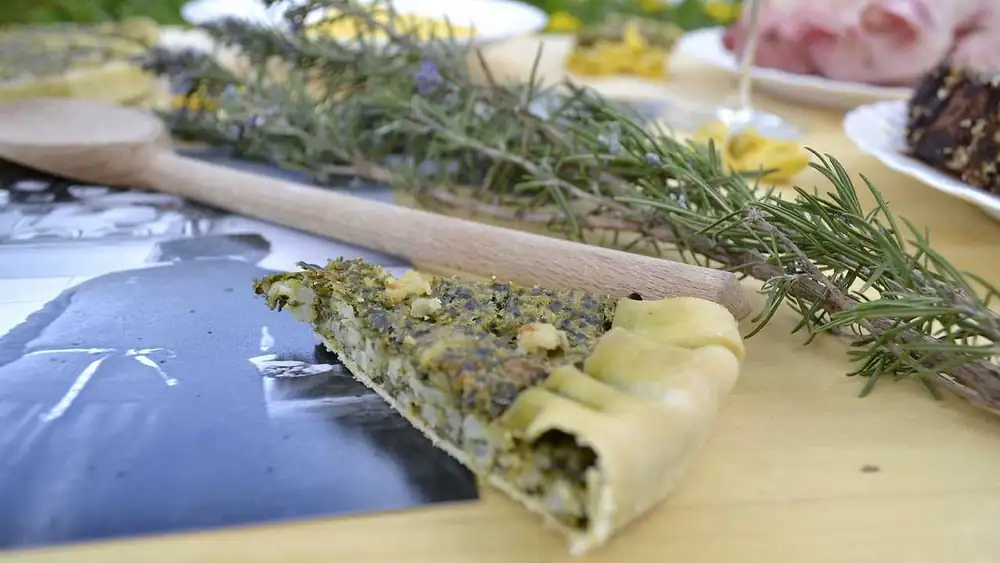
But if the erbazzone is the "posh" variant, the one also found at printing shops and glossy events, there's a poorer sibling, developed in the hills between Modena and Reggio, which has a very poetic history: it's the scarpazzone, typical of the areas around Mount Fosola, in the Felinese, Carpinetano, and Casinese areas; in short, in the Emilian Apennines.
The name scarpazzone comes from the fact that, instead of the baby spinach and spring chard used in the "bassa" version, the dough uses chard with its ribs. The white ribs, instead of being discarded, are chopped into the dough; and those ribs, in dialect, are called "scarpe," hence the name "scarpazzone" or "scarpasùn" in the local dialect.
But scarpazzone isn't the only difference from erbazzone: its most eclectic ingredient is rice. Swiss chard or spinach, lard, parmesan cheese, garlic, and onion are typical ingredients of Emilian cuisine, a peasant cuisine based on vegetables, aromatic herbs, dairy products, and pork. Rice, however, isn't traditionally present, and there's no real culture of risotto, which, however, flourishes throughout much of Northern Italy. In Emilia, rice is used to make scarpazzone or rice cake. Full stop.
Why is rice among the ingredients of scarpazzone?
Rice arrived here, especially in the "mountains," as the people of Reggio Emilia call their hills—lands of bloody partisan wars—thanks to women who, in the 1940s and 1950s, worked as rice weeders, seasonal workers harvesting rice in Veneto and Piedmont. As compensation, the rice weeders received about a kilo of rice for each day they worked in the rice fields; their stay typically lasted forty days, from April to early July. The resulting rice fed the family during the winter, but, not knowing exactly how to use it, it was added to already familiar dishes.
The rice for scarpazzone is, in fact, cooked in milk, with a touch of peasant ingenuity, until it's almost creamy, and then added to sautéed Swiss chard. Cooking in milk was a way to approach rice with a familiar ingredient, which managed the starch released by the grain in a simple way, without all the complications of creaming a risotto with fat at the end of cooking.
Scarpazzone, like erbazzone, was baked in a special pan called a sól (with a closed "o"), made entirely of copper and slightly raised from the oven floor by three legs. This pan was so distinctive that the bottom was sometimes engraved with a Celtic rose, the six-petalled one, symbol of the Emilian Apennines. These molds can still be found in antique markets, although traditional families have their own on display at home, along with the tigelliera for preparing tigelle, another typical dish of these areas.
The sól was baked in a wood-fired oven, and it is said that each family had their own oven built using this mold, so that the opening was wide enough to accommodate it. Rice cake was also baked in the same container, also made with rice cooked in milk, eggs, orange and lemon zest, sugar, and a few raisins; it is the most famous dessert in these areas.
Gastronomic integration is when you welcome an ingredient from abroad and, with a certain poeticism, make it become related to your home flavors. It works, and often gives rise to some beautiful and forward-thinking ideas.