Not milk or butter: this unexpected ingredient is the trick to the perfect puree
Mashed potatoes are one of the most popular side dishes, but a problem quickly arises when preparing them: instead of a silky smooth puree, we end up with a lumpy, watery or even sticky mixture. So how do you make it so that it is truly creamy, light and lump-free?
A little trick for better puree starts with cooking
According to Index.hr, some cooks use a rather unexpected trick when cooking potatoes – they add a little white vinegar to the water. The acid is said to help the potatoes maintain a slightly firmer structure during cooking, which prevents the outside from cooking too quickly while the middle is still cooking. This is supposed to reduce the chance of the potatoes being cooked unevenly, which can be one of the reasons for lumps in the mashed potatoes.
The amount of vinegar used is small: one tablespoon of white vinegar is enough for one kilogram of potatoes and about two liters of water. After cooking and draining, its taste should not be noticeable. If you don't have white vinegar on hand, you can also use a little lemon juice.
What you do with the potatoes after cooking is also important.
While vinegar can help, the key to a creamy texture is the steps you take after cooking the potatoes. This includes draining and mashing the potatoes, as well as gradually adding the warm ingredients. Also, don't overmix the potatoes, as the starch can release and make them sticky and rubbery.
How to make smooth and creamy mashed potatoes
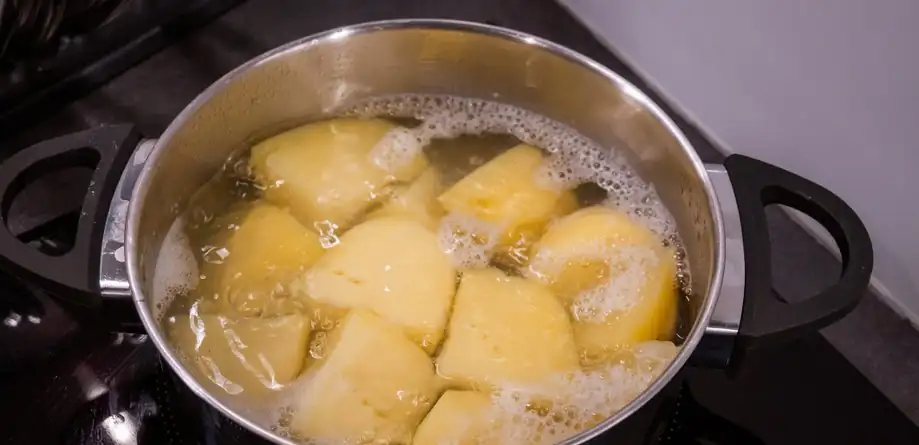
First peel, clean and wash the potatoes well, then cut them into pieces. It is important not to cut them into too small pieces, as they will absorb too much water during cooking. It is important that the pieces are a little larger and of approximately the same size so that they cook evenly.
Cover the sliced potatoes with cold water. In addition to the salt, add a tablespoon of white vinegar to the water. Cook the potatoes until a fork can easily penetrate the center. It is not practical to determine the cooking time exactly, as it depends on the variety and size of the pieces.
Once the potatoes are cooked, drain them well and, if desired, return them to the hot pot for a short time to evaporate the excess water. Then mash them while they are still hot. Any milk, cream or butter you add should also be warm, as this will help them bond better with the potatoes.
Another important rule to follow is to stop blending the puree as soon as it is smooth. Processing it too long releases too much starch, which can result in a heavy and sticky mixture instead of a fluffy puree. Therefore, a classic masher or a blender is better for this than a blender or electric mixer.