Dubarry, Stroganoff, Alsatian: what the lines on classic menus really mean
Some names are simply a long-established, well-known preparation method, but there are also some that have quite an exciting story behind them: a court mistress, the vicissitudes of a noble family's life, or the name of a famous chef, which over time has become an independent technical term.
Bakony
This dish, which is very popular in Hungary, evokes the centuries-old abundance of mushrooms in the Bakony forests. The essence of its preparation is that a natural meat cutlet – that is, meat without a skin, seasoned and fried in a pan or on the grill – is thickly spread with sour cream, or perhaps cream mushroom paprika, then served with dumplings and a good portion of fresh sour cream.
Basque
The term came from the French à la basquaise and refers to a rich pepper-tomato base, most often paired with fish or poultry, and in the Basque Country, a slice of ham is often added. The fleshy, sweet peppers – often the typical piquillo variety – are first roasted and peeled, then cooked with tomatoes, onions and garlic before being added to the meat or fish.
It is worth distinguishing the method from another, much more modern Basque specialty that has only become known worldwide in the last few years: the cheesecake with a burnt top, originally from San Sebastián, baked at a deliberately high temperature, which has conquered contemporary menus and cafes.
This selection is just a taste of the rich vocabulary that classical cuisine has accumulated over the past centuries. The terms on the menu can be precise technical instructions, but they can also describe the taste of an entire era or even condense the fate of a ruler into two or three words. This happens from the Bakony Mountains to Burgundy and all the way to San Sebastián: the name of a place, a person or a characteristic preparation method becomes a colloquial expression that almost no one questions anymore – but everyone encounters them when they hold a menu in a classic restaurant.
Böller
This preparation method brings together the traditional delicacies of pig's throat on a single plate: lungs, kidneys, liver, glands, blood and tongue, and rarely brain. In other words, everything that needs to be processed first, while still fresh, after the pig is slaughtered, and which is richest in fat and protein. These dishes were also high in calories, which was especially useful in the cold of winter.
Budapest style
Typically, tenderloin is prepared this way, as a generous, “everything goes” dish: lecsó, foie gras and mushrooms meet on the plate, accompanied by a few green peas. Its birth coincides with that of the Hortobágy meat pancake – both were created for the 1958 Brussels World Fair and have remained a symbol of Hungarian hospitality ever since.
Burgundian
The name Burgundy in French gastronomy almost automatically evokes red wine – everyone here immediately thinks of bourguignon. However, the adjective Burgundian-style refers to something else: a bacon, mushroom, and onion garnish, which is most often added to red wine-based stew-like meat dishes.
Csaba
It refers to Békéscsaba and thus naturally refers to the sausage: a dish is given this label if it contains or is made with spicy, red pepper sausage. It is worth knowing that this does not automatically mean that the sausage actually originating from Békéscsaba, which has been protected as a Hungaricum since 2010, was used – the name now denotes a characteristic flavor rather than a guaranteed origin.
Dubarry
Louis XV was mourning the death of one of his mistresses, Madame de Pompadour, when he was introduced to Madame du Barry, a blonde beauty who, in addition to her sensual pleasures, was passionate about cooking and especially cauliflower. Hence the name Dubarry style of cauliflower baked in a tube with Mornay sauce.
Alsatian
A classic dish from Alsace, choucroute is a fermented cabbage stewed in beer or white wine. It is usually served with a generous selection of smoked meats – sausages, bacon and ham.
Florentine
The Hungarian name is rarely heard in practice, and menus tend to use the internationally widespread Florentine form – à la florentine – which refers to the preparation of the dish with spinach. Henry II.'s wife, Catherine de' Medici of Florence, arrived at the French court with her northern Italian chefs, who introduced spinach to French cuisine – hence the Florentine name. Usually, eggs or fish are prepared with spinach and béchamel sauce, which, according to legend, is also thanks to the queen, who was known for her ruthlessness.
Holstein
Although this dish is surrounded by a legend, the name was supposedly given by Friedrich von Holstein, who ordered his veal dish in this way at the now 150-year-old Borchardt restaurant in Berlin: with fried eggs, anchovy fillets and capers on top. In this form, it seems like a much more exciting, juicier and French dish than it has become on the tables of Hungarian restaurants. At home, the pairing of natural steak and fried eggs has become a seemingly indelible classic.
Like a good woman
This name is particularly interesting because it can cover several things. In the case of meat – usually veal chops – it covers a combination of pearl onions, meaty smoked bacon, mushrooms, and green peas. In the case of fish dishes, however, it means stewing in white wine fish broth, which is finished with a cream-mushroom sauce.
The dish prepared in the Jean Bart style is based on similar principles, but in this case, breadcrumbs and cheese are piled on top of the steamed fish, then fried in the oven until crispy. In her book Nőkötet, literary historian Ibolya Maczák points to the old culinary approach according to which the adjective “in the manner of a good woman” actually meant that, according to the average bourgeois taste of the time, the table should be generously served with the delicacies that were at hand in the kitchen.
Lorraine style
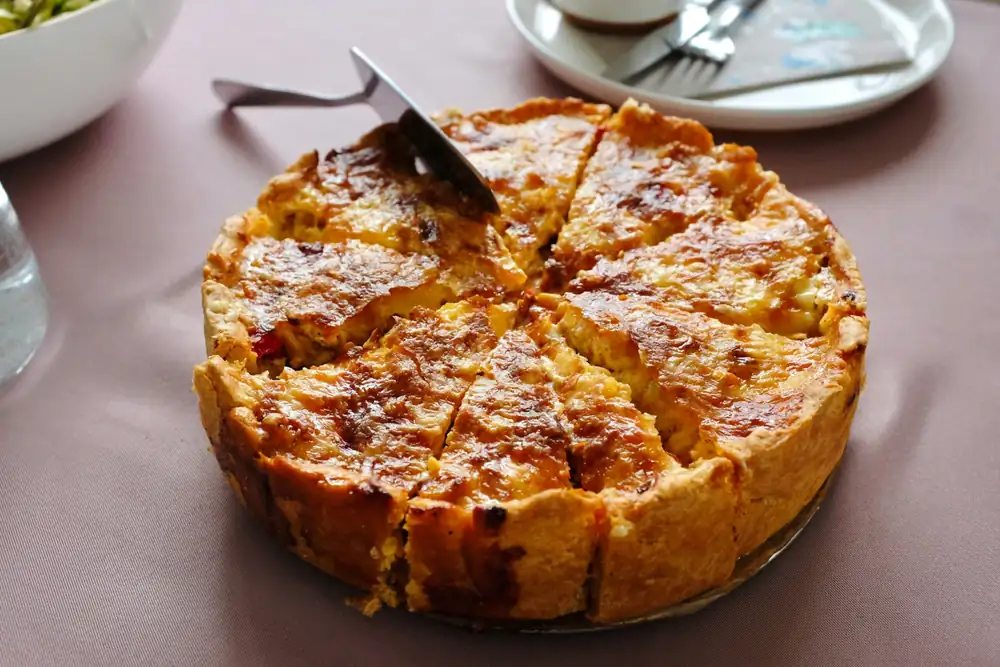
We almost never use this Hungarian name in practice - instead, we refer to this bacon and cheese-enriched, egg-cream pie as quiche lorraine, which takes its name from the Lorraine province of France.
Lyon
In France, onions are not just a basic seasoning – as part of mirepoix (onion, carrot, celery), they are the starting point for almost all stocks and sauces – but also a main character in their own right, just think of the classic French onion soup. Lyon, one of the strongholds of French gastronomy, has been particularly interested in this ingredient, hence the dish named after the city: it consists of a meat dish topped with onion rings rolled in flour and fried until crispy.
In the style of Mrs. Molnar
The literal translation of the French word à la meunière, which refers to the floury hands of the millers, is: a fish fillet dredged in flour and then fried until crispy in browned butter, with lemon and parsley.
Óvári or Magyaróvári
Both names refer to the same place: Magyaróvár, which is now part of Mosonmagyaróvár, and Óvári is simply a shorter, colloquial version of it. The connection with the locality is particularly close, as the dish traditionally uses the Óvár cheese, which is named after it – this is placed on the meat slice loaded with mushrooms and ham, which is baked or grilled until the cheese turns golden and crispy.
Orly style
The name refers to a Parisian suburb, although the technique behind it has now evolved considerably: originally it meant snacks dipped in egg and crumbs and served with tomato sauce, but nowadays it is used almost exclusively for meat and fish dipped in beer batter and fried in oil until crispy.
In the style of a baker
It is a translation of the French à la boulangère, which literally means: in the baker's style. And its origin is no coincidence: in rural French households, where there was no oven of their own, women would take Sunday meat with potatoes and onions in a bowl to the local baker, so that after baking the bread, it would be cooked in a warm oven while the family was at church. In our country, today it is mostly made with knuckle, potatoes and onions - it is most delicious when it is really cooked on a slow fire, for a long time.
Garbage
It is a fish dish from the south, baked in a pan, and is most often made with carp: it is placed on a lecsó base, layered with potatoes, bacon and paprika, and topped with sour cream. Some people refer to it as fish casserole.
Stroganoff style
It is named after a Russian noble family, although it is often listed on international menus simply as a Russian preparation method. It is basically a beef tenderloin stew with sour cream or cream, lightly mustarded, pickled cucumbers and mushrooms. There are several legends about its origin: according to one version, it was created by a French chef in 1891 for a Russian family, and according to another, the soft-cooked, easy-to-chew recipe was created at the request of a toothless count.
In the manner of a courtier
This is a fried steak, on which herb butter is spread just before serving, allowing it to melt into the meat in the heat. Based on the description, gastronomy fans may already guess that the method has French origins: they call it à la maître d'hôtel.
Villages
We mostly mean the iron roast: meat marinated in garlic milk overnight, which is then rolled in paprika flour and fried until crispy the next day.