Carrots in season: how to get the most out of this season's bestseller
From field to plate
Every month, Jolien lovingly puts a seasonal star in the spotlight. How does this all-natural ingredient grow, what does it taste like, and above all: what do you do with it in the kitchen? This month: carrots.
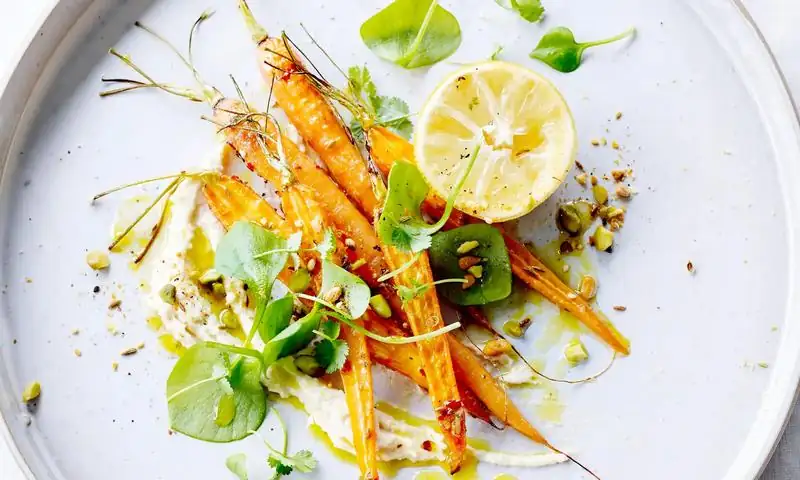
Jolien: "Carrots go into my shopping basket almost every week. Not only because my eldest son loves them, but also because you can do something different with them every season. In the spring, I eat young carrots with hummus. In the autumn, I roast them with cumin, let them simmer in a spicy dahl, or blend them with pumpkin into a velvety soup. On my list this weekend: a moist carrot cake."
From the field to your plate
This is how they grow: carrots grow almost entirely out of sight. Below the ground, the sturdy taproot that we eat forms; above the ground, only the fine, fresh green foliage appears.
Here is how you harvest them: young bunch carrots are harvested early and often sold with the foliage. Winter carrots remain in the ground longer, grow larger and firmer, and develop a fuller, deeper flavor.
Here is how to buy them: choose firm, smooth carrots. If you are buying bunch carrots, also look for fresh green leaves: that is a sign of freshness.
Here is how to store them: remove the tops as soon as you get home, otherwise they will draw moisture from the carrots. Then store the carrots in the cool vegetable drawer of the refrigerator. This way, they will easily stay crisp for one to two weeks.
So healthy
Carrots owe their orange color to beta-carotene, which your body converts into vitamin A. This supports your vision, skin, and immune system, among other things. Combine carrots with olive oil, butter, nuts, or yogurt: this way, your body absorbs the beta-carotene more easily.
A touch sweeter
Carrots naturally contain sugars. After a cold night, they can taste even sweeter. To protect itself against frost, the plant converts part of its starch into sugars. These help prevent ice crystals from damaging the cells. Good news for the carrot and for our plate.
An iconic dish
At the three-star New York restaurant Eleven Madison Park, chef Daniel Humm turned a simple carrot into an iconic dish. For his carrot tartare, a large, juicy carrot was ground at the table using a classic meat grinder. With egg yolk, mustard, and horseradish, it acquired the full flavor and tension of steak tartare.
A layer of shine
For perfectly glazed carrots, cook them in a small amount of water with butter, a pinch of sugar, and some salt. Cook them gently under a circle of baking paper until the liquid evaporates and the butter and sugar coat the carrots like a glossy glaze. The result: buttery soft, intensely sweet, and irresistibly glossy carrots.
Mirepoix-magic
In French cuisine, many classic sauces, soups, or stews begin with a mirepoix: a mixture of finely chopped carrot, onion, and celery. During gentle simmering, the carrot releases its natural sweetness and helps build a deep, rounded base flavor.