Is one of the world's most unique blue cheeses in danger?
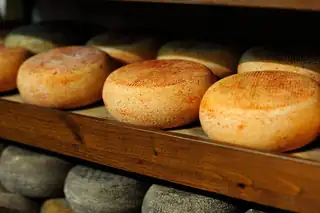
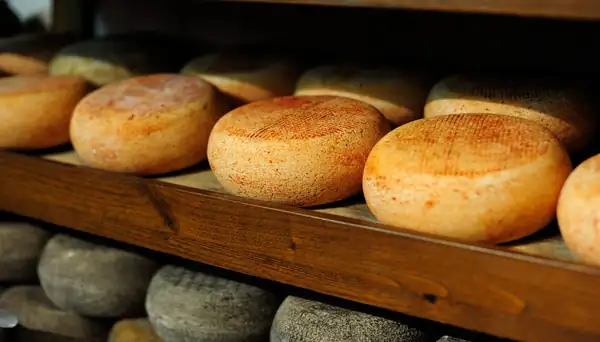
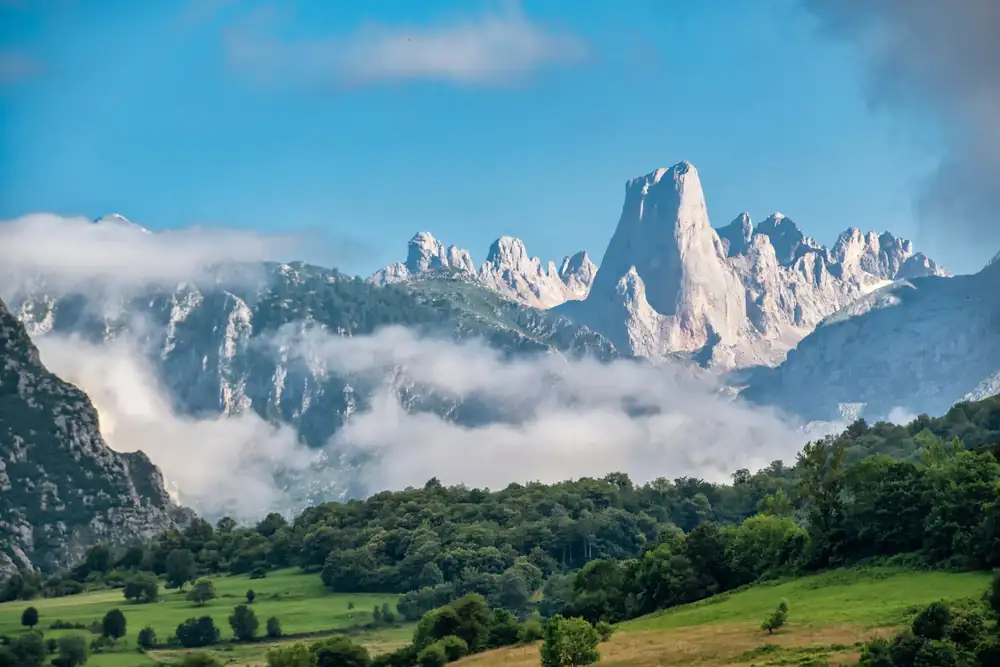
The same process has been repeated for centuries among the limestone mountains of the Picos de Europa National Park. After a few weeks of drying, the cheese discs made from raw milk are placed in natural caves, where the constant temperature and high humidity develop Cabrales' intense aroma and characteristic blue veins.
The Protected Designation of Origin (PDO) strictly defines the conditions for its production. The cheese can only be made in the area of Cabrales and part of the neighbouring Peñamellera Alta, from raw milk from cows, sheep or goats that come from the pastures of the Picos de Europa. The milk can come from a single animal species or from a mixture of several milks.
However, the most important element of Cabrales' character is not the recipe itself, but the maturation process. The cheeses are placed in natural limestone caves, where the microclimate shapes their structure and flavor over months. The right to use the caves is passed down from generation to generation in many families, just like the knowledge of cheesemaking.
The higher-lying ripening areas are still only accessible on foot. The cheese wheels are transported in sacks, often on horseback, and in winter the makers sometimes carry them to the caves on their backs. During the months of ripening, the wheels are regularly turned and cleaned, and then checked with a thin knife to see if the inside has reached the desired consistency and aroma.
The challenges today are no longer primarily technological. The number of Cabrales makers has steadily decreased in recent decades: while annual production has remained roughly unchanged, larger factories have gained an increasingly important role, and smaller family farms are disappearing one by one.
The process also shapes the landscape. As the number of shepherds and grazing animals decreases, scrubland spreads more rapidly, altering mountain habitats, increasing the risk of forest fires and affecting the movement of wild animals. The story of Cabrales therefore goes far beyond a special blue cheese. Each wheel of cheese represents the continuation of a form of farming that has shaped the landscape of the Picos de Europa for centuries. If this way of life disappears, not only a cheese-making tradition but also part of the cultural and ecological balance of the landscape will be at risk.