The legume that looks like it has feathers: what is the winged bean and why is it called that?
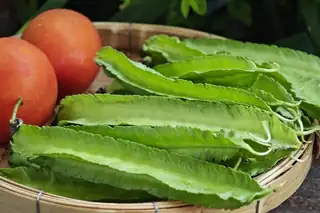
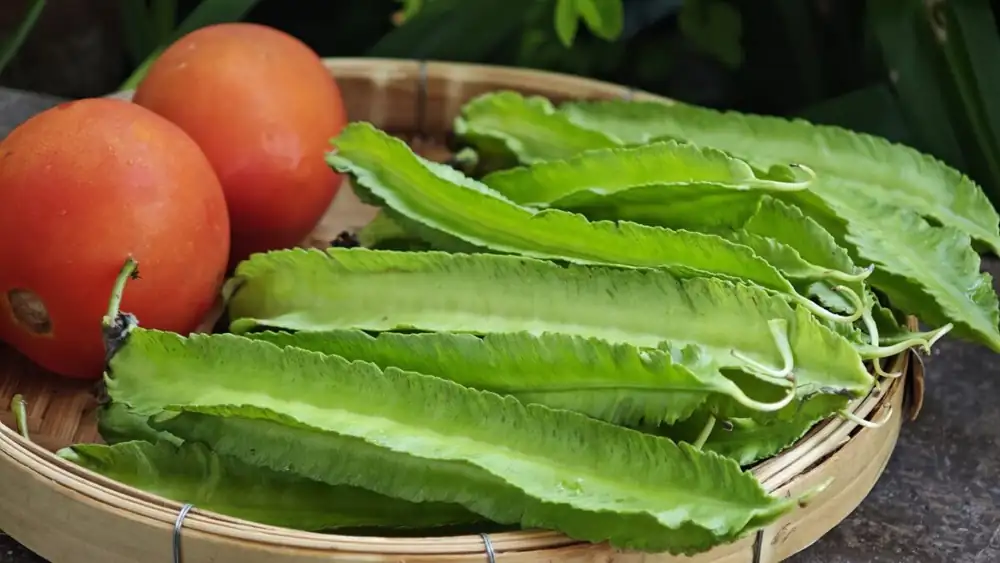
It looks like something out of a fantasy botany book, with those pods crisscrossed by four ridged edges that resemble tiny wings, yet it's a true legume, widely used in Asian cuisines: it's called winged bean, and some would eat it just for the name, while others are lying.
What is the winged bean and why does it have this name?
Native to tropical Asia, its scientific name is Psophocarpus tetragonolobus and it belongs to the Leguminosae family, the same as beans, chickpeas, and soybeans. It is also known as the Goa bean, four-cornered bean, Manila bean, and dragon bean, but it is its shape that makes it immediately recognizable: the pod has four raised, wavy edges that run along its entire surface, giving the appearance of small wings.
The plant grows like a vine and can reach about four meters in height, with oval leaves and flowers ranging in color from pale blue to purple. The pods also vary in shape and color depending on the variety: generally green, they can also be cream, pink, or purple. When fully ripe, they become darker and more fibrous, splitting open to release the seeds.
Can it also be grown in Italy?
The answer is yes, but with significant agronomic limitations: in addition to requiring stable temperatures above 20-25°C, it is a short-day plant that flowers only when the days get shorter (below 12 hours of light). In the Italian summer, it therefore tends to develop a lot of vegetal mass, failing to flower before the autumn cold. The plant is also a climber and requires support to develop its shoots, while during the early stages of growth, it grows rather slowly and therefore requires some attention. Before sowing, the seeds can be scarified, that is, lightly incised into their outer covering, or soaked: both practices can promote germination. Under favorable conditions, the first shoots can appear within a few days, while flowering comes later, and the pods reach their maximum size about two weeks after pollination. If left to mature too long, however, they become fibrous and lose the tender consistency that makes them appealing in the kitchen.
There's another detail that makes this legume particularly interesting from an agricultural perspective: its roots contain bacteria capable of fixing atmospheric nitrogen, allowing the plant to utilize it. This is a characteristic shared by many legumes and helps explain why the winged bean can grow without necessarily requiring large amounts of fertilizer.
From pods to seeds: almost nothing of the winged bean is thrown away
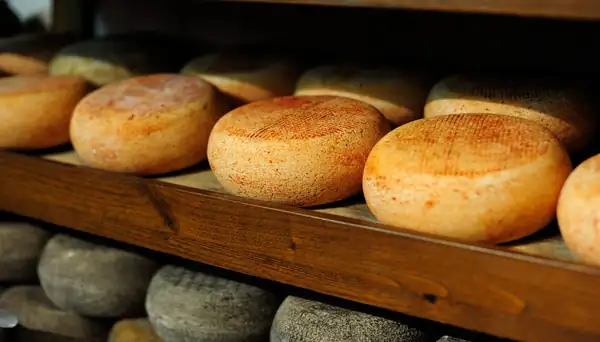
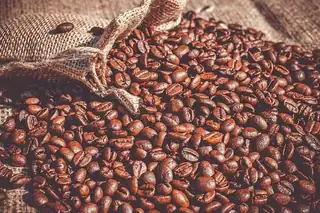
The true strength of this plant is its culinary versatility: the young pods are eaten cooked or blanched, a crucial step for inactivating the natural antinutritional factors typical of almost all legumes. Similarly, the leaves and shoots, if briefly cooked, resemble the flavor and texture of the finest spinach, while the flowers find their place in the kitchen both as a garnish and as a natural coloring: in some Asian dishes, they are used, for example, to color rice. Finally, the roots produce edible tubers, which can be eaten cooked and have a flavor reminiscent of hazelnuts. And then there are the seeds, which must be cooked before being eaten: once dried, they can be roasted or ground into flour, while the toasted seeds make a valuable coffee substitute and, through maceration and boiling, a sort of plant-based milk very similar to soy milk. In some parts of Asia, the pods are used in traditional recipes such as the Philippine ginataang sigarilyas, where they are cooked in coconut milk.