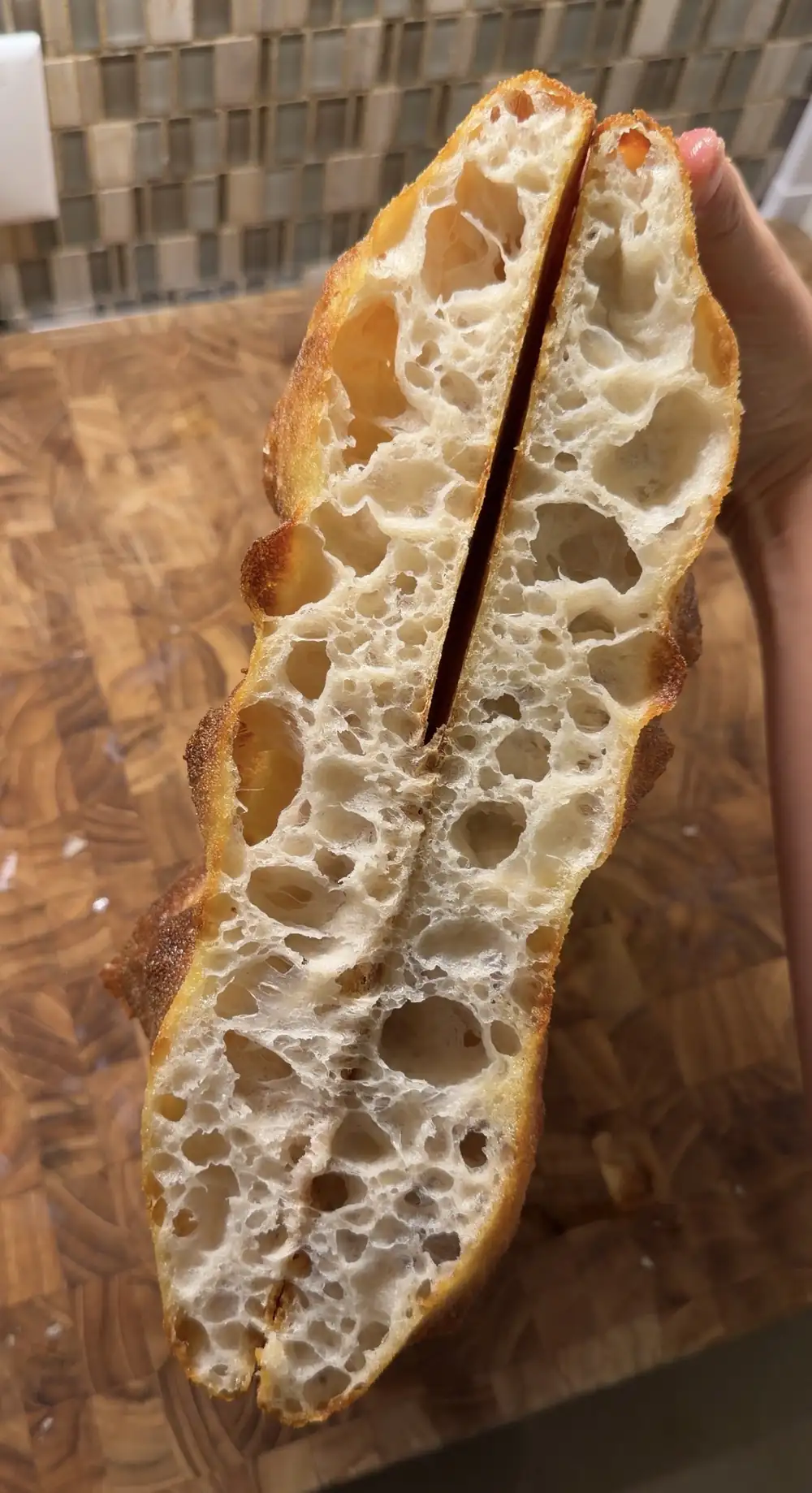
Sourdough Schiacciata
Schiacciata is Tuscany’s flatter, crispier, more olive oil forward foccacia, that has a lighter more open crumb that makes it feel almost more like a flatbread. I’ve been making this using a similar method as my Sourdough Ciabatta: autolyse, bassinage, overnight cold bulk ferment.
- 210 g King Arthur Bread Flour
- 210 g T65
- 225 g water (for autolyse)
- 40 g water (for bassinage)
- 150 g active levain (at peak)
- 10 g salt
- 9 g extra virgin olive oil
- generous drizzle of olive oil
- flaky sea salt
- Build levain: Feed at 1:1:1 and let peak at room temperature, about 5 hours.
- Start autolyse: About 1 hour before your levain peaks combine 225 g cold water, 210 g bread flour, and 210 g T65 flour in your mixer bowl. Mix until no dry flour remains. Cover and rest for 1 hour. If your kitchen is warm refrigerate the covered bowl during this rest to keep the temperature down.
- Prepare bassinage water: While the dough autolyses prepare your 40 g bassinage water at the correct calculated temperature. Set aside.
- Add levain and salt: Once the levain is at peak and the autolyse is complete add 150 g active levain and 10 g salt to the mixer bowl.
- Mix on low: Mix on low speed for about 5 minutes until everything is combined.
- Increase speed and add EVOO: Increase to medium speed and knead until the dough is smooth and gluten is almost fully developed. Slowly drizzle in 9 g EVOO with the mixer running until fully combined.
- Bassinage: Once the dough is almost fully developed slowly pour in the 40 g bassinage water with the mixer running. Continue mixing until the dough is super smooth, fully combined, and a very thin translucent windowpane can be formed. Check dough temperature — target is 75°F.
- Transfer: Lightly oil a square or rectangular container. Transfer the dough and cover.
- Bulk ferment: Ferment until the dough has risen around 70% and looks bubbly, jiggly, and full of gas. Transfer to the fridge at 36-38°F for around 17 hours until doubled in size.
- Preheat: The next day preheat your oven to its highest temperature — 500°F — with your baking stone or steel inside if you have one. Preheat for at least 45-60 minutes.
- Prepare your surface: Spread a generous layer of semolina flour onto a tray or work surface.
- Turn out the dough: Flip your dough container directly onto the semolina so the dough lands on the flour. Gently stretch the dough outward and flip it over so both sides are coated in semolina flour.
- Dimple: Using your fingertips press firmly all over the surface of the dough to create deep dimples throughout.
- Transfer to parchment: Gently lift the dimpled dough and place it onto a piece of parchment paper.
- Finish: Drizzle generously with extra virgin olive oil and sprinkle with flaky sea salt.
- Bake: Use a pizza or bread peel to slide the parchment directly onto the hot baking stone. Bake for 16 minutes until deeply golden and crackly.
- Cool: Transfer to a wire rack immediately. Drizzle and brush the outside with more olive oil. Cool for at least 10-15 minutes before cutting.
Why You’ll Love This Recipe
- T65 and bread flour blend — the combination gives you incredible flavor and just the right extensibility for a flatbread this style.
- Similar method as ciabatta — if you’ve made my Sourdough Ciabatta this will be easy to make!
- Incredibly versatile — eat it plain, topped with flaky salt and rosemary, or loaded with toppings.
Sourdough Schiacciata: Focaccia’s Crispier Tuscan Cousin
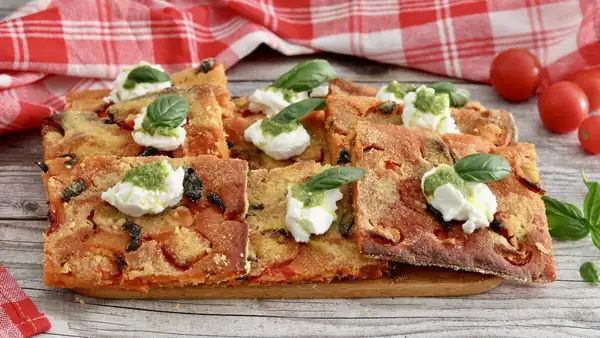
Schiacciata literally means “squashed” in Italian and that’s exactly what it is. A pressed, flattened olive oil bread that’s thinner and crispier than focaccia with a more open crumb and a more pronounced olive oil flavor. Where focaccia tends to be thick and pillowy, schiacciata is flat and crackly with a bottom crust that gets almost fried in the olive oil in the pan. The inside stays tender and airy.
I use a similar method as my Sourdough Ciabatta here: autolyse, bassinage, overnight cold bulk ferment. The main difference is there is no final proof, and we bake directly on a stone until the bottom is deeply golden and crispy and the interior is light and open.
SCHIACCIATA DOUGH
- 210 g T65 flour (replace with bread flour if you do not have)
- 265 g water, temperature calculated — divided into 225 g for autolyse and 40 g for bassinage
Baker’s Percentages:
- Flour: 100%
- Water: ~72.6% (effective hydration higher with levain)
- Levain: 35.7%
- Salt: 2.38%
- EVOO: 2.14%
The Flour Blend
This recipe uses a 50/50 blend of bread flour and T65. Bread flour gives you the gluten strength you need to hold the structure during fermentation and baking. T65 adds a more complex wheat flavor and a natural extensibility that makes the dough easier to stretch into the pan without it snapping back. I first fell in love with T65 when experimenting with baguettes and have been incorporating it into more of my bread recipes since. If you can’t find T65 you can use all bread flour.
Your Sourdough Starter and Levain
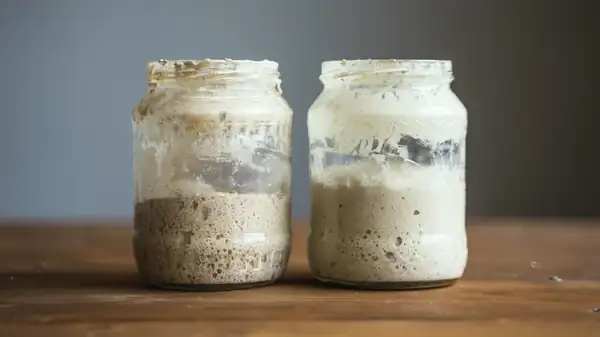
I keep my starter at room temperature and feed it twice a day at 1:1:1 — equal parts starter, flour, and water by weight. For this recipe build your levain also at 1:1:1 and use it when it hits its peak (risen to its highest point, domed on top, bubbly throughout, and smelling pleasantly tangy). You’ll know it’s past peak when the dome starts to flatten and it begins to fall. For my starter this takes around 5 hours at room temperature but yours will vary. Since we need 150 g of levain I typically build with 55-60 g of each to give a little buffer.
Autolyse, Water Temperature, and Bassinage
The mixing method here follows my Sourdough Ciabatta exactly. I cover all of this in depth there so I won’t repeat the full explanation here, but the short version:
- Autolyse: mix just flour and water an hour before your levain peaks. This gives gluten a head start before anything else goes in and makes the dough smoother and more extensible when you start mixing.
- Water temperature: calculate your water temperature to hit a target final dough temp of 75°F. The formula is covered in detail in my Salt Bread post. I use the Ooni Halo Pro spiral mixer with a friction factor of around 20°F.
- Bassinage: I hold back 40 g of water from the autolyse and add it slowly during mixing after the dough is mostly developed. This gives me another temperature control lever and helps the dough absorb its full hydration more easily.
How To Make Sourdough Schiacciata
- Feed your levain: Build at 1:1:1 — about 55-60 g of each. Let peak at room temperature, about 5 hours. It’s ready when domed, bubbly, and at its highest point before it starts to flatten and fall.
- Transfer: Lightly oil a square or rectangular container. Transfer the dough, cover, and let it fully relax.
- Preheat: The next day preheat your oven to its highest temperature (mine is 500°F) with your baking stone or steel inside. Preheat for at least 45-60 minutes.
- Bake: Use a pizza/bread peel or a baking tray flipped over to slide the parchment directly onto the hot baking stone. Bake for 16 minutes until deeply golden and crackly.
Storage & Reheating
Storage Best the day it’s baked when the crust is at its crispiest. Store at room temperature for up to 1 day but freezing will keep it fresher.
Freezing Slice and freeze in an airtight bag for up to 1 month. Reheat directly from frozen in a hot oven.