Steamed Vegetables: The Ultimate Guide to Perfect Cooking
Hello, beautiful people! Today we're going to dive headfirst into a cooking technique that's a one-way trip: steamed vegetables.
If you think they're boring or tasteless, it's because you haven't yet heard the secrets to making them spectacular. And that's what I'm here for, your friend Paulina, to guide you on this path of flavor and health.
Steaming vegetables is not only an incredibly healthy way to cook, but also a technique that, when done correctly, preserves the original flavor, texture, and vibrant colors of each vegetable. Forget about those pale, watery vegetables.
Today you're going to learn how to make them crispy, delicious, and full of life. The best part is, you don't need to be a professional chef or have expensive equipment. I'm going to show you how to make them with what you have at home.
Let's cook!
About the steamed vegetables
Variations for your steamed vegetables How to steam vegetables without a steamer In the microwave: it couldn't be faster!
Steamed Vegetable Recipe with Lemon and Herb Dressing Ingredients
About the steamed vegetables
Steaming vegetables is basically using the steam from boiling water to cook the food without it coming into direct contact with the water. And why is that so great?
Because they aren't submerged, vegetables retain far more nutrients, especially water-soluble vitamins like vitamin C and B vitamins, which are often lost in cooking water. Furthermore, the flavor becomes much more concentrated.
A steamed carrot tastes more like a carrot than a boiled one. It's a pure and honest way to enjoy what the earth gives us. It's the perfect side dish for roast chicken or any fish, transforming a simple dish into a complete and balanced meal.
A tip that never fails
The secret to perfect steamed vegetables is not in the equipment, but in the time.
It's better to undercook them than overcook them. You can always cook them for another minute, but you'll never get that crispy texture back once they've gone soft.
Pierce with a fork: if it goes in with slight resistance, they're ready!
Variations for your steamed vegetables
Not having a steamer is no excuse. There are plenty of ways to achieve the same result with utensils you probably already have in your kitchen.
Here are my favorite methods!
How to steam vegetables without a steamer
This is the most classic and effective trick. You just need a large pot with a lid and a metal colander that fits inside.
Put a couple of fingers' worth of water in the pot. Make sure the water level doesn't touch the bottom of the colander.
Bring the water to a boil. Place the chopped vegetables inside the colander and place the colander over the pot.
Cover the pot and reduce the heat to medium. The steam will do its magic.
It's that easy! It's a technique very similar to the one we use for other vegetable recipes, but focused on light and healthy cooking.
In the microwave: it couldn't be faster! If you're in a hurry, the microwave is your best friend.
All you need is a microwave-safe container with a lid. Place the chopped vegetables in the container. Add two or three tablespoons of water.
No more. Cover the container (if the lid doesn't have a valve, leave it slightly open to allow steam to escape).
Cook on full power for 3-5 minutes, depending on the hardness of the vegetables. Check halfway through!
Steamed Vegetable Recipe with Lemon and Herb Dressing This is my basic recipe, the one that never fails and that you can adapt with the vegetables you like best.
The dressing adds a fresh and delicious touch that elevates any dish. Preparation time: 10 minutes. Cooking time: 15-20 minutes.
Serves: 4 people Difficulty: Super easy
For the dressing:
4 tablespoons of extra virgin olive oil
Juice of 1 lemon
1 clove of garlic, finely chopped
1 tablespoon of fresh parsley, chopped
Step-by-step preparation
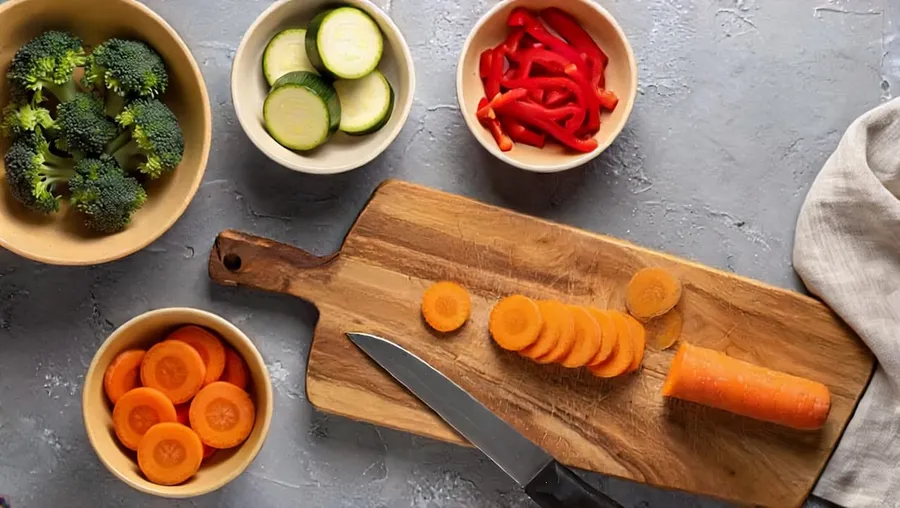
Prepare the vegetables: Wash and cut all the vegetables as indicated in the ingredients. It is important that the pieces are roughly the same size.
To prepare for cooking: Fill a large pot with about 3-4 cm of water and bring to a boil. Place a steamer basket or a metal colander on top, making sure the water does not touch the vegetables.
Cook the hard vegetables: First, add the carrots to the basket, cover, and cook for about 5 minutes, as they take longer to soften. Add the rest: Add the broccoli, bell pepper, and zucchini.
Cover again and cook for another 5-7 minutes. The vegetables should be "al dente," meaning tender but with a slight crunch. If you like salads with different textures, this is the perfect point.
Prepare the dressing: While the vegetables are cooking, mix the olive oil, lemon juice, minced garlic, and parsley in a bowl or small jar. Season with salt and pepper and whisk lightly with a fork to emulsify (if using a jar with a lid, you can cover it and shake vigorously).
To serve: Once the vegetables are cooked through, carefully remove them from the heat. Transfer them to a large serving dish and immediately drizzle with the dressing.
Gently mix so that everything is infused with flavor. And that's it! You have a perfect, healthy, and delicious side dish.
It's a great base that you can complement with other preparations, such as some delicious stuffed eggplants for a complete vegetarian dinner.
Frequently Asked Questions about Steamed Vegetables
Which vegetables can be steamed?
Almost all of them! Broccoli, cauliflower, carrots, potatoes, asparagus, green beans, and peppers are fantastic.
Leafy greens like spinach also need steaming, but they require much less time. How long should vegetables be steamed?
It depends on the vegetable and the size of the cut. As a general rule: asparagus or spinach (2-3 min), broccoli or cauliflower (5-7 min), diced carrots or potatoes (10-15 min).
The best way to tell is by piercing them with a fork. How do you season steamed vegetables so they taste good?
The secret is in what comes after. Once cooked, you can add a drizzle of olive oil, salt, pepper, garlic powder, or fresh herbs like parsley or cilantro.
A few drops of lemon juice or soy sauce also work wonders. Is it better to eat vegetables steamed or boiled? Steamed, without a doubt.
As I mentioned before, because they're not in direct contact with water, they retain their nutrients, flavor, and texture much better. It's a difference you'll notice from the first bite.
How to prepare vegetables for steaming? Wash them well and cut them into similar-sized pieces so they cook evenly.
Harder vegetables, such as potatoes or carrots, should be cut into smaller pieces than softer ones, such as broccoli.