Minas Gerais: the first cheese declared Intangible Cultural Heritage of Humanity is Brazilian
UNESCO's recognition of the 'Methods of Making Artisanal Minas Cheese' marks a significant milestone for Brazilian food culture and officially confirms the historical, social, and economic value of a practice that has been active since the colonial period.
The origins of Minas Gerais artisanal cheese date back to the 18th century, when Portuguese livestock management and cheesemaking techniques were adapted to the conditions of the former Captaincy of Minas Gerais. Furthermore, the Serro, Canastra, Araxá, and Cerrado regions maintain distinct sensory profiles linked to local climate, altitude, and microflora—characteristics that have contributed to its designation as a heritage product.
The characteristics that define Minas Artesanal Cheese are: the use of raw milk, the native ferment (pingo) of each property and a specific maturation due to the different local microclimates.
Throughout the 19th and 20th centuries, cheese became established as a regional economic driver. Its production, although mostly family-run, combines empirical knowledge and technical criteria, with the pingo (a type of cheese) as a key element in defining the product's identity.
The process of making artisanal Minas cheese involves knowledge and techniques developed by small rural producers throughout the state of Minas Gerais. Local cheesemakers take pride in the tradition of using raw milk and 'pingo' (drop), a natural yeast composed of bacteria specific to the region. This, along with the aging period and the local climate, contributes to the cheese's characteristic flavor, color, and aroma.
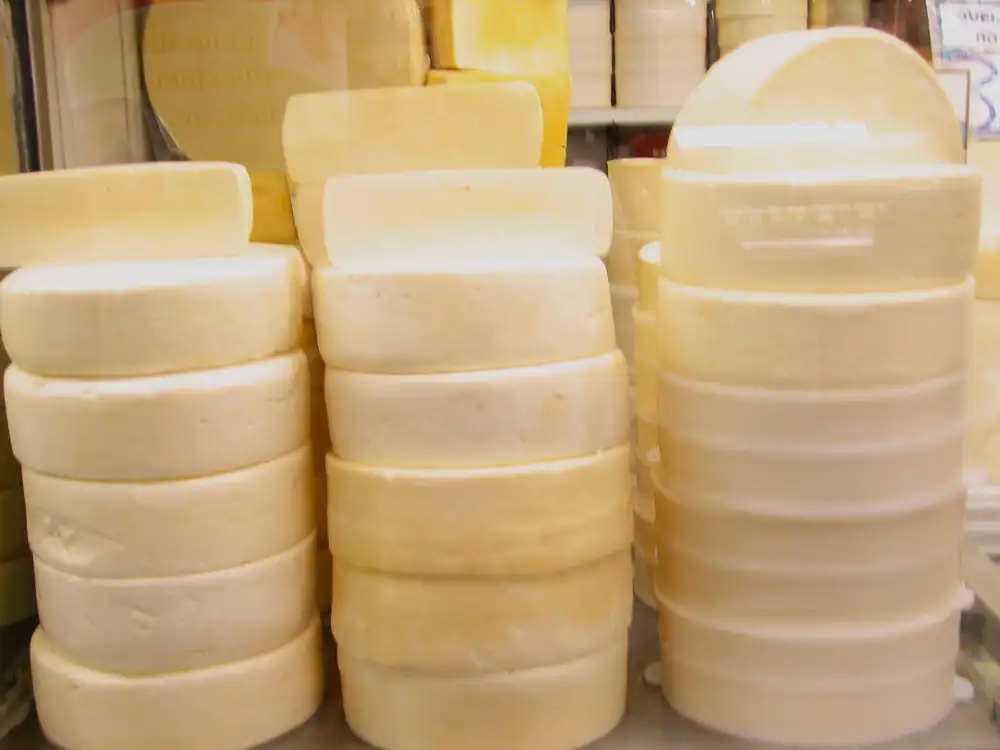
There are many varieties of Minas Gerais cheese, primarily classified by their aging (fresh, semi-cured, and cured), and within these categories, each region and producer creates their own versions. Among the main varieties are Minas Frescal (soft, smooth, and moist, eaten at breakfast and used to make pão de queijo), Minas Meia-Cura (semi-cured, with a firmer texture and more intense flavor, very popular with guava paste (a combination known in Brazil as Romeo and Juliet); Minas Curado (mature, with an intense flavor and a more defined rind, eaten on its own or with drinks); and Canastra, an artisanal raw milk cheese with a dry and strong flavor, originating from the Canastra region. Peppered cheese, where peppercorns are added to the cheese for a spicy touch, is also popular.
The related knowledge, which is key to considering cheesemaking as cultural heritage, includes pasture and livestock management, production techniques, and specific marketing channels—in this case, sales at local fairs and markets. Minas artisanal cheese is associated with hospitality and is commonly enjoyed with sweets and beverages at gatherings, meetings, and special occasions.
A cheese that makes local culture
Most cheesemakers own small rural properties and work in small-scale family operations. Family members and local communities participate in the work as production increases. Knowledge is passed down orally among family members at all stages of the process. Learning takes place through observation and daily interactions with experienced family members. The production and consumption of artisanal Minas cheese reinforce a sense of belonging to a place and a community, strengthen local economies, improve quality of life, and contribute to socioeconomic inclusion.
Minas Gerais cheese is already well-known in international competitions such as the World Cheese Awards and the Mondial du Fromage, where it has won several medals in successive editions, thus reinforcing its reputation and its distinctive attributes in aroma, texture, and aging. And, even more importantly, it embodies the organoleptic and cultural expression of a region.
UNESCO's international recognition comes at a virtuous moment of qualitative expansion for cheese, with significant progress by producers in its regulation and access to new markets.