Three kinds of winter cabbage with chestnut cream & Leche de Tigre
The recipe for three kinds of winter cabbage with chestnut cream and Leche de Tigre comes from chef Matthias Gfrörer. He is the head chef of the Gutsküche restaurant in Wulksfelde.
- Zest of 1 organic lime
- 1 small bunch of coriander
- 2 tsp sea salt
- 2 tbsp roasted hazelnut oil (ready-made product)
- 3 pinches of cayenne pepper
- 80 ml maple syrup
- 80 ml of pure ginger juice (ready-made product)
- 100 ml lime juice
- 100 ml rapeseed oil
- 200 g kale stalks and leaves
- freshly grated nutmeg
- freshly ground black pepper
- 1/2 tsp sea salt
- 1 tbsp raw cane sugar
- 3 cl Madeira or Cream Sherry
- 50 g Butter
- 400g pre-cooked chestnuts (vacuum-packed)
- 100g peeled, coarsely chopped shallots
- 20 ml almond oil
- 100 ml Hafersahne
- 150 ml vegetable broth
- Salt
- Cane sugar
- freshly grated nutmeg
- freshly ground black pepper
- 2 fresh medium-sized salad chilies
- 3 tablespoons olive oil
- 50 g Butter
- 500 ml rapeseed oil
- 500 ml vegetable stock
- 200 ml Green Tiger's Milk (so)
- 200 g Maronencreme (so)
- 600 g kale
- 600 g black kale
- 1 kg Stängelkohl (Italian: Cima di Rapa)
- Bunsenbrenner
- For the Leche de Tigre, roughly chop the coriander and kale stems and leaves, then finely purée them with 100 ml of cold water, maple syrup, hazelnut oil, lime zest, salt, and pepper. Just before serving, whisk the ingredients together with the lime and ginger juice and rapeseed oil to make a vinaigrette.
- For the chestnut cream, caramelize the chestnuts, shallots, and sugar in a saucepan. Stirring constantly, glaze/roast the chestnuts and shallots for 3–5 minutes. Set aside the 12 best-looking chestnuts. Pour the vegetable stock over the remaining chestnuts. Simmer gently for about 12 minutes to dissolve the caramel. Once the shallots are soft, add the almond oil, oat cream, butter, and Madeira. Bring to a boil, then purée until very smooth. Season to taste with salt, black pepper, and nutmeg.
- For the baked kale, wash the kale, tear it into pieces, and pat it very dry. Fry in rapeseed oil at 175°C until crispy. Drain on a kitchen towel. Season well with salt, pepper, and nutmeg.
- For the charred black kale, wash the large kale leaves thoroughly and then sprinkle them with salt and raw cane sugar. Now roast/char the leaves until crispy brown using a blowtorch and set aside.
- For the glazed broccoli rabe, first reduce the vegetable stock to 100 ml. Wash and trim the broccoli, then sear it in a saucepan with olive oil on both sides until golden brown. After 4 minutes over medium heat, season with salt, pepper, and sugar, and deglaze with a splash of water. Cover and cook for 2 minutes until al dente. To serve, season the broccoli rabe with salt and pepper, glaze it with butter in the reduced vegetable braising liquid, and serve hot.
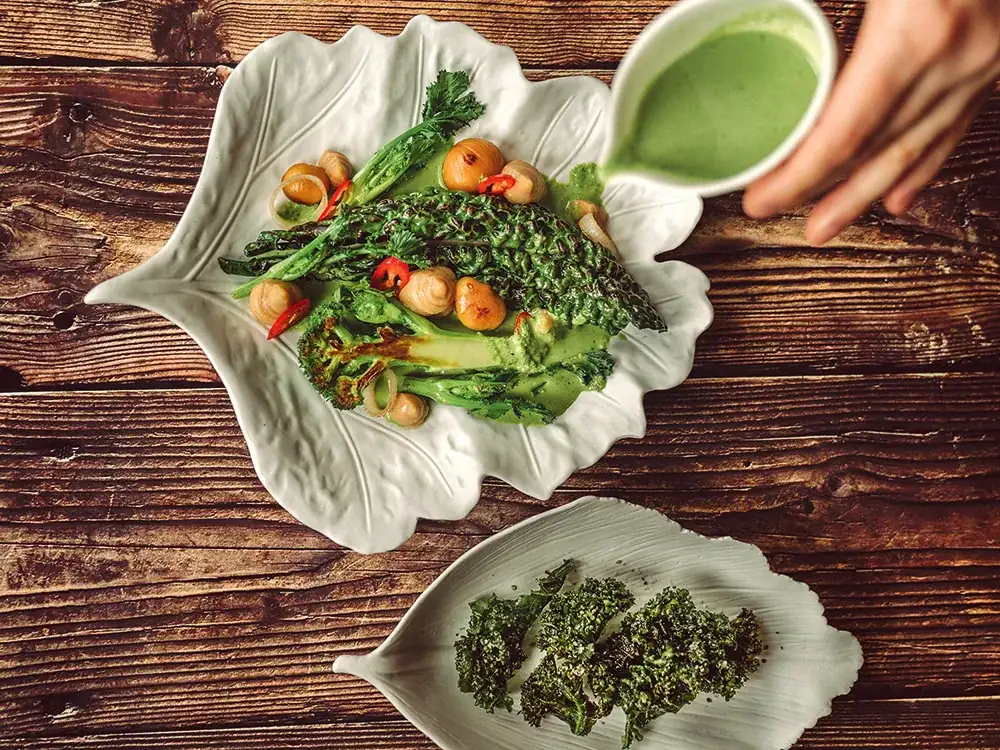
- To finish: Arrange all three types of cabbage on a plate, decorate with dollops of chestnut cream and 3 chestnuts each, and pour over Leche de Tigre. Slice the salad chilies into rings and add them to the plate.
- Optional garnish & fine side dishes: Finely sliced, strongly toasted farmhouse bread & wild boar ham or mature cheeses.
Tips about winter cabbage from Matthias Gfrörer:
There's plenty to do in winter... at the Wulksfelde estate. "Winter vegetables have their own magic," says Matthias Gfrörer, head chef of the estate's kitchen. "Lamb's lettuce and winter cabbage store an incredible amount of energy and are real vitamin powerhouses; orange and lemon juice can't compare! Kale is a true superfood, offering a wealth of minerals. Ideally, you shouldn't cook it, but rather prepare it like the Americans do – as a smoothie or salad. For me, kale is the new spinach!"
Turnip greens or cima di rapa: With its curly, elongated leaves, turnip greens resemble Westphalian turnip greens and Chinese cabbage. It is primarily cultivated in Italy as cima di rapa ("turnip tops") and, similar to broccoli, is used there as a vegetable in pasta dishes or stews.
Black kale, or cavolo nero, was originally cultivated in Italy, especially in Tuscany, and is a popular vegetable side dish or ingredient in pasta dishes such as gnocchi with ricotta or pasta with sausage, as well as in stews and soups. Black kale has a milder flavor than curly kale, and Italians don't eat the ribs.
Kale, also known as curly kale, tastes best when harvested late in the season and in very cold weather, as the plant then contains less starch and more sugar. Traditionally, kale is eaten in northern Germany with smoked pork loin or black pudding, but it can also be enjoyed as a salad or in a smoothie. This typical winter cabbage is rich in vitamin C.
Concept: Matthias Gfrörer has developed a unique and highly sustainable style with his creative vegetable-based cuisine (fish and meat are served separately), using the best seasonal produce from the affiliated organic farm, Gut Wulksfelde. Cuisine: The dynamic chef is constantly evolving himself and his restaurant – with numerous events and the expansion to include a deli, ice cream parlor, and animal encounter area. In the large restaurant with its open kitchen, dishes such as homemade mozzarella served as a Caprese salad (with tomatoes and basil) (€12/€24), Breton artichoke with three different dips (€23), and Niçoise à la carte with roasted potato sticks and olive tapenade (€14/€26) are offered. Drinks: The wine list features around 200 bottles, many from certified organic winemakers. Atmosphere: In the large, bright restaurant, guests are seated at wooden tables and on benches surrounding the room. A popular venue for celebrations, it attracts many regular customers. A summer terrace is also available.