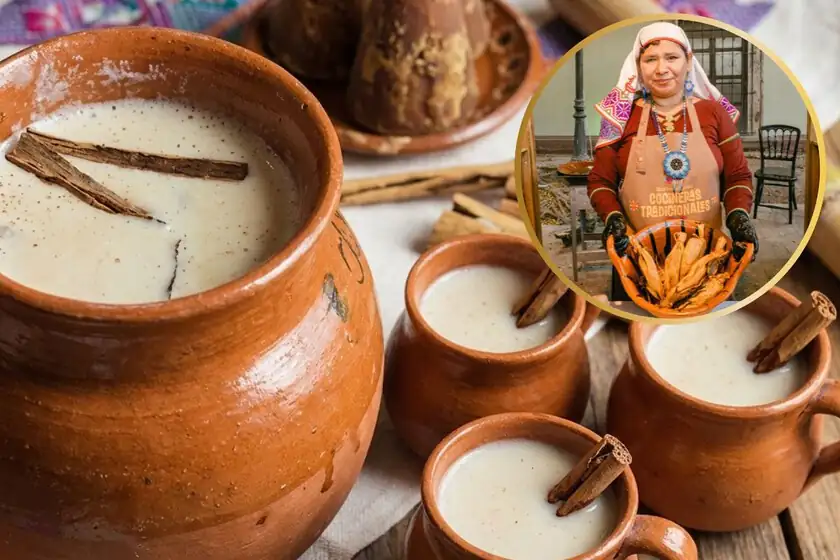
How to make pineapple atole without milk, with the recipe and tips from traditional cook Adriana Paniagua from Nayarit
In central Mexico, autumn is slowly arriving, and there's nothing better than a cup of atole to accompany breakfast or an afternoon snack. If you'd like to try a different kind of atole, we'll tell you how to make pineapple atole without milk, using the recipe and tips from traditional cook Adriana Paniagua.
Adriana Paniagua, guardian of the traditional cuisine of the Nayarit coast
Originally from San Pancho, also known as San Francisco, in the municipality of Bahía de Banderas, Nayarit, Adriana Paniagua is a traditional cook who has dedicated her work to preserving the flavors, recipes, and knowledge of Nayarit cuisine. Her work stems from a tradition that finds in local ingredients and inherited techniques a way to keep the identity of coastal communities alive.
From San Pancho, a community where Pacific landscapes and deep-rooted cultural richness converge, Adriana revives dishes that are part of Nayarit's culinary heritage. Her cuisine is characterized by fresh regional produce, seafood flavors, and recipes passed down through generations within families.
Beyond simply putting food on the table, Adriana's work represents a way of preserving the culinary heritage of Nayarit's communities. Each recipe speaks of the ingredients available in the region, the techniques learned within families, and the relationship between the kitchen, the sea, the land, and daily life.
Their participation in culinary events and spaces also puts traditional cooks in the spotlight—women who, from their homes and communities, have kept alive recipes and cooking methods that are part of Nayarit's cultural heritage. In their hands, cooking becomes a link between generations and a way to tell the story of their towns through flavors.
Meeting of Traditional Cooks of Nayarit: gastronomy, culture and tradition
The next edition of the Nayarit Traditional Cooks Meeting will take place during the first week of October, as part of an initiative by the Nayarit Tourism Secretariat to continue the rescue and dissemination of the state's culinary roots.
The event will bring together gastronomy, culture, music, dance, and traditional knowledge in one space, with the participation of traditional cooks, producers, artisans, and the general public. The aim is to introduce visitors to the diverse flavors and cultural expressions that distinguish the different regions of Nayarit.
One of the central themes of this meeting is to recognize traditional cooks as guardians of culinary heritage, because behind each preparation there are families who for generations have preserved recipes, ingredients, techniques and stories.
Thus, the event not only offers the opportunity to sample representative dishes from Nayarit, but also to meet the people who keep this cuisine alive. Each dish serves as a small portrait of the community it comes from, from seafood to recipes made with corn and other regional ingredients.
For Adriana Paniagua and the other traditional cooks who participate in these kinds of events, cooking is also a way to preserve their identity. Their recipes keep new generations connected to the flavors and knowledge that are part of Nayarit's history.
Adriana Paniagua offers her services as a cook through Facebook and Instagram Adriana.paniagua.315213 and if you ever need her to cook for you in San Pancho, you can contact her to prepare everything from traditional dishes like tamales, pozole or atole to aguachiles or ceviches.
- Dissolve the dough in water until you obtain a homogeneous mixture without lumps.
- Place the mixture in a pot over medium heat and add piloncillo or sugar to taste.
- Add the previously blended pineapple and stir constantly to prevent it from sticking to the bottom and to help the piloncillo dissolve completely.
- When the mixture begins to boil, remove from heat and serve hot.
- If you prefer to prepare it with plums, cook the fruit and remove the pits by hand. Then, mash the pulp until you obtain a puree, add it to the mixture, and continue stirring until fully combined.