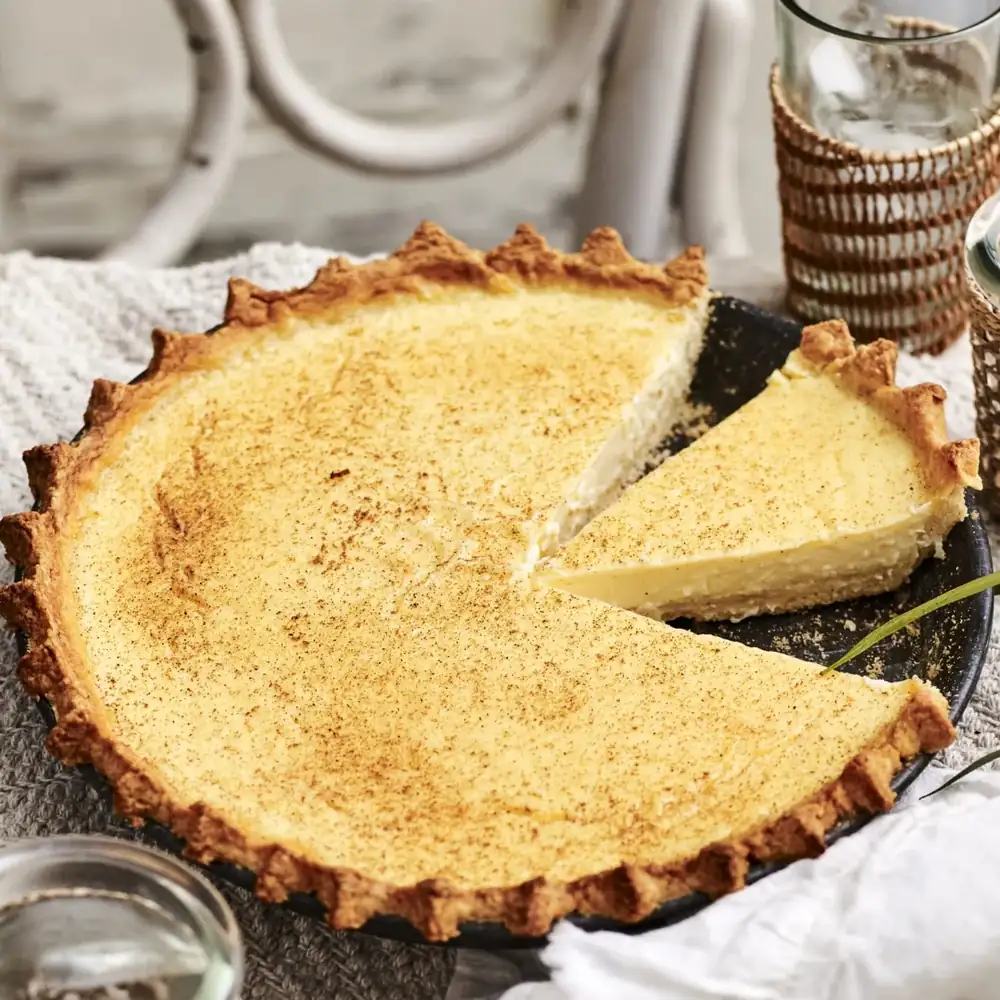
Custard tart
Combining buttery pastry and a sweet, creamy filling, it’s no wonder this dish is a firm favourite. Custard tarts are a classic sweet treat you’ll find in bakeries and cafes, as well as fine dining restaurants (where they may be called flan pâtissier).
- 1 1/4 cup plain flour
- 1/4 cup self-raising flour
- 1/4 cup caster sugar
- 90 gram cold butter, chopped coarsely
- 1 egg
- 2 teaspoon water, approximately
- ground nutmeg
- CUSTARD FILLING
- 3 eggs
- 1 teaspoon vanilla extract
- 2 tablespoon caster sugar
- 2 cup milk
- Sift flours and sugar into bowl, rub in butter. Add egg and enough water to make ingredients cling together. Press dough into a ball, knead on floured surface until smooth. Cover, refrigerate 30 minutes.
- Preheat oven to 200°C (180°C fan-forced).
- Roll dough on floured surface until large enough to line 23cm pie plate. Lift pastry into pie plate, gently ease into side of plate, trim edge.
- Place pie plate on oven tray, line pastry with baking paper, fill with dried beans or rice. Bake 10 minutes. Remove paper and beans, bake further 10 minutes or until pastry is browned lightly, cool.
- Meanwhile make custard filling: Whisk eggs, extract and sugar in bowl until combined. Heat milk until hot, quickly whisk into egg mixture.
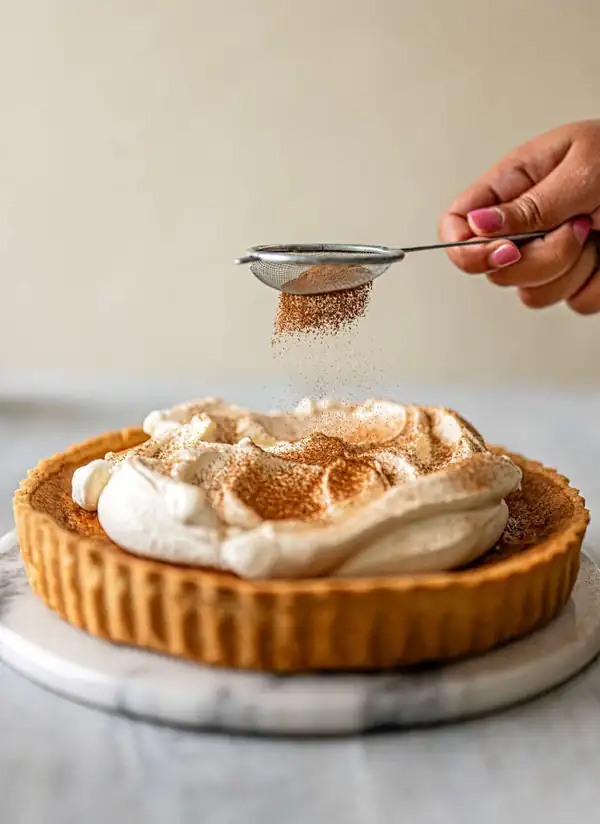
- Pour custard into pastry case, bake 15 minutes. Sprinkle custard evenly with nutmeg, bake further 15 minutes or until custard is just set, cool. Refrigerate custard tart until cold.
Are you looking for more custard dessert recipes?
Method
Sift flours and sugar into bowl, rub in butter. Add egg and enough water to make ingredients cling together. Press dough into a ball, knead on floured surface until smooth. Cover, refrigerate 30 minutes.
Preheat oven to 200°C (180°C fan-forced).
Roll dough on floured surface until large enough to line 23cm pie plate. Lift pastry into pie plate, gently ease into side of plate, trim edge.
Place pie plate on oven tray, line pastry with baking paper, fill with dried beans or rice. Bake 10 minutes. Remove paper and beans, bake further 10 minutes or until pastry is browned lightly, cool.
Meanwhile make custard filling: Whisk eggs, extract and sugar in bowl until combined. Heat milk until hot, quickly whisk into egg mixture.
Pour custard into pastry case, bake 15 minutes. Sprinkle custard evenly with nutmeg, bake further 15 minutes or until custard is just set, cool. Refrigerate custard tart until cold.
Custard tart recipe can be made a day ahead and stored, covered, in the refrigerator. Note.
Pastry tips
One of the most enjoyable parts of this custard tart recipe is the way the texture and flavour of the pastry contrasts with the sweet, creamy custard. There’s also nothing quite like homemade pastry. But if you’ve never made it before, here are some simple tips to help you create it for this recipe (and plenty of others):
- Remember to rest the dough, as this allows the gluten to relax and also helps firm the butter and other components (making it easier to handle).
- Roll the dough on a floured surface or between two sheets of baking paper to prevent it from sticking to your benchtop.
- You can use the rolling pin to help place the pastry in the tin. Once the pastry is the right size, just fold it over the rolling pin, lift it up and place it in the tin, then adjust as needed.
- Lightly dust your hands before touching the dough to help prevent it from sticking.
- Make sure there are no cracks or joins in the pastry.
- Always bake the pastry before adding the custard filling, as this makes it nice and crisp (rather than absorbing moisture from the custard (or other filling).
- Using a ceramic or glass pie dish? Line the base with baking paper.
You can also view part of the process in our video.
What’s the difference between a custard tart and a Portuguese custard tart?
The pastry is one of the most noticeable differences between custard tarts, with the Portuguese version, pasteis de nata, using a type of puff pastry. Traditional French or British custard tarts, on the other hand, typically use a shortcrust pastry (or similar).
You may also notice differences in the custard filling, which tends to be less sweet and scorched or caramelised on top of Portuguese custard tarts. But while there are differences in the custard based on the type of tart and recipe, most are typically based on a vanilla-flavoured custard made with eggs.
Is a custard tart the same as a custard pie?
Custard tarts and custard pies are usually the same or very similar, with the term “pie” commonly used in American recipes for tarts similar to this one. But “custard pie” is less likely to refer to smaller, individual custard tarts or region-specific ones like the Portuguese pasteis de nata.