Pastel de Nata Filled with Thai Tea Custard and Set in a Sesame Praline Shell
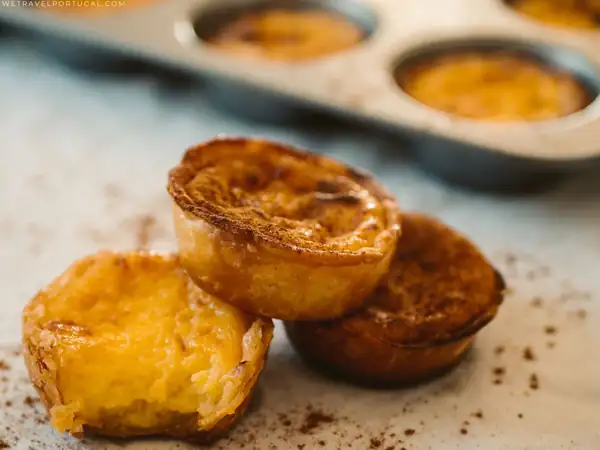
Lisbon's caramelised custard tart reimagined in Bangkok orange: a custard infused with Thai tea, baked in the traditional blistered pastry, then dipped rim-first into a black sesame praline. Our pastry desk's favourite thing of the year, and the reason its ovens are never cold.
- 1 sheet all-butter puff pastry (or homemade nata dough)
- For the custard: 300 ml whole milk, 2 tablespoons Thai tea leaves, 1 star anise, strip of orange peel
- 30 g plain flour
- 100 g sugar plus 60 ml water
- 100 ml condensed milk
- 4 egg yolks
- For the praline: 100 g sugar, 60 g black sesame seeds, toasted
- Warm the milk with the tea, star anise and orange peel for 15 minutes. Strain. Whisk the flour into 50 ml of the cold milk, then combine with the rest and bring to a boil, whisking, until thick.
- Boil the sugar and water to 105 C and pour into the milk mixture, whisking. Whisk in the condensed milk, then the yolks. Strain and cool.
- Roll the pastry into a tight log, cut into 12 slices, and press each into a muffin tin cup so the pastry is very thin and rises above the rim. Chill 30 minutes.
- Fill three-quarters full with custard. Bake at the hottest setting, 290 C if possible, for 12 to 15 minutes until the tops are blistered and dark. Use the grill for the last 2 minutes if needed.
- Melt the sugar to a dark caramel, stir in the sesame, pour onto a tray, cool and grind coarsely.
- Cool the tarts 10 minutes, then dip each rim into the praline. Eat warm.
The pastel de nata is Portugal's gift to the world: a cup of impossibly thin, flaky, shatter-crisp pastry holding a custard whose top has been scorched black in an oven hotter than most home ovens can reach. Thai iced tea, cha yen, is black tea infused with star anise, tamarind and food colouring, sweetened with condensed milk until it glows orange. Our pastry desk noticed that both are about custard and caramelisation, and set about making a nata that tasted of Bangkok.
The custard follows the Lisbon method, a flour-thickened milk base enriched with yolks and a hot sugar syrup, but the milk is first steeped with Thai tea leaves, star anise and a strip of orange peel, and the sugar is partly replaced with condensed milk. It bakes to the familiar blistered top with an orange-brown centre that tastes of tea, spice and caramel. The pastry is the traditional one, laminated with butter in a spiral so that the cup shatters in layers. The addition our desk is proudest of is the shell: a black sesame praline, cooked to hard caramel and ground, into which the rim of each warm tart is dipped so it sets into a thin, nutty, faintly bitter crown.
The one thing that matters
Heat. A pastel de nata needs 290 degrees or more so the pastry crisps before the custard overcooks, and the top blisters rather than sets flat. Most domestic ovens stop at 250; use the grill for the last two minutes, watching every second, or a pizza oven if you have one. Cool the tarts for exactly ten minutes before dipping the rims in the praline; too hot and the sugar slides off, too cold and it will not stick.
Eat warm, in two bites, with a strong coffee or a cold glass of Thai tea itself, which is what our desk does at four o'clock every afternoon now.