Dumpling Lasagna Recipe
Making dumplings at home is a therapeutic task until you reach number fifty and still have about 100 more to make.
- 500 g de carne de cerdo molida (con un 20% de grasa para mayor jugosidad)
- 1 paquete de láminas de masa para wonton o gyoza (unas 40 láminas)
- 2 tazas de col china (bok choy o repollo picada muy fina)
- 3 tallos de cebollino picados (parte blanca y verde)
- 2 cucharadas de jengibre fresco rallado
- 3 dientes de ajo picados finamente
- 2 cucharadas de salsa de soja
- 1 cucharada de aceite de sésamo tostado
- 1 cucharadita de azúcar blanca
- 1/2 cucharadita de pimienta blanca
- 150 ml de caldo de pollo o agua
- 2 cucharadas de aceite de chile (chili oil)
- 1 cucharada de semillas de sésamo
- Cebollino extra para decorar
- Mezcla en un bol grande la carne de cerdo molida con el jengibre, el ajo, la salsa de soja, el aceite de sésamo, el azúcar y la pimienta blanca. Remueve en una sola dirección hasta que la carne se vuelva pegajosa y los ingredientes estén integrados.
- Incorpora la col china picada y el cebollino a la mezcla de carne. Integra con movimientos suaves para no soltar demasiada agua de la verdura.
- Engrasa ligeramente una fuente para horno de unos 20x20 cm con aceite de sésamo o vegetal.
- Coloca una primera capa de láminas de wonton en el fondo, solapándolas ligeramente para que no queden huecos.
- Extiende una capa fina de la mezcla de carne sobre la masa (aproximadamente 1 cm de grosor). No presiones demasiado para evitar que la lasaña quede compacta.
- Repite el proceso alternando capas de masa y carne hasta terminar los ingredientes. Asegúrate de que la última capa sea de masa de wonton.
- Vierte el caldo de pollo por los bordes de la fuente y asegúrate de mojar ligeramente la capa superior de masa para que se hidrate.
- Cubre la fuente con papel de aluminio sellando bien los bordes para que el vapor no escape.
- Hornea a 180°C durante 25 minutos. Retira el papel de aluminio y hornea 5 minutos más si deseas que los bordes superiores se doren ligeramente.
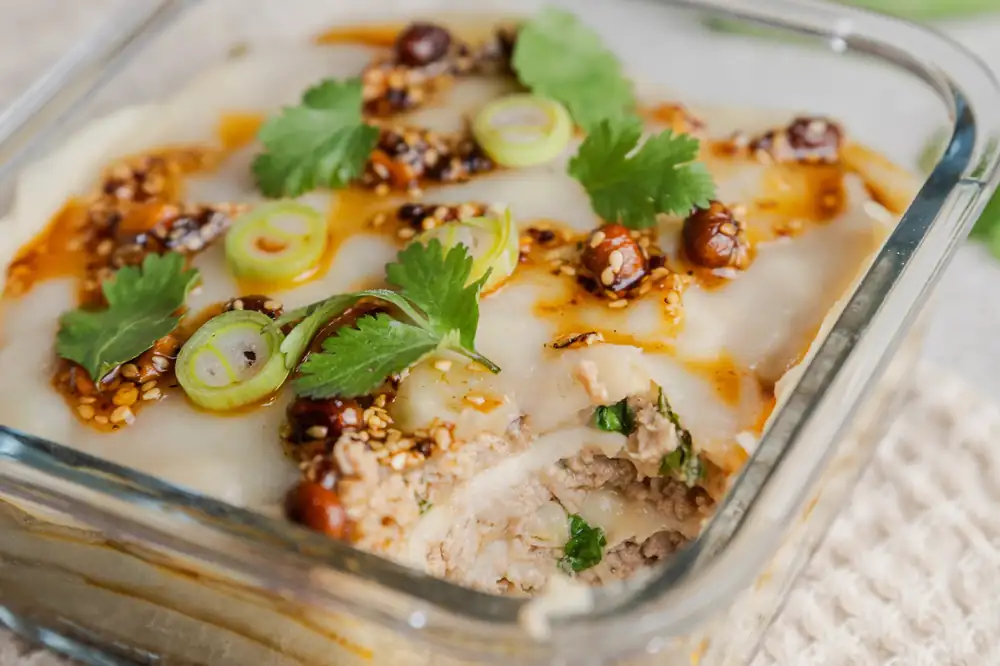
- Deja reposar la lasaña 5 minutos antes de cortar. Sirve con el aceite de chile y semillas de sésamo por encima.
If you're looking for the taste of a Gyoza but don't have the patience for hand-folding, this Asian lasagna format will become your favorite go-to for weeknight dinners or get-togethers with friends.
How to make easy homemade dumpling lasagna
- Easy
- 420 Kcal
For filling and layers
- 500g of ground pork with 20% fat for extra juiciness
- 1 package of wonton or gyoza wrappers (approximately 40 sheets)
- 2 cups of finely chopped bok choy or Chinese cabbage
- 3 chopped chive stalks (white and green parts)
- 2 tablespoons of grated fresh ginger
- 3 finely chopped garlic cloves
- 2 tablespoons of soy sauce
- 1 tablespoon of toasted sesame oil
- 1 teaspoon of white sugar
- 1/2 teaspoon of white pepper
- 150 ml of chicken broth or water
For the topping sauce
- 2 tablespoons of chili oil
- 1 tablespoon of sesame seeds
- Extra chives for garnish
- In a large bowl, combine the ground pork with the ginger, garlic, soy sauce, sesame oil, sugar, and white pepper. Stir in one direction until the meat becomes sticky and the ingredients are well combined.
- Add the chopped bok choy and scallions to the meat mixture. Gently combine to avoid releasing too much water from the vegetables.
- Lightly grease a 20x20 cm baking dish with sesame or vegetable oil.
- Place a first layer of wonton wrappers at the bottom, overlapping them slightly so that there are no gaps.
- Spread a thin layer of the meat mixture over the pasta (approximately 1 cm thick). Do not press down too hard to avoid making the lasagna too dense.
- Repeat the process, alternating layers of dough and meat, until all the ingredients are used. Make sure the last layer is wonton dough.
- Pour the chicken broth around the edges of the dish and make sure to lightly wet the top layer of dough so that it hydrates.
- Cover the dish with aluminum foil, sealing the edges well so that the steam does not escape.
- Bake at 180°C for 25 minutes. Remove the foil and bake for another 5 minutes if you want the top edges to brown slightly.
- Let the lasagna rest for 5 minutes before cutting. Serve with chili oil and sesame seeds sprinkled on top.
Practical tips and tricks for your Asian lasagna
- To prevent the dough layers from sticking together and forming a chewy block, spread the filling evenly but without pressing down; simply place each layer as if you were dropping it in. The air between the ingredients helps the steam circulate.
- If you notice that the top sheets harden too quickly in the oven, brush them with a little water or sesame oil before putting the dish in the heat.
- Use pork with some fat. If you use meat that's too lean, the inside of the lasagna will be dry and lose that characteristic dumpling texture.
- The way you cut the vegetables is key. Chop the Chinese cabbage as finely as possible (short julienne style) so that it cooks at the same time as the meat and doesn't add an unpleasant fibrous texture.
- This recipe keeps well in the refrigerator for up to 3 days if stored in an airtight container. It's normal for the dough to absorb some of the juice over time.
Depending on the utensils you have at home, you can adapt the cooking of your dumpling lasagna to obtain different textures:
Comparative table of cooking times
- Bamboo steamer: 15 to 20 minutes. This method is the most faithful to the original dumpling. Place the small dish inside the steamer over boiling water.
- Conventional oven: 25 to 30 minutes at 180 °C. It needs to be well covered so that the liquid hydrates the dough.
- Air Fryer: 12 to 15 minutes at 170 °C. It is essential to cover the dish with aluminum foil so that the circulating air does not dry the dough out instantly.
How to achieve the "Soup Dumpling" effect (Xiao Long Bao)
If you want a flavorful broth to ooze out when you cut into the lasagna, prepare a chicken broth jelly. Dissolve one packet of unflavored gelatin in 200 ml of hot chicken broth, let it set in the refrigerator, dice it into small cubes, and mix them with the cold meat before assembling the layers. As it heats up, the gelatin will melt and create the internal broth.
What to serve with this Chinese lasagna
- Smashed cucumber salad: It's a traditional salad that you can order in many Chinese restaurants, ideal in this case.
- Steamed broccoli with sesame: A simple side dish that adds fiber and a crunchy touch without overpowering the flavor of the lasagna.
- White rice: If you want a more substantial meal, rice helps absorb any excess sauce or juices released by the dish.
- Hot and sour soup: A classic that works very well as a starter before serving lasagna.
Frequently Asked Questions – FAQs
How to prevent the inner layers from fusing into a compact, chewy mass?
The key is hydration and the thickness of the filling. You should add enough stock (150 ml) and make sure the filling isn't too thick or too tightly packed, allowing the steam to gently separate the sheets.
What is the safe internal temperature for the meat in this lasagna?
The pork should reach an internal temperature of 74°C (165°F) in the center of the lasagna to be safe. You can check this with a kitchen thermometer by inserting it into the thickest part of the dish after 25 minutes of cooking.
Is it possible to make a vegan version of this dish?
Yes, substitute the pork with crumbled firm tofu or a mixture of chopped shiitake mushrooms. Be sure to use egg-free wonton wrappers and vegetable broth for hydration.
What do I do if I can't find wonton wrappers?
You can use fresh (not dried) Italian lasagna sheets, but the result will be heavier. If you use dried lasagna, you must soak it in hot water until it's pliable before assembling the layers.
How do I prevent the top layer from becoming rock hard?
Sealing with aluminum foil is essential for the first 20-25 minutes. If the steam escapes, the dough will dry out. Also, make sure the broth you pour in at the beginning thoroughly moistens the edges of the top layer.