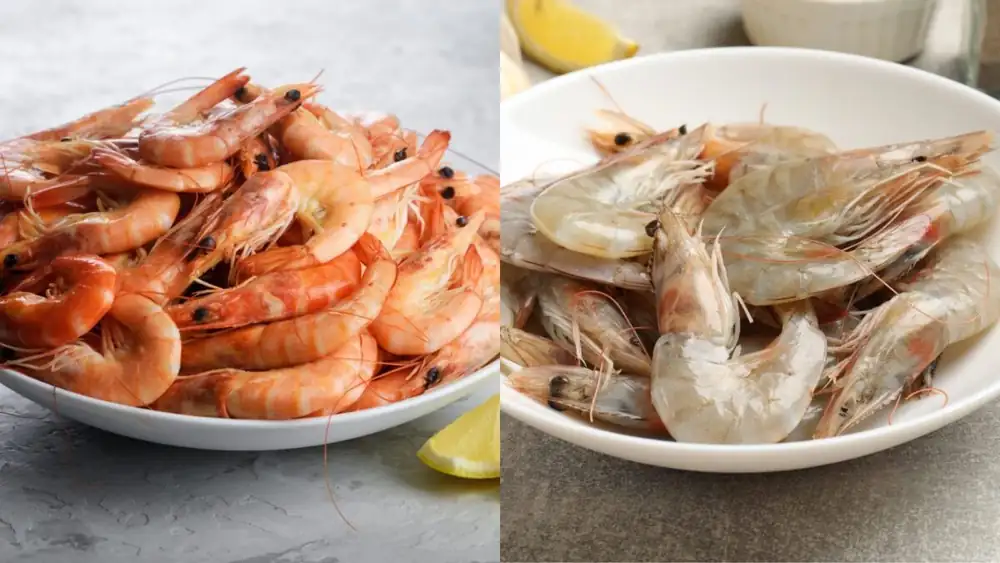
Why are some shrimp pink and others gray? The difference isn't related to freshness
We've all experienced it: browsing the fishmonger's shelves and noticing that shrimp come in different shades of color, particularly those with lovely pink hues and others dominated by gray, greenish, and sometimes almost transparent hues, and wondering why this difference exists.
Why are some shrimp pink and others gray?
The first thing to know is that shrimp coloration varies in nature and, very often, differentiates one species from another, so much so that the shade becomes their defining characteristic, hence popular names such as pink shrimp, grey shrimp, but also purple or red shrimp, based on the hue of their shell.
- When we talk about pink shrimp, we usually refer to Parapenaeus longirostris, also known as the "pink shrimp" or "white shrimp," one of the most common species in the Mediterranean Sea and the Atlantic Ocean, averaging 6 to 12 centimeters in length. It has an elongated body with a slightly curved back and hues ranging from pink-orange to purple. Among its distinguishing features is the presence of a distinctive tooth in the gastric region, a morphological trait that distinguishes it from other shrimp of the same family (Penaeidae). Its flesh is delicate and firm, and lends itself to countless recipes, from risotto to cocktails. It is fished year-round, and for the most sustainable consumption, the best time to avoid it is spring, during reproduction. The pink carapace, however, is among the most common of all, we see it in the small northern shrimp, typical of the cold waters of the Pacific and the North Atlantic, as well as in the XL Argentine shrimp, also known as Atlantic shrimp, with shades that tend towards bright red.
- The brown shrimp, as defined by this name, is Crangon crangon, also typical of the Mediterranean and Atlantic. It is the size of a shrimp, 6 to 9 centimeters long, and less elegant in appearance than the former, with a slightly stockier body. Its shell is grayish-beige, translucent, and dotted with small black dots. It lives on the seabed and in coastal areas, and its coloration similar to that of sand helps it camouflage itself, hiding from predators. Versatile in the kitchen, it's always available, but it's best to eat it between December and July.
A crustacean that isn't strictly speaking a shrimp, but is called the "imperial shrimp," is the Mediterranean or Asian prawn. Its sweet, highly prized flesh (especially that found in our seas) effectively resembles a shrimp in appearance, despite being typically larger, reaching around 20 cm in length. What makes it instantly recognizable (and unique) is its grayish-brown color, with pale pink highlights, and its dark, transverse bands resembling tiger and zebra stripes.
Does the color of shrimp change when cooked?
The answer is yes, and it's a characteristic common to most crustaceans, including shrimp and the aforementioned prawns. Even species that appear gray when raw turn pink and orange when cooked. The main reason is the presence of astaxanthin, a natural red-orange carotenoid pigment that binds to a protein in raw shrimp, altering their color to gray or greenish. The heat of cooking denatures the protein, releasing the pigment and revealing the typical orange-pink hue. Pay attention to timing: shrimp have very delicate flesh, and just a few minutes of cooking are enough to keep them soft, juicy, and firm; otherwise, they risk drying out and fraying. When they turn pink, they're considered ready.
Does the color indicate whether the shrimp are fresh?
At this point, it's clear that when it comes to shrimp, color can deceive the eye: gray, brown, or greenish hues, usually associated with food that's about to spoil (if not already spoiled), aren't indicators of optimal or poor condition at this point. Instead, you need to rely on your sense of smell, detecting a pleasant sea air odor, free of ammonia. The body should be firm, not soft and slimy, and the shell should be intact and shiny, free of black spots that appear due to the oxidation of enzymes activated upon contact with air a few hours after the crustacean's death. These don't affect food safety or flavor, but they do indicate a product that's no longer particularly fresh.
Pink or gray shrimp: which to choose?
As with the previous point, color doesn't make a difference in gastronomy. The choice of raw materials depends primarily on freshness (if in doubt, opt for frozen products), the size of the different types of shrimp (between prawns and king prawns), and their intended use. Properly defined pink and grey shrimp are mostly found at fishmongers and local markets, adapting to traditional dishes, while in large-scale retail outlets, it's more common to find species farmed or caught in countries like Argentina, Ecuador, Thailand, Vietnam, or the seas of Northern Europe. The label must always indicate the species, the origin, and whether the product has been previously thawed (which, remember, isn't synonymous with low value). From this perspective, Southeast Asian shrimp and king prawns are more likely to have been farmed intensively, so always check where they come from for a more responsible purchase. If you intend to serve them raw (the tender meat lends itself perfectly to this, as carpaccio or tartare), then make sure they have been previously frozen (or do it yourself) to avoid the risk of food poisoning.