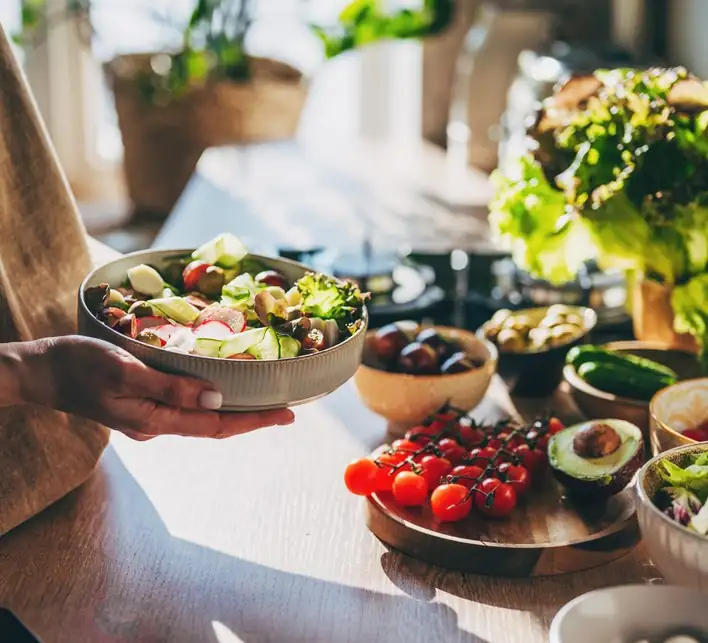
The 6 principles of no-nonsense nutrition
Nutrition can’t solve every issue, but food is so much more than just energy – it's nutrients and how it affects our mood, sleep, digestion, inflammation, stress levels, cardiovascular health and countless other functions in our body, which are all in turn important to having a healthier, happier life.
- 150g cooked beans or lentils, tofu, tempeh or seitan
- 110-150g oily fish, white fish, shellfish, poultry or meat
- 60-90g cheese, such as feta, halloumi, goat’s cheese or mozzarella
- 2-3 eggs
- 50-75g unsalted raw nuts or seed
- Step 2: add your vegetables
- Add half a plate of vegetables (about 200-250g). Choose at least three different types and mix up the colours. These can be cooked, chopped into a salad, grated, cut into crudités, stir-fried, roasted, in a soup or threaded on to kebabs – be creative!
- add a healthy carbohydrate
- These should be about a quarter of your plate, which is 1-3 tablespoons of pasta or grains (30-50g dry weight) or 50g-75g of heavier seeded breads. This may not work for every meal, so don’t worry if you miss this part out now and then. Remember that beans and lentils can also be used as a healthy carb – aim for 2-3 tablespoons, which is around 65-110g.
Principle 1: it’s all about proportion
A balanced plate means balanced nutrition. Aim for your main meals to be made up of a quarter protein, half vegetables and a quarter healthy carbs, and be sure to include some healthy fats. By maintaining the right proportions, you will feel fuller for longer and shut down the food noise.
Principle 2: prioritise protein
Build your plate around protein, and aim for 30g with every meal. Proteins are essential for almost every function in the body, and eating adequate protein triggers hormones that increase satiety and keep us from snacking. Also include plenty of plant-based proteins to enjoy their added health benefits.
Principle 3: focus on fibre
A fibre-rich diet is linked to improved health markers in almost every area, and our microbiome thrives on the prebiotics in fibre. Aim for 10g fibre with every meal from a combination of vegetables, fruits, pulses, nuts and seeds, and wholefood carbohydrates.
Principle 4: eat fats – but the right fats!
Fats often get a bad rap, but we need them in our diet to support brain health, heart health, hormones and so much more. They need to be mostly healthy fats though, so aim to include extra virgin olive oil, nuts and seeds, avocados and oily fish in your meals.
Principle 5: plant points – 30 is the magic number
Plants provide fibre, vitamins, minerals, trace elements and phytonutrients essential to our overall health – and our gut bacteria love diversity. Aim for 30+ different plants each week. Vegetables, fruit, nuts and seeds, pulses, wholegrains, herbs and spices, and even coffee and chocolate all count.
Principle 6: Mind the gaps – why the timing of your meals matters
Aim for three meals a day, spaced 4-5 hours apart without snacking, and 12-14 hours fasting overnight. Having proper gaps between meals is linked to numerous health benefits, including less bloating, improved blood sugar regulation, better metabolic health, better weight maintenance, improved sleep quality and a healthier gut microbiome.
Start by building your plate around your protein. Proteins should take up around a quarter of your plate. Below are approximate serving sizes, but these would depend on your personal requirements and whether you're combining your proteins – also remember that protein is found in other foods on your plate, like healthy carbohydrates. I like to mix-and-match a variety of proteins to make up my quarter plate, such as lentils and tofu, halloumi and chickpeas or chicken and beans – these can optimise protein and also top up the fibre.
Have you used healthy fats to cook with, or as a dressing? Around 1 tablespoon per meal is about right. Or, are there healthy fats as part of your food, such as in fatty fish or avocado? If not, think about how you can add some. Maybe make a quick French or tahini dressing in a jam jar, or add some olives, nuts or seeds to your plate.
Up the nutrients and diversity by adding three ingredients, like walnuts, olives, fermented veg (sauerkraut or kimchi), fresh herbs, shards of parmesan, pumpkin seeds, microgreens, sesame seeds, a spoonful of hummus or even a bowl of miso soup.
Bonus: add a fruit
Enjoy a piece of fruit with your meals, if you like. It could be part of your meal, such as apple in your salad or fruity salsa. Preferably, opt for lower glycaemic fruits, such as berries, apples, pears or kiwis.
Extracted from No-Nonsense Nutrition by Dominique Ludwig (£26, Bluebird)