Magic Lemon Cake: one batter, three incredible textures!
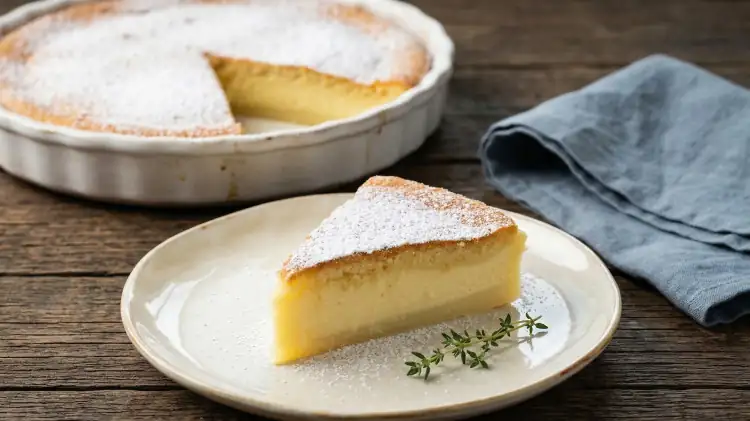
Lemon Magic Cake is one of those desserts that seems to defy the laws of pastry making: with a single, light and fluid dough, you'll almost magically obtain three different consistencies after baking.
- Medium eggs carefully separated into yolks and whites. 4
- Granulated sugar 150 g
- Butter 125 g
- Flour 00 115 gr
- Whole milk 500 ml
- Water 10 g
- Organic lemon, grated zest only (avoid the bitter white part) 1
- Salt 1 pinch
- Icing sugar for final decoration
- Begin by carefully separating the egg yolks from the egg whites. Make sure there are no traces of yolk in the egg whites, otherwise you'll have difficulty whipping them into stiff peaks later. In a large bowl, beat the egg yolks and sugar together using an electric whisk. You need to beat the mixture patiently for about 10 minutes, until it becomes light, fluffy, and frothy: this is the essential base for the future layers of the dessert.
- Now add the room-temperature water to the egg yolk mixture. Immediately afterward, pour in the melted butter, making sure it's now cold or barely warm: this step is essential to avoid compromising the consistency of the eggs. Continue mixing everything with an electric mixer at medium speed. Your goal is to obtain a smooth, homogeneous emulsion without any separation before proceeding with the dry ingredients.
- Now carefully sift the flour directly over the bowl: this step is essential to avoid annoying lumps. Gradually add it to the rest of the mixture. At this stage, set aside the electric mixer and use a silicone spatula (or a spatula). Mix the flour with gentle, steady movements until it's completely absorbed and the mixture is perfectly smooth. Now it's time to give the cake character: add the grated lemon zest (remember, use an organic lemon and only remove the yellow part, which is the most aromatic). Now, slowly pour in the warm milk and continue mixing with the spatula, using steady movements. Don't be alarmed if the mixture seems almost runny: this is precisely the consistency needed for the magical layering to occur properly during baking!
- In a separate, clean, and dry bowl, beat the egg whites with an electric mixer until stiff peaks form. Now gradually fold them into the remaining batter using a spatula. Use gentle, bottom-up movements, trying not to deflate the mixture too much: it's the air trapped in the egg whites that will allow the soft, sponge-like top layer to form!
- Take a 24-centimeter cake pan and carefully line it with parchment paper. I recommend pressing the paper tightly to the edges to ensure the cake holds its shape perfectly and is easy to unmold. Gently pour the batter into the pan. Don't worry if the consistency seems very runny, almost like batter: this is the correct consistency, allowing the three layers to form during baking!
- Bake your cake in a preheated oven, set to 150°C (300°F). Remember that the low, constant temperature is the real secret: it allows the ingredients to slowly separate and form the three magical layers without burning the surface. Bake for about 50 minutes. When cooked, the top should be lightly golden, while the center of the cake will remain soft and firm. After removing it from the oven, take your time: let the cake cool to room temperature directly in the pan. This waiting time is precious because it allows the inner layers to stabilize and reach the right consistency. Once the cake has cooled, transfer it to the refrigerator for at least 2 hours. This chilling is the final touch of the "magic": it makes the creamy, velvety center and the base layer perfectly firm, like a pudding.
But what's the real secret to achieving the perfect three layers? It's all in the chemistry between the ingredients and the slow, low-temperature cooking. The end result is a sensory journey: a firm, pudding-like base, a velvety, creamy center, and a soft, sponge-like surface. It's a refined dessert, ideal for those seeking an original alternative to the classic Lemon Caprese Cake or the melt-in-your-mouth texture of Lemon Tenerina Cake.
Its unique texture, partially reminiscent of a clafoutis but with more distinct layers, makes it the perfect way to end a summer dinner. If you're a true lemon lover and looking for more inspiration, you could alternate it with a spectacular simple Lemon Delicacy Cake, a refreshing Lemon Tiramisu, or the creaminess of a Lemon Cheesecake.
Let's get to work: let's discover together how to perfectly balance the ingredients so as not to fail at the magical layering!