It's okay to overindulge in eggplant
It had a reputation for being toxic - it is true that if it is not cooked, it has a large amount of solanine, an alkaloid that causes indigestion - but eggplant is a hydrating and filling summer complement that offers multiple possibilities for cooking.
It belongs to the nightshade family (like the tomato, potato or pepper) and its low calorie content includes it among the ideal vegetables for weight control diets, although the way it is cooked must also be taken into account, since breaded it will provide more calories than roasted with a little extra virgin olive oil.
It provides fiber, mainly in its skin and seeds, and is notable for its carbohydrate content (a common property in most plant-based foods), in addition to certain nutrients such as folic acid or potassium.
Its characteristic purple color is due to anthocyanins, which are pigments with anti-cancer, anti-inflammatory and antioxidant properties.
Many virtues
Among the beneficial properties of eggplant we can find its digestibility, since if cooked properly, it is light and easy to digest; it helps to keep cholesterol levels low, promotes blood sugar control, is diuretic, improves hypertension (due to its potassium content), can help the functioning of the nervous system (due to its contribution of B vitamins) and has a high antioxidant power.
Despite its many benefits, it can also be harmful in some cases, such as in people prone to kidney stones, especially if consumed in large quantities, due to its oxalate content, which easily forms crystals.
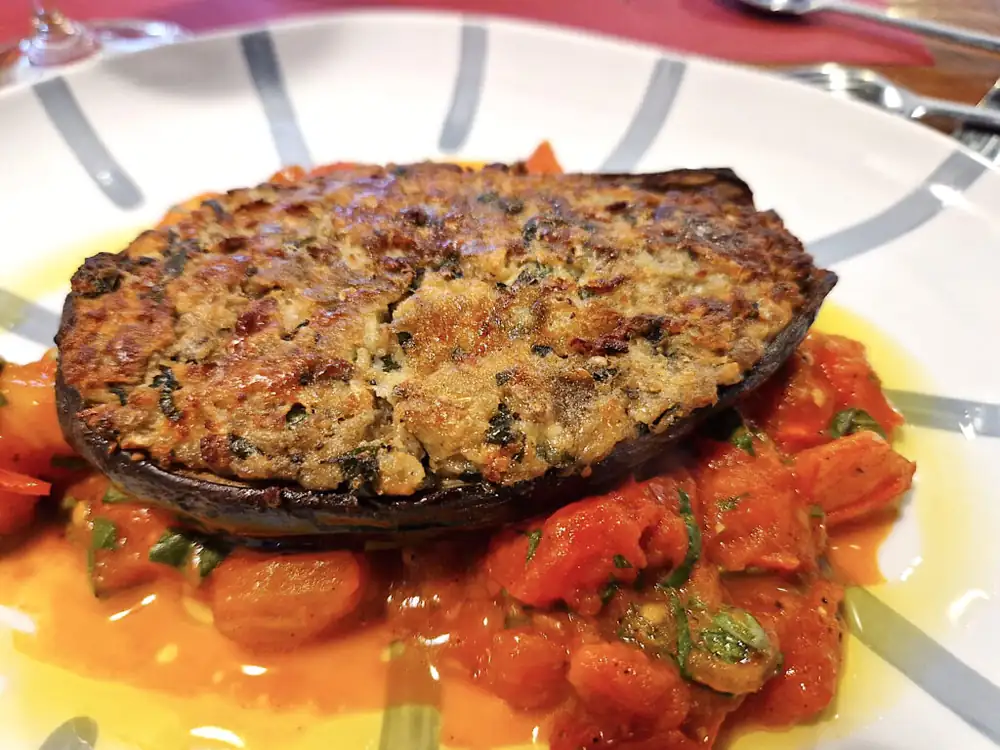
Eggplants can be enjoyed as an appetizer, grilled or used as a dip, roasted on toast, baked stuffed, fried and drizzled with molasses or the ever-popular summer chilli, or as part of fillings for dishes like croquettes or empanadas. There are as many eggplant recipes as there are days in the year. But they're best enjoyed in summer.