Cold lentil soup with vegetables, easy and tasty
Para 4 1 €/pers. 60 kcal/100g.
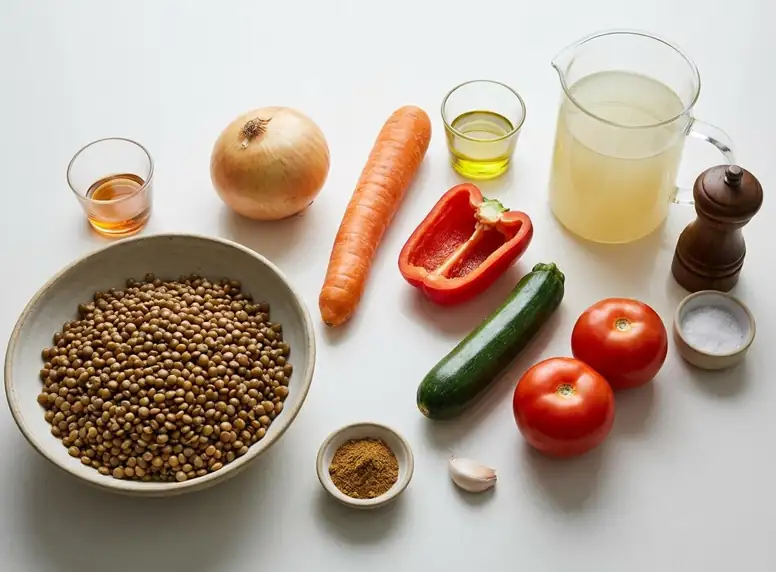
- 400g of cooked and well-drained brown lentils
- 150g of onion
- 100g of carrot
- 90g of red pepper
- 160g of zucchini
- 250g of ripe tomato
- 1 clove of garlic
- 500 ml of mild vegetable stock
- 35 ml of extra virgin olive oil
- 15 ml of sherry vinegar
- 1/2 teaspoon ground cumin
- Shall
- Freshly ground black pepper
- Peel the onion and carrot. Wash the bell pepper, zucchini, and tomatoes. Dice the onion, carrot, bell pepper, and zucchini into medium-sized pieces; mince the garlic and chop the tomato. The pieces don't need to be perfectly cut since we'll be blending everything later, but it's best to keep them roughly the same size so the vegetables cook evenly.
- Place a large saucepan over medium heat with 30 ml of extra virgin olive oil. Add the onion, carrot, and bell pepper with a pinch of salt. Cook for 8 minutes, stirring occasionally, until the onion is soft and the carrot begins to soften.
- Add the zucchini and garlic and continue cooking for another 4 minutes. Then add the tomato and let it cook for another 5 or 6 minutes, until it has lost most of its water and you have a base of tender and juicy, but not watery, vegetables.
- Add the cooked lentils, ground cumin, and 400 ml of vegetable stock. Reserve the remaining 100 ml in the refrigerator for final adjustment. Stir and bring to a gentle boil.
- We cook everything together for 10 minutes over medium-low heat. We don't need any more time because the lentils are already cooked; this short boil allows them to absorb the flavor of the vegetables and makes the mixture soft enough before blending. We taste and adjust the salt slightly, being careful not to overdo it, as the flavor is quite different when cold.
- Remove the saucepan from the heat and let it rest for about 10 minutes. Transfer the contents to a blender or purée until you obtain a very smooth and homogeneous cream. Add the sherry vinegar and blend again for a few seconds. If the blender needs it, add a small amount of the reserved stock, but don't aim for the final consistency yet.
- We transfer the cream to a wide container so it cools down more quickly. As soon as it stops steaming, we cover it and refrigerate it for at least 2 hours. There's no need to leave it on the counter for hours to cool: the sooner it chills, the better it will keep.
- We take the cream out of the refrigerator and stir it well. Now we'll see its true consistency. If it's too thick, we add the reserved cold stock little by little, 15 to 30 ml at a time, and blend or stir until it drips from the spoon with good body but without forming lumps.
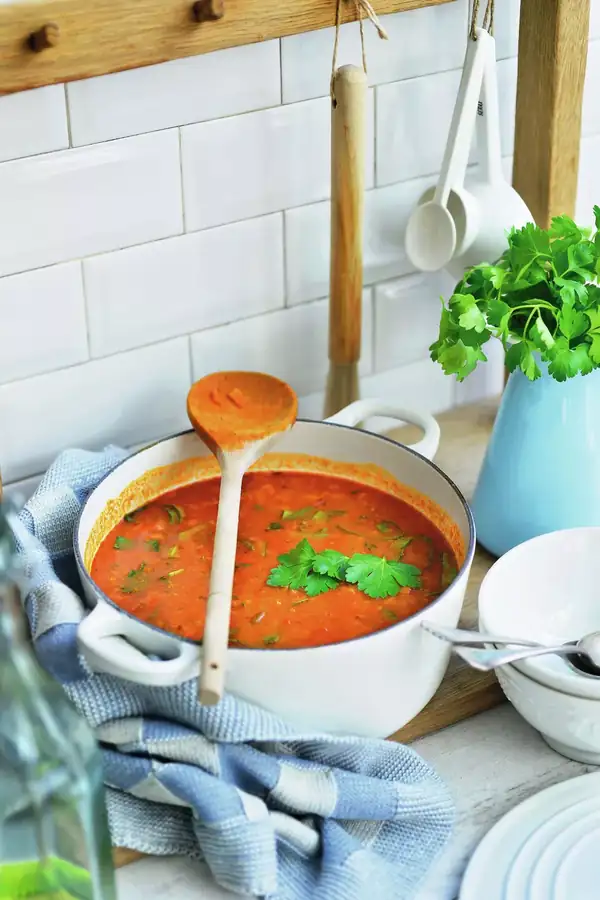
- We tasted it again and adjusted the salt, pepper, or a few more drops of vinegar if needed. We divided the cream among bowls and finished with the 5 ml of extra virgin olive oil we had reserved. We served it chilled, but not ice-cold, so the lentils, vegetables, and a touch of cumin could be appreciated.
Cooked lentils have a good consistency on their own. As soon as you blend them, the mixture thickens quickly, and after a few hours in the refrigerator, it thickens even more. That's why this cold lentil and vegetable soup doesn't quite reach the right consistency after you turn off the heat: the final consistency is determined once it's cold, just before serving. This way, you get a smooth and silky soup, not a thick purée that you practically have to eat standing up by the spoonful.
It's a different way to enjoy legumes during the warmer months. While there are many soups and stews made with lentils, not so many are designed from the outset to be served cold. If we want to keep the lentils whole, lentil salad offers a different texture; if we prefer cold soups, chilled zucchini soup is a much lighter option. Here, we're looking for something in between: a clear lentil flavor, well-cooked vegetables, and a texture that still feels refreshing.
The tomato adds moisture and a touch of acidity, the carrot and onion provide sweetness, and the bell pepper and zucchini complete the base without overpowering the lentils. Cumin is used sparingly, and the vinegar is added at the end, after cooking. If we prefer a hot, more classic version, homemade lentil purée follows a different approach: here, we don't want a thick winter cream, but rather a texture that works well cold.
We sauté the vegetables until they lose their rawness.
We add flavor to the lentils without lengthening the cooking time.
We blend the cream before it cools.
We adjust the texture once it's cold and take it to the table
For this recipe, you can use canned cooked lentils without any problem. We'll be working with 400g of drained lentils. Rinsing them isn't strictly necessary, but it can be helpful if you want to remove some of the liquid and better control the salt level; this is explained in detail in the blog's guide on canned legumes. If you're using lentils you've cooked at home, simply drain them before weighing them.
It's also normal for the soup to be quite a bit thicker the next day. The lentils continue to absorb liquid while resting, and a blended soup will settle. We don't try to fix this by adding a lot of stock all at once: we add a little water or cold stock, stir, and check again. This final adjustment is precisely what allows us to maintain a light, cold soup without making it watery from the start.
And yes, this cream can be frozen. Since it doesn't contain cream, yogurt, or potato, it recovers its texture quite well after thawing. We store it in portions, thaw it in the refrigerator, and then blend or stir it again before serving, adding a little liquid if necessary. Stored in the refrigerator, well covered, it's best consumed within about 3 days.
The vinegar isn't there to make the cream taste like vinegar. It's a small amount that cuts through the sweetness of the vegetables and prevents the lentils from being bland when served cold. The same goes for the cumin: half a teaspoon is enough to complement it; if you use too much, it ends up overpowering everything else.
If you fancy a return to the warm register, lentils with vegetables and lentil soup use the same family of flavors with a different texture and temperature.