Record-breaking revolution at Madrid Fusion
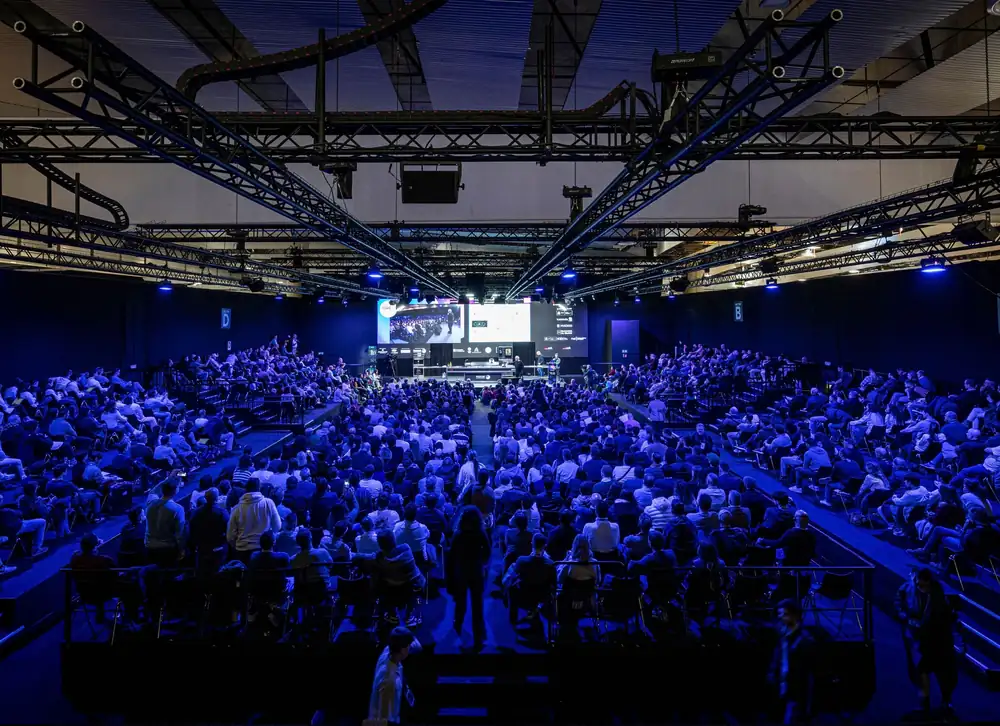
The final figures confirm the success of the 23rd edition of Madrid Fusión Alimentos de España, which closed with the largest turnout in its history: 1,874 delegates, 26,104 visitors, and 232 exhibiting companies.
This edition of Madrid Fusión, themed 'Revolutionaries,' not only recognized a generation that revolutionized and continues to revolutionize cuisine, but also served as a showcase for the new revolutions underway. On the one hand, artificial intelligence as a tool for designing food, menus, optimizing production systems, and managing restaurants, among other things; and on the other, the great zero-waste revolution, which was the focus of many of the conference's keynote speakers. If gastronomy is to contribute in some way to the improvement of society and the health of the planet, it is clear that its leaders are committed to this, whether through innovation in the production and use of new ingredients, or by looking to tradition and the knowledge contained in the flavors of the past.
Main Auditorium: Less waste, more harmony with nature.
In the main auditorium, Katsuhito Inoue, the driving force behind Chef's Table (Kyoto, Japan), explained the gastronomic experience offered at his restaurant, drawing inspiration from the subtle and ever-changing nature of Kyoto's landscape. The brilliant chef Dylan Watson-Brown, of Ernst* (Berlin), spoke about his dashi dishes, created using regional ingredients in a cuisine that blends locally sourced produce with Japanese cooking techniques. Albert Franch, Luka Balac, and Carlos Henriques, from the Green Star Nolla (Helsinki, Finland), demonstrated how they achieve one of the few zero-waste restaurant kitchens in the world. Aware of the challenges of this decision, they explained, "We didn't want to expand further because of all the invisible waste generated during transportation and, above all, because we want to support the local economy."
From Galicia, and also related to environmental impact, came Javier Olleros (Culler de Pau**, O Grove, Pontevedra), who highlighted the value of the cereals and seeds of his region. More specifically, in a talk where he made a direct appeal for hospitals to promote health and nutrition more through their kitchens, he emphasized the value of black oats, an endemic Galician cereal that “has significant value not only in agriculture, but cereals like oats are also very resistant to abrupt climate changes.”
Also speaking in the main auditorium were Javi Estévez (La Tasquería*, Madrid), who has made an art of transforming offal; Miguel Ángel de la Cruz (La Botica*, Matapozuelos, Valladolid, Spain), who spoke about terroir as inspiration and a source of ingredients; and Jordi Vilà (Alkimia*, Barcelona), who explained his work delving into the foundations and history of Catalan cuisine. “We must value the culture of each place,” asserted this chef, who champions the unique DNA of each restaurant, since “it’s wonderful to be able to identify a restaurant by its flavors.” Senén Barral, from Inditex Catering Services, explained the Spanish multinational’s 360º collective catering project, committed to ethics and low environmental impact.
Nacho Manzano, chef of the Casa Marcial restaurant, was awarded the Madrid Fusion Food of Spain Award for Product Defense, after 30 years of work transforming rural Asturias by elevating its products to the highest levels of cuisine. "All we do is celebrate the products," said the chef, who accepted the award from the Minister of Agriculture, Fisheries and Food, Luis Planas.