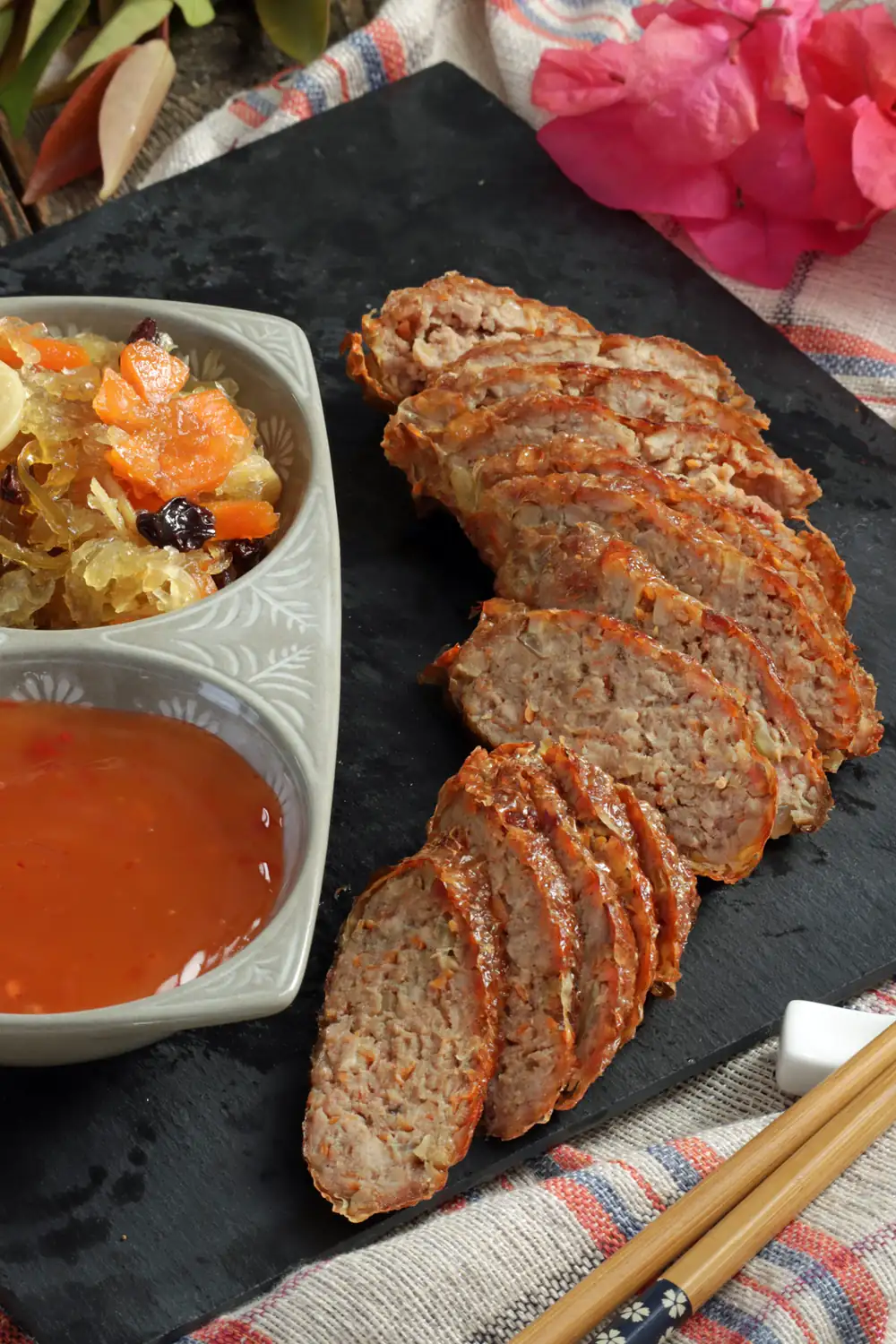
Kikiam Recipe (Ngoh Hiang)
Kikiam or Quekiam is the Filipino variation of the Ngoh Hiang, a Chinese dish of minced pork and prawn seasoned with five-spice powder, rolled in a beancurd skin wrapper, steamed and fried until crisp and golden. Enjoy as is or use as toppings for various Asian-themed noodles and rice dishes.
- 500 grams ground pork (80% lean)
- 1 tablespoon sugar
- 2 tablespoons soy sauce
- 2 tablespoons oyster sauce
- 1 teaspoon five-spice powder
- ½ teaspoon ground white pepper
- ½ cup singkamas or radish (grated and liquids slightly squeezed)
- ½ cup carrots (grated)
- 2-3 pieces dried shiitake (rehydrated in water, finely chopped (optional))
- 1 medium white onion (finely chopped)
- 4 tablespoons cornstarch
- 1 pack Dry bean curd sheets
- 1 tbsp cornstarch (dissolved in 2 tbsp water)
- Oil (for frying)
- Mix together all ingredients for the filling. Mix well using hand squeezing from time to time to fully combine. Divide meat mixture into 5 portions.
- Place a beancurd sheet on a board or plate. Scoop a portion of the mixture and place it on top of the sheet along one of the long ends. Roll the sheet enclosing the filling then fold both the side corners over the center to close the sides. Roll it over until the other end of the wrapper. Brush the edge with cornstarch slurry to close and seal completely. Make sure to wrap it tightly pushing out any trapped air inside before closing.
- Steam kikiam for 15 minutes. Remove from the steamer and let it cool down completely. You can also freeze them if not to be consumed immediately.
- To serve, heat an inch-deep of oil in a pan. Deep fry kikiam in medium heat for 2-3 minutes on each side or until golden brown. Drain on paper towels. Slice before serving.
What might come to mind to many when they hear the word 'kikiam' are those small, brown, almost the size and shape of your pinky finger ones that are sold by street vendors. Those are actually composed of processed fish meat and are just a highly commercialized adaptation of the original dish. Some might know it as Orlian.
Don't get me wrong, I also enjoy those every now and then together with some fishballs, squid balls, and Kwek-kwek. Paired with a cool and refreshing glass of Sago't Gulaman drink to wash it down. However, this Kikiam recipe that I am sharing today is still my favorite version, especially paired with my special sauce!
What is Kikiam and where did it come from?
Ngó͘-hiang is the Chinese term for this dish that originated from Fujian, China. It is traditionally made of minced pork, prawn, and veggies mixed together and seasoned with Chinese five-spice powder. The mixture is rolled in a beancurd skin, steamed then deep-fried before serving. It was introduced to the Philippines by Hokkien immigrants and has been made to adapt to local ingredients since then.
Foxy Tips when making Kikiam at home
Steaming the Kikiam rolls before frying them ensures that the inside gets cooked properly first. Frying them right away can result in the outside being burnt as the beancurd skin cooks quickly while the inside remains raw. Steaming also makes the skin cling to the meat which makes it easier to fry later on.
However, if you need to fry them right away without steaming, just make them smaller and thinner when wrapping. Use damp beancurd skin too.
If you are having trouble rolling the mixture in the beancurd skin, dampen it. Especially those parts that have turned crisp and dry.
Let the steamed rolls cool completely before frying them. Those that you do not plan to cook yet can be stored in the freezer for a month.
Fry using medium-low heat only to ensure that the beancurd skin does not get overcooked.
For the filling