The renowned ramen shop “Ryukishin” has reopened in Namba, Osaka, under a new name! You'll be amazed by the perfection of their meticulously crafted rice flour noodles and soy sauce-based soup
A ramen shop where rice flour noodles are the main ingredient.
Matsubara-ya opened in August 2026 in Namba Komejirushi, Osaka. It is a restaurant opened by Ryuji Matsubara, who changed the name of his famous salt ramen shop, Ryukishin. "Actually, 'Matsubara-ya' was the name of the first shop I opened 34 years ago. Back then, it was soy sauce-based, and I wanted to try soy sauce again," says Matsubara. Paired with the soy sauce ramen, which is a return to his roots, are gluten-free rice flour noodles that he has been researching for a long time.
The star of "Matsubara-ya" is its homemade fresh rice flour noodles. They use "Kyushu Mizuho Chikara Rice Flour" from Kumamoto Flour Milling and make the noodles without lye water. They have customized a roller-type noodle-making machine at their own noodle factory in Sakai, and they work on the dough, which is difficult to control the moisture content of, every day to finish it. The noodles tend to lose moisture easily, so the cooking time varies from day to day.
Here are the dishes you can enjoy!
I'll be introducing some recommended dishes using rice noodles.
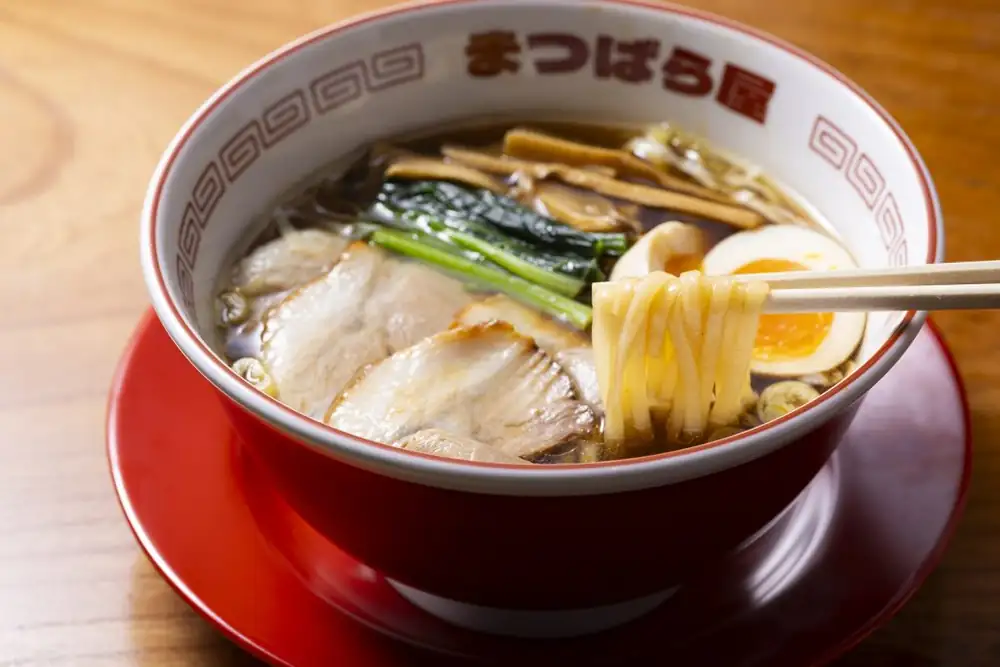
The soup for the soy sauce ramen is based on chicken bones and duck bones from Tsumura Honten, with onions, garlic, and ginger added. The soy sauce base is made using a traditional pickling method, where soy sauce is combined with kelp, dried shiitake mushrooms, dried squid, mackerel flakes, and bonito flakes to slowly extract the umami. The toppings include pork chashu, seared bamboo shoots, organic komatsuna (Japanese mustard spinach) from Sakai's Nakamura Farm, and white onions. The special version includes extra chashu and a seasoned egg. The flat, medium-thick straight noodles are smooth and easy to swallow, and the soup has a natural acidity from the fermentation of dried ingredients that adds depth to the umami of the chicken and duck. It's a simple yet highly accomplished bowl of ramen.
Next up is the new tsukemen (dipping noodles). The noodles are served soaked in kelp water, which has been steeped in water using true kelp the day before. The dipping sauce is a combination of the same kelp water and Ryukishin's salt-based sauce, topped with plenty of pork shoulder chashu. The chashu is cooked at 58°C for 10 hours and then simmered in the sauce for another 2 hours, resulting in a moist and flavorful texture. The kelp water creates a sense of unity between the noodles and the dipping sauce, allowing you to fully enjoy the smoothness of the rice flour noodles.
Abura soba (oil noodles) is also on the menu. This dish combines anchovies made primarily from sardines from Senshu with whitebait from Awaji Island (limited quantities available). The aromatic oil made with olive oil brings everything together, and although it's a generous portion of 260g (2 servings), it's surprisingly light and easy to eat. The aroma of plenty of seaweed is also very appetizing. It's an abura soba that feels both Japanese and Western, and the owner says, "A French acquaintance of mine is a big fan of these noodles."
As a noodle manufacturer, we deliver rice flour noodles nationwide.
The restaurant limits its operating hours to 11 am to 3 pm, and Mr. Matsubara himself is always in the kitchen. "Many people have allergies, so I cook everything myself so that they can eat with peace of mind," he says. Families with children who have allergies have been delighted, saying, "This is the first time our whole family has been able to eat ramen together!" He also says, "I would be happy if people who eat ramen every day would eat our ramen once a week and take care of their health." In the future, he plans to sell his rice flour noodles nationwide, and he is enthusiastic, saying, "As a noodle manufacturer, I would like to collaborate with various chefs!" Mr. Matsubara's challenge continues.