Focacceria Genovese Sant'Agostino Gran Torino, review: quality pop in the city center
Focacceria Genovese Sant'Agostino Gran Torino is a historic Turin spot for Genoese focaccia, farinata, Recco-style focaccia, and pan pizza.
(Can a place opened in '97 be called historic? My mind still resists accepting this. For me, but perhaps for each of us, "historic" means at least prior to one's birth, if not dating back to the last century – but oops, that's exactly the case, and anyway, twenty-five years have passed, stop it.)
It's a multitasking, multi-target place: catering to both passing tourists and avid locals; open from 9:00 a.m. to midnight, for dinner, lunch, and a savory breakfast; it offers multiple dining options, with an evenly distributed clientele. Some take-home items, others buy a "take-away" item, as they say here, and finally, others sit at the few tables inside, which in the summer extend as far as they can into the alley outside—one of those narrow streets reminiscent of Naples, or Genoa, for that matter.
Organic flours, naturally fermented wines, a wood-fired oven specifically for farinata: Focacceria Sant'Agostino aspires to be a quality pop spot. Urban/internet legend has it that it's never closed, not even for a day off—I don't know if that's true, but I know it's not something I'd brag about, mind you.
The place calls itself a focacceria and a pizzeria. Now, we won't get into the details of what distinguishes pizza from focaccia: some say it's a question of thickness, others say it's a question of baking in a pan or on the stove, others (us) say it's technically a question of when the final leavening takes place, but ultimately it's simply a matter of traditional names that should be accepted without splitting hairs. Let's go in and see how it's eaten.
Gran Torino's focaccias and pizzas
Gran Torino's focaccias and pizzas are sold by the piece, not by weight, as is now the custom with the new wave of Roman-style pizza al taglio. This is an advantage because the prices are clear, but a disadvantage because you can't decide how much to order; that's the portion size.
A classic Genoese focaccia, baked in rectangular pans: it should be the flagship product, and it's not bad; but there's something off about the balance between crispiness and softness (the former a bit too crispy, the latter a bit lacking), and overall the flavor isn't as greasy/salty as the Genoese. The one with onion, given the filling, has no crust or flavor issues: very good.
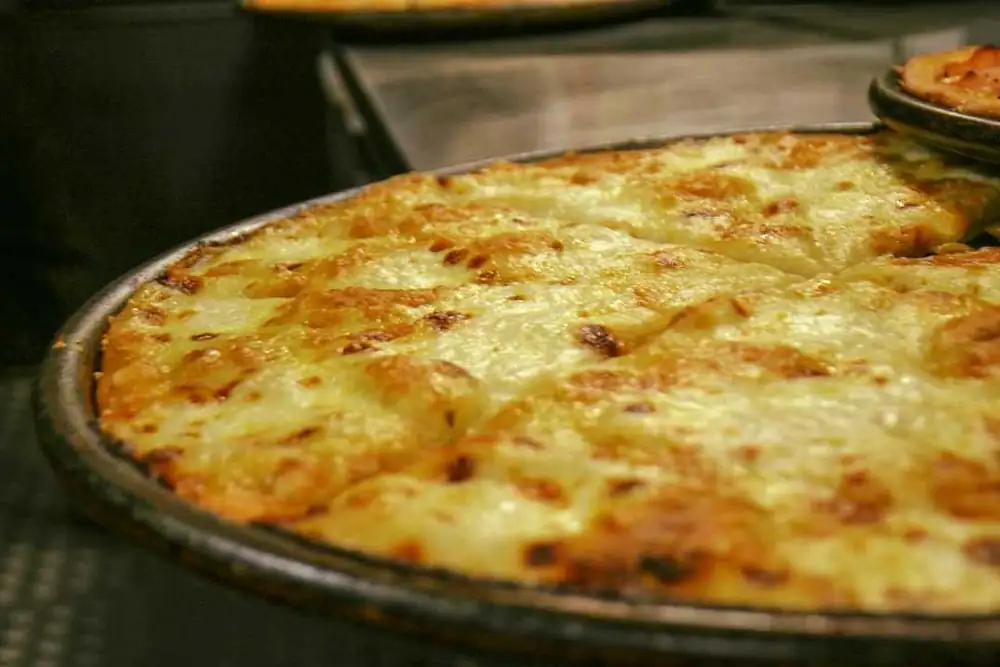
The pizzas are baked in large, round pans—a sort of pan-fried pizza rather than a small one—and sold by the slice. The bottom is browned and crispy, as expected, and not even particularly oily. The pepperoni and anchovy combination is incredibly typical (in these parts) and incredibly umami-inducing; well-risen, it seems thick, but that's just the abundance of mozzarella. In fact, the gorgonzola and coppa are incredibly light and thin; and equally delicious, even though the blue cheeses suffer a bit in the oven.
Various other types are baked continuously (and possibly reheated if time has passed). There's also a sourdough Margherita, elongated like a pizza in pala: the color is pale, as is often the case with naturally leavened pizzas, but the crust is there, and so is the flavor, only tinged with a hint of acidity/dryness in the dough.
The cheese focaccia, the very thin Recco-style one that can't be called "from Recco," is tasty but not as enveloping as one might expect.
Wines by the bottle and by the glass, few but well-chosen, and, as mentioned, naturally fermented. Beers hastily described as "Italian in the bottle, foreign lagers and reds on tap"; in our case, two Belgian beers, a Legere from Bertinchamps and an amber ale from Viven, probably the Special Ale.
The prices are affordable but not charity-like, we're still in the center of Turin (the 19 euros you see are for two focaccias and two slices of pizza, plus two small beers – the others were tried separately).
Opinion
Ligurian-style focaccia and round-pan pizza slices: Sant'Agostino is a historic Turin name that successfully combines pop and quality, a safe haven in an area where food and wine traps lurk around every street corner.
PRO
- The atmosphere of a contemporary tavern.
AGAINST
- The service at the counter is a bit rushed, as they usually have to deal with an onslaught of dozens of people.