Trattoria Autotreno in Bologna: Review of a Monument to Petronius
Trattoria Autotreno is seventy years old—it turned seventy last April—and its name, to paraphrase Maestrone, tells us of a time when it and Bologna were younger than they are now.
Since then, Trattoria Autotreno has been a point of reference for truck drivers – and others – looking for typical home-cooked Bolognese cuisine at affordable prices.
The environment
The most surprising aspect is that it wears its seventy years quite well, despite the restaurant world having completely changed. So don't expect foodporn-esque dishes or a "rustic-but-fancy" atmosphere: everything here is simple, and that's precisely why people come. Table service is courteous but brisk, the wine list is practically nonexistent, and if you're sitting next to a noisy table, you'll have to raise your voice to be heard. That said, the cuisine is extremely solid, entirely dedicated to Bolognese cuisine, without any particular highlights, but honest and genuine, just as befits this type of establishment, which is increasingly rare nowadays.
How to eat
After the ritual question of "white or red?" we start with a fantastic crescentina as big as your hand, served piping hot, soft, and meaty, topped with a generous slice of prosciutto for the modest sum of €2. It's the only appetizer on the menu, but it's highly recommended; in fact, you'd be tempted to ask for a couple more and leave the rest alone.
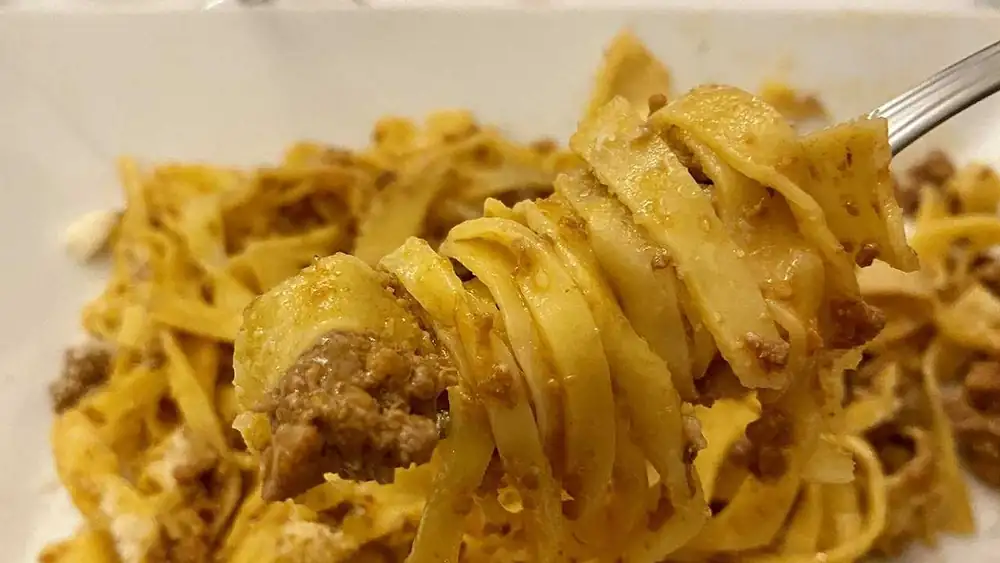
The first courses are more or less classic, from tagliatelle with ragù or porcini mushrooms, tortellacci with cheese and walnuts, and tortellini in broth. The pasta is undeniably handmade, and the toppings are of a decent quality. The ragù, in particular, has a very classic style, perfectly in keeping with the Bolognese tradition. In fact, a few more spoonfuls would have been appreciated, especially considering the generous portions. The other first courses are also decent, although the tagliatelle with porcini mushrooms is a bit out of place. The tortellini, on the other hand, stand out for the high-quality filled pasta, but suffer from the subpar broth. They remain a good dish with an almost unbeatable quality-price ratio.
Among the main courses, the Cotoletta alla Bolognese stands out: a slice of breaded and fried pork (don't expect veal) topped with a slice of prosciutto and a Parmesan cream. The style may not be the most modern, but it's still pleasing in its opulence. The baked prosciutto and roast rabbit are also delicious, and their simplicity is reminiscent of classic home cooking. Among the side dishes, we recommend the spinach sautéed with butter and Parmesan, rather than the somewhat bland baked potatoes.
The standout dessert is the zuppa inglese, with its rich flavor balanced by the creamy cream and alchermes syrup. Here too, there's little emphasis on presentation: if this were a haute cuisine dish, it would probably be titled "Oops, I Dropped the Zuppa Inglese."
The crème caramel is perfect, while the rice cake is presented in a taller and softer version, where you can appreciate its fresh style and delicate aromas of milk, almond and candied citron.
How much do you pay?
The bill, finally, is rather light – 30 euros – considering that we are in Bologna and we leave full and quite satisfied (the receipt is for two people, including house wine, coffee and some bitters at the table).
Autotreno has proven to be a highly regarded fixture in the city's dining scene, especially for informal lunches or dinners, and is one of the few places that can still truly call itself a trattoria. In short, it's one of the places I recommend when people ask me the age-old question: "Where can I go to eat well and spend little?"
Historical note for those curious about medieval history
As you walk along Via Saffi, leaving Porta San Felice behind you, in the right lane before reaching the trattoria, you'll notice a large circular stone split in two: it's the cover of a medieval well. Not just any well, in fact, but the very one from which the Modenese stole the famous "bucket" at the end of the Battle of Zappolino in 1325, bringing it back to the city in triumph as a sign of victory. The "Stolen Bucket" later inspired Alessandro Tassoni's mock-heroic epic of the same name, published in 1622, and is still held hostage by the people of Modena, preserved inside the Palazzo Comunale (Town Hall), while a copy is kept inside the Ghirlandina Tower, its historic location.
Opinion
A Bolognese trattoria, authentic like few others in Bologna and the surrounding area. Solid, home-style cuisine, authentically Bologna-style, with no compromises on aesthetics or gastronomic flourishes. For three generations, it has been satisfying the people of Bologna and has never lost its appeal.
AGAINST
- Little care in plating
- Noisy environment