Kohaku in Rome, the Japanese kaiseki restaurant just steps from Via Veneto
Kohaku Rome. Considered the highest and most refined expression of Japanese cuisine, kaiseki cuisine represents a traditional multi-course meal in Japanese gastronomy. A true culinary ritual, rooted in Japanese hospitality and warmth, in which the chef prepares everything expressively during the meal.
Sabrina Bai, already the owner of Shiroya, a traditional Japanese restaurant with an izakaya feel, decided to launch Kohaku, a kaiseki restaurant in Rome. Kohaku quietly opened its doors in November 2022 on Via Marche, in the Ludovisi neighborhood. Sabrina is joined on the project by chef Hideyuki Matsushita and chef Kazuaki Kawane.
The Kaiseki philosophy
Sabrina's travels to Japan made her fall in love not only with the culture, but also with its flavors. In fact, after Shiroya, she wanted to create a place dedicated to fine dining Japanese cuisine. "You come here to experience an elegant traditional meal that unfolds through a significant journey of many gastronomic courses, conceived and created by two Japanese chefs specializing in Kaiseki," Sabrina explains. The term kaiseki refers to the meal that accompanied the tea ceremony. This beverage has ancient origins, and the small dishes accompanying its tasting give life to kaiseki cuisine. Three guidelines: hot dishes, served with the utmost respect for the temperatures; carefully measured quantities of food so that the tasting occurs without waste; and elimination of all decorative elements within the dish that do not serve a tasting function. According to this ritual, eating becomes a truly spiritual and emotional experience. Kohaku, in fact, has created paths to "offer, through each course, all that care that, by satisfying a need, puts the body and spirit in the condition to desire and appreciate what will come next."
The restaurant
The minimalist design of the restaurant, just steps from Via Veneto, is reminiscent of historic Japanese homes. An Italian touch is evident, thanks to the use of travertine, chosen by AMW Architettura, the studio responsible for the project. A large wooden counter welcomes guests, designed for kaiseki sushi tastings. Inside, wood dominates everything, from floor to ceiling, from tables to chairs. There are approximately twenty seats, including chairs and sofas along the perimeter, plus ten more at the counter. Plates, glasses, and chopstick rests are custom-made by Sebastiano Allegrini and Angelica Mariani at the Pots workshop in the Monti district. All this complements the restaurant's philosophy, based on "the use of the finest local ingredients, to be savored in an authentic setting reminiscent of traditional Kyoto homes, without forgetting the distinctive touch of Made in Italy style."
La cucina di Kohaku
At Kohaku there are two chefs, as well as two tasting menus: the pure kaiseki by chef Hideyuki Matsushita and the kaiseki sushi by chef Kazuaki Kawane.
Both menus are based on seasonality, respect for local ingredients, and Japanese cooking techniques, such as "kiru" cutting, "niru" simmering, "musu" steaming, "yaku" grilling, and "ageru" deep-frying. Furthermore, the chefs carefully studied the textures of the ingredients and their reactions to different cooking techniques for approximately two months. This is to maintain a balance between umami and the other five flavors: sour, sweet, salty, bitter, and spicy. As for the raw ingredients, the fish comes from Antica Pescheria Galluzzi; the rice, the star of Japanese cuisine, is "Wadachi Mai," organic and natural, sourced from terraces in Nigata Prefecture; the sake and wagyu beef are also sourced from Japanese suppliers.
Kohaku's two menus are exclusively for dinner, while lunch offers an à la carte option for a taste of kaiseki cuisine, accessible to all budgets. Daily specials are inspired by the Bento box, the iconic Japanese lunch box, featuring rice and side dishes, as well as seasonal fish, meat, vegetable, and tempura specialties. You can choose a "lunch set" with meat, fish, sushi, and sashimi (from €19 to €48). Lunch options also include ramen (€18), both in its seafood version and the classic chicken broth version.
I due percorsi di Kohaku: puro kaiseki e kaiseki sushi
One element that distinguishes the two experiences is the direct interaction with Chef Kawane, which makes the kaiseki sushi experience unique. During the ritual, guests receive their dishes directly from the chef.
Both tastings begin with a glass of sake that precedes the dishes. Chef Matsushita's ritualistic nine-course Kohaku kaiseki (€120) begins with Sakizuke, a cream of sweet potato and onion soup made with cream, followed by Zensai, a series of small appetizers. Next comes Otsukuri, a selection of sashimi of the day, and then Agemono, a sea bass fillet wrapped in a cloud of fried breadcrumbs. The following courses alternate between seafood and meat. There's also a tribute to French cuisine, which has had a major influence on Japanese cuisine: Shiizakana, a Piedmontese beef fillet with Madeira reduction, grilled foie gras, and a potato croquette. Before the desserts, a warm udon soup concludes the experience. The chef never delegates two tasks: cooking the meat and salting the dishes. The flavors of the dishes are enhanced by the combination of katsuobushi and kombu, in different broths to enhance the umami.
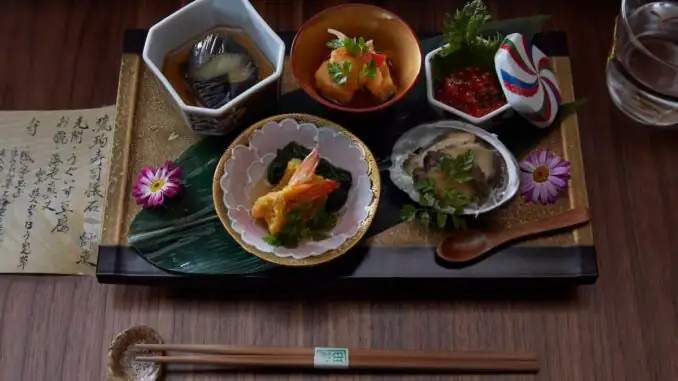
Chef Kazuaki Kawane's Kohaku sushi kaiseki (€180) consists of 12 courses handwritten by the chef on a sheet of parchment, signed "memoir" after the last course. Following a welcome with a glass of sake and the chef's greeting to the diners, the sous chef begins carving the fish in plain sight. Everything is prepared by the chef, who recounts anecdotes as he serves the courses, while Japanese jazz music plays in the background. The courses are served in meticulous order, alternating flavors and textures. It begins with saki-zuke, an appetizer, followed by osuimono, a small soup, and hassun, a platter of culinary delights. It continues with sushi and sashimi, followed by alternating courses of varying consistencies and temperatures. Before dessert, the menu concludes with oshirumono, a red miso soup. Mizugashi is the dessert, which in kaiseki cuisine is always made with fruit and water, with o-cha, a cup of hot tea.
Kohaku. Via Marche 66, Rome. Tel. 06 4566 5202. Website. Facebook. Instagram. Open every day for lunch and dinner, except Sundays.