Tradition does not mean backwardness
The best thing about cooking is that it never stops. Its greatest strength lies in its willingness to change and adapt to the circumstances and territories that surround it. Nothing makes it so alive, vibrant, fertile, and comforting.
We often forget this when we talk about traditions and apply the term to cooking. Tradition, they say, speaks of an absolute truth, with an air of eternal reality and, as such, immutable: dishes are as they were described in the first recipe ever written down, regardless of the reality of thousands of cooks who disprove it daily. Recipes change every day in the practical application of the dish because they respond to different times, realities, and needs. We never eat the same as the previous generation; when our way of life changes, so does our way of eating.
There was a time when cocido was called adafina, and chickpeas were cooked with lamb and some vegetables. It was a very popular Jewish dish in 15th-century Christian Spain—today it would represent the essence of Sephardic cuisine, which also strikes me as very North African—and it is said to have been part of the regular diet of the Catholic Monarchs and other illustrious figures from five hundred years ago. After the Christianization of the kingdom, beef and pork replaced lamb in the stew. It was much more than a food exchange: it was a certificate of loyalty to the dominant religion, a public display of faith. It remained a very popular dish, but some of the ingredients had changed.
Cocido is one of those traditional dishes that has never stopped evolving. Tradition dictates that cocido includes potatoes, carrots, and cabbage among its ingredients, but there was a time when pantry staples were seasonal. Cabbage was a winter vegetable, impossible to grow in the warmer months, carrots grew in spring, and potatoes didn't become widely available in Europe until well into the 17th century. The recipe must have had variations that the canonical version (if there is one?) doesn't include. It didn't matter: it was still cocido, or cozido.
Chickpeas weren't native to northern Spain, where white beans thrived and took their place. The dish continued to be cooked, even if it was called 'montañés' (mountain stew). In Andalusia, it adapted to the times and became known as 'puchero'. It contained, and still contains, abundant, locally sourced chickpeas, sometimes green beans, whatever meat and cured meats were available, and whatever vegetables were in season. The cooking vessel, the 'puchero', replaced the cooking method in the name, but everything else remained the same. It never ceased to be part of what we would now call culinary traditions.
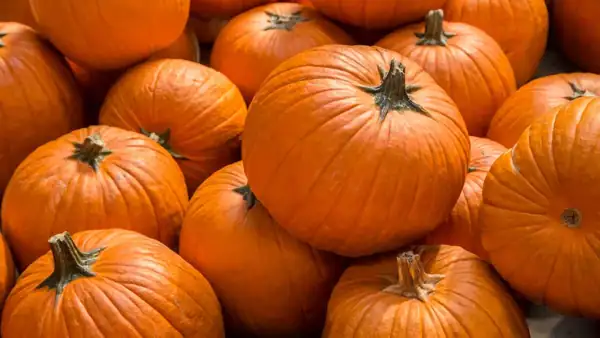
Upon arriving in the Americas, the cocido underwent an identity crisis and became known as sancocho, sancochado, cazuela, and so on, but it retained similar characteristics: legumes, chachinas (a type of sausage), beef, chicken, potatoes (this time, indeed, from the beginning), squash, corn… The squash changed its name to pumpkin, and as soon as it reached European ports, it joined forces with potatoes and corn to become part of the cocido of the Canary Islands, which was essentially an enriched locro, and remained deeply rooted in local traditions. It bore little resemblance to the original recipe, but it never lost its status as a traditional dish.
In that era, 18th-century Spain—so illuminatingly portrayed at the beginning of the 19th century by Richard Ford in his *Travels in Spain*: "Spain is brown, its fields, its houses, its clothes, and its people are brown"—surrendered to the stark reality of institutional poverty (three hundred years of hauling gold, silver, and cacao from the Americas had only yielded enough to build churches and palaces), came to enshrine the piri stew as a way of life among the people of Madrid. The poor man's stew had only seen meat briefly at the market—they greeted each other from afar—and consisted of little more than chickpeas, potatoes, cabbage if available, and a bone rented out by the hour. It was still stew, even if it was barely a proper recipe. It remained, however, a traditional dish.
They were all the same recipe. A single truth and thousands of different realities: one in every house and every kitchen. Around it, small universes were enthroned, each one elevating its own to the status of absolute truth: there is only one tradition, and it is the one from my house.
- You have no idea what authentic fabada is like.
- You're wrong, kid. It's the one your mother cooks.
- When did you try it?
- Never, but I'm starting to get to know you.
In these times of exaltation of grandmothers and their kitchens, we should begin by accepting that grandmothers never cooked the same way their daughters did before they too became grandmothers and saw their cooking revered. Our diets have always been shaped by different times and realities; we don't need to eat the same because we don't live the same way. My grandmothers lived in a time of manual labor that demanded abundant consumption of fat and carbohydrates: inexpensive products quickly transformed into energy. Maximum effort with minimum expenditure. The seasonality of produce was an immutable reality, and the seasons dictated their cooking methods. Their daughters lived in different realities and cooked differently. And let's not even talk about granddaughters and grandsons.
The popular custom of that time dictated that the stew be made all at once: chickpeas, carrots, potatoes, meats, bones, and cured meats all sharing the same pot, which long ago would sit overnight in the embers of the fireplace, kindled by a magical hand at midnight. It had that slow, steady cooking method that some modern kitchens successfully employ and many more try without understanding it. Until someone refused to get up before dawn to stoke the fire, and since they had a stove, they simply placed the pot on a low heat. The temperature remained constant, and the stew could be skimmed. The method changed to perpetuate the tradition.
Some kitchens understood that the cooking point for chicken or hen doesn't coincide with that of shanks, chickpeas, or bacon, so they began to cook them separately and then skim off the fat and combine the broths. In others, the methods changed so much that I saw cocido (a traditional Spanish stew) reduced to a cube of bread or deconstructed (a verb to think about) and surrounded by foams. And it was still cocido; as traditional as the first day, when the dish—chickpeas, lamb, and vegetables—looked nothing like it does today. It has never stopped changing, but no one would deny its nature and its identity.
No matter how much we might insist otherwise, cooking has never been a static discipline, especially not in this age that allows for the exchange of ideas, practices, and customs in a fraction of a second. To think otherwise would be to confuse tradition with backwardness. It would mean condemning cooking to live as a prisoner of the day it was born, and if that were the case, it would be in danger. Because cooking evolves, advances, and changes a little each day: it is a child of the times in which it lives.