The secret messages of Chinese cuisine
We can rightly ask ourselves the question: where does the symbolic concept of Chinese gastronomy originate from?
One reason for this is traditional Chinese medicine, whose methodology and recommendations are based on the philosophy of yin and yang. Two opposing but inseparable forces are constantly at work in the universe in the form of the black “yin” and the white “yang”. In order for chaos to not reign in the universe, a delicate balance must be maintained. On a macro level, we can achieve this by paying attention to what energies, flavors, and ingredients we introduce into our bodies.
The symbolic examples listed below are often associated with certain regions, major Chinese holidays, or traditional medicinal practices:
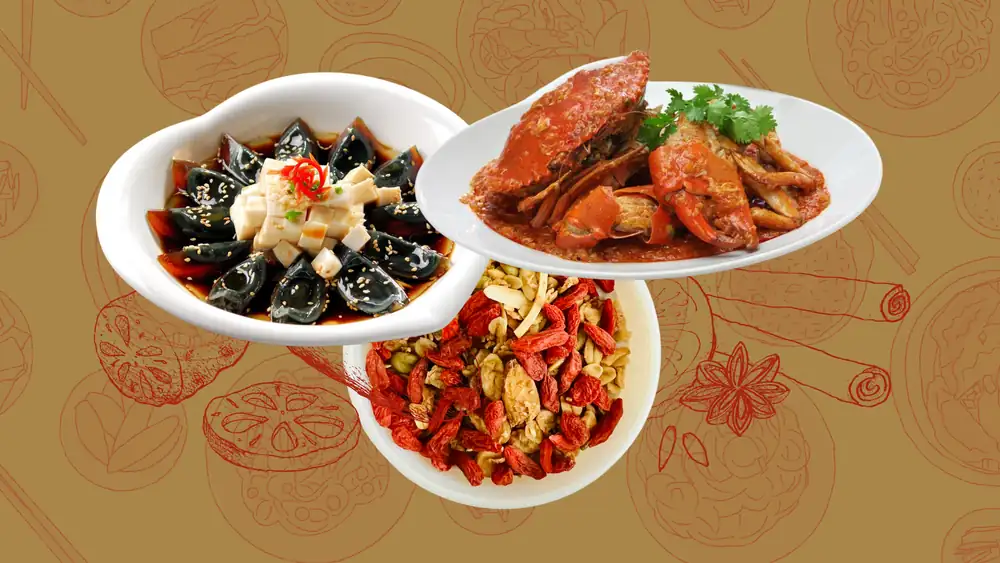
- Woolly Crab (Da Zha Xie, 大闸蟹)
Meaning: Harmony and meeting
Woolly crab is often eaten during the Autumn Festival. This seasonal delicacy symbolizes the harmony of family gatherings and the beauty of autumn.
- Lotus root (Lian Ou, 莲藕)
Meaning: Connection and purity
The holes in the lotus root symbolize deep connection. Another interpretation is that the connection between the root system and the lotus flower symbolizes purity and enlightenment.
- Tengeri uborka (Hai Shen, 海参)
Symbolism: Strength and vitality
Sea cucumbers are believed to help maintain health and increase stamina, making them a symbol of resilience and longevity, especially for men.
- Small news (Ku Gua, 苦瓜)
Symbolism: Perseverance and overcoming difficulties
The bitter taste of melon symbolizes the struggles of life. By consuming it, we strengthen our bodies that we can achieve success by enduring and overcoming difficulties.
- Hundred-day egg (Pi Dan, 皮蛋)
Symbolism: Transformation and preservation of values
The unique preservation process of the 100-day-old egg symbolizes the ability to adapt despite the passage of time, making it a metaphor for long-term stability.
- Mandarinhal (Gui Yu, 桂鱼)
Symbolism: Respect and rank
Reason: The name of this fish resembles the Chinese word for “nobility” (贵, gui). Its elegant appearance symbolizes sophistication.
- Goji berry, or wolfberry (Gou Qi Zi, 枸杞子)
Symbolism: Long life and health
This popular ingredient, used in both teas and soups, is believed to improve vision and vitality - thereby symbolizing the pursuit of a healthy life.
- Chestnut (Li Zi, 栗子)
Symbolism: Prosperity and wealth
The name of the chestnut is similar to the phrase "founding sons" (立子, li zi). Therefore, eating it symbolizes hope for descendants and the desire for business success.
- Bird's Nest (Yan Wo, 燕窝)
Symbolism: Luxury, health and care
This rare and highly prized delicacy, bird's nest soup, is considered nutritious and is often gifted to loved ones as a sign of care.
- Osmanthus flowers (Gui Hua, 桂花)
Symbolism: Love, romance and luck
The fragrant osmanthus flower is most commonly used in desserts and teas. Its name (桂, gui) sounds like the words for “noble” and “luck,” and is therefore a symbol of success and harmony in a romantic sense.
10+1. Peking duck
Symbolism: Loyalty and family unity
Peking duck is traditionally served at important family gatherings, making this dish a symbol of togetherness and sharing.
Symbolic spices
In addition to special dishes, spices cannot be left out of the list, as they also have deep cultural and symbolic meaning.
- Star anise (八角, Bā Jiǎo)
Symbolism: Harmony and wholeness
The star-shaped, eight-pointed spice symbolizes balance, unity, and the harmony of the universe. Another exciting meaning is that the number eight is considered lucky in Chinese culture.
- Szecsuáni bors (Huā Jiāo)
Symbolism: Vitality and effervescence
The powerful, numbing spiciness of Sichuan pepper encourages you to experience the intensity and excitement of life.
- Five-spice powder (五香粉, Wǔ Xiāng Fěn)
Symbolism: Balance and harmony of the elements of life.
The combination of the five tastes (sweet, sour, bitter, salty and umami) symbolizes the balance of yin and yang and the harmony of the five elements in Chinese philosophy.
- Sesame seeds (芝麻, Zhī Má)
Symbolism: Fertility and success
The countless tiny seeds symbolize prosperity, growth, and the hope of many descendants. The phrase “芝麻形开节节高” (zhī má kāi huā jié jié gāo), or “the sesame seed flowers grow taller step by step,” is a metaphor for continuous development and success.
- Garlic (蒜, Suàn)
Symbolism: Prosperity and wealth
The Chinese word for "garlic" (蒜, suàn) sounds similar to "to count" (算, suàn), so garlic symbolizes abundance of wealth and blessings.