MÁK restaurant is heading towards the southern horizon, Baranya and Somogy – we spoke with János Mizsei and Gábor Koltai
You recently finished your tour of the country – how do you approach the work when exploring a new region? How do you find the producers you will work with later?
János Mizsei: We have had a very inspiring and meaningful time. The concept of traveling around the country is interesting because often you don't even expect what kind of ingredients you will encounter in a given area. The country changes a lot, each area retains its own characteristics, but due to the emergence of new and new producers, and due to external factors such as climate change - to which we all have to adapt - it acquires more and more unusual, new, often less fortunate, but sometimes exciting properties. At the beginning of the journey, it is always a great help when we get in touch with a local restaurant, who provide important guidance in the process. We see what they use, we talk about the characteristics of the region, about the local producers. The Hosszú Tányér restaurant helped us a lot, we visited them, talked a lot, received a lot of help and we even had a dinner together at the end of 2024.
Gábor Koltai: The concept has been refined so much in recent times that we have started to concentrate on much smaller areas within the larger parts of the country, in order to give back the uniqueness of a given region even more. Of course, it is also an important aspect that the logistics of procurement are simpler, more efficient and more sustainable. Within the southern area, the focus is currently on Baranya and Somogy. Fortunately, there is now an abundant supply of producers who guarantee outstanding quality, but it is more a problem to deliver at the right time and with sufficient regularity from time to time. Just as we move clockwise through the major cardinal directions of the Carpathian Basin in our concept and on the map, when we reach the southern cardinal direction again, we will have the opportunity to enjoy other parts of it and process their values in the menu. Very interesting areas include Baja and its surroundings, or the Szeged catchment area, or perhaps Vojvodina. The point is to deal with one sub-area at a time within the great southern hemisphere, so that our concept will be effective and sustainable.
What are the most important ingredients that you discovered during your travels and will be welcomed back on the menu of the southern climate? What regional characteristics did you encounter?
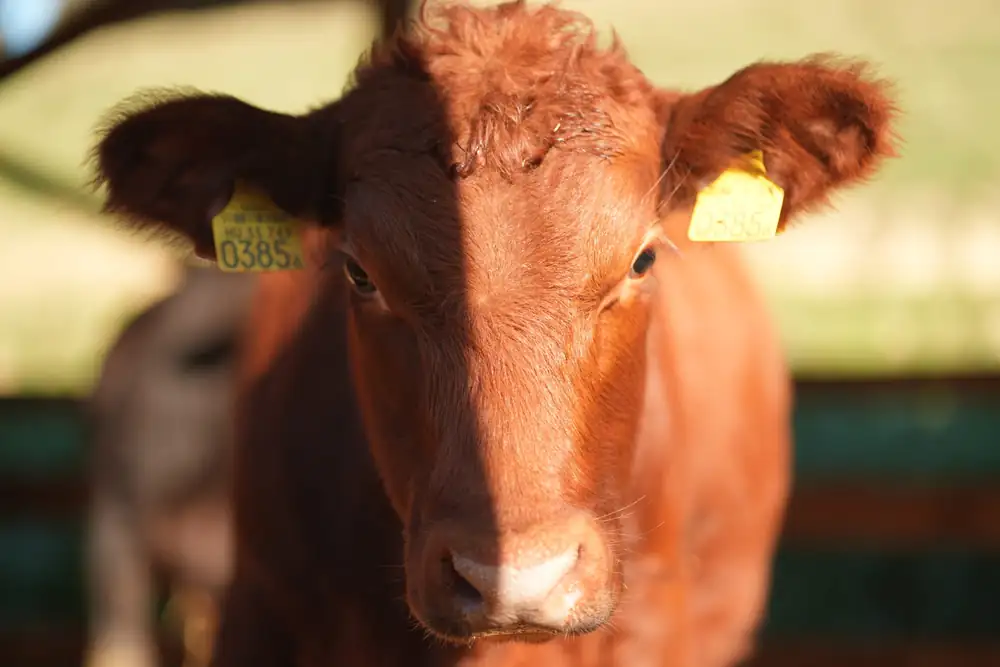
János Mizsei: The Baranya-Somogy region is full of exciting ingredients, such as Hungarian wagyu beef. Everyone associates wagyu with Japanese beef farming, many would not even think that we can find this noble ingredient in Hungary. We found Zichy wagyu in Ófalu, Baranya County. When we recently had dinner together at the Hosszú Tányér restaurant, and we started thinking about ingredients from the southern hemisphere, this meat also appeared on the menu. It is noble and intense, there is really no need to put anything around it. The wagyu dishes on the new menu will be minimalist – I want to completely strip the plate so that we can focus exclusively on the ingredient.
We suspected that fish would not be a mainstay in this region, so we would not plan to work with it much, or at most, just as an addition to a given dish. But we decided that at least this “SOUTH” menu would be our “GAME SEASON”, and if there was no fish, we would find something else instead, such as venison or the ‘golden-striped’ rabbit.
In Baranya, specifically on the outskirts of Pécs, we also visited a fantastic goat farm called Mecsekecske, run by a very nice couple, Illa Gábor and Kamilla. This visit was also a completely amazing and special experience. You can taste goat milk there that you can't find anywhere else. There is something quite ancient about the way the goats are kept on the farm. They built it on top of a steep hillside, they roll hay bales down the hill and the goats eat them while they are moving up the steep slope. When they reach the top, they milk them. We talked about ancient forces – such is gravity, which they use in this special way.
It means a lot to me to meet the producers, to learn where each raw material comes from, since city people don't really encounter these methods in their daily lives. The Illa couple raise their goats with special care, they take their work very seriously. Each goat has a name, and they also pay attention to breeding. By the way, goat milk will appear in the dessert, and it will be accompanied by chamomile.
When exploring a particular region, how important is the seasonal availability of ingredients in that region?
János Mizsei: The mushroom season in Hungary is getting shorter and shorter, and when a certain type is available, everyone is always busy for those few weeks. From this perspective, there is a bit of a challenge in putting these mushrooms on the menu, especially if you are planning a menu that will run in the restaurant for three to four months.
However, truffles are very characteristic of the southern region, and we had the opportunity to delve deeper into their world. We visited the area with truffle hunters and trained dogs. We are also working with two outstanding local truffle experts on the new menu, one of them Balázs Hárshegyi (Triflafater), and Tibor Vrancsik and his super-powered search dog, Lilu. The mushroom is an ingredient that is very exposed to changes in the environment and human behavior. According to experts, it is becoming increasingly difficult to find truffles in Hungary, which is partly due to climate change, but also because non-experts have started collecting them.
When it comes to using truffles, we want to break away from the norm a bit – retain their aromas and oiliness, but process them using different technologies, rather than just putting them on the plate and saying 'look, we have truffles'.
Root vegetables are the most stable in the winter months, and you can always count on them. We will rely heavily on these, along with meats.
Did you encounter any surprising ingredients or circumstances that you didn't expect?
János Mizsei: I think that city people, like me, often imagine the relationship between wild animals and hunters as the hunter going out with a rifle, shooting the deer, then processing it, and then it ends up on the restaurant menu. However, this is not nearly so. For example, we visited a fantastic game reserve in Somogy, in the heart of Zselic, at the Bőszénfai Deer Farm, which was very interesting from this point of view. Deer, stags, donkeys, and water buffalo live in the area, and they are cared for with great expertise. The area also includes a processing plant, where they mature the meat and portion the animal's parts. They also pay attention to reproduction.
What's interesting about deer is that every restaurant wants to use the nobler parts of the animal, such as the backbone, so there are many parts that are more difficult to sell, or not at all, even though they are very valuable. One example is the offal. I would like to experiment with deer liver on the menu, I'm a little excited about how guests will react to it. I think it's important to use those parts, offal that are a bit obscure. There is also an ancient, almost magical power in using them, perhaps this will best characterize this basically meat-focused menu.
The wines of a given region are always given a special role in the MÁK, what is the situation in the southern hemisphere?
Gábor Koltai: We have noticed recently that there is not as much demand for international wine pairings at MÁK – although of course you can still find several international items in the restaurant – so we would like to give preference to natural and classic Hungarian wines. The restaurant’s profile also basically revolves around the treasures of Hungarian gastronomy, so we would like to continue to present this on the wine list. Our guests have come to know, accept and even love our menu concept, which is explicitly focused on ingredients, identity and regional landscape, so this demand has become evident in the guests’ preferences for wines and juices.
János Mizsei: Full-bodied wines are best suited to a meat-focused menu, and in our current region we can find a particularly wide variety of red wines. An important aspect, as always, will be that the food and wines match each other without overwhelming each other.
Our juice program is also gaining more and more emphasis, the foundations of which we laid with the expert of the three-star restaurant Hisa Franko, and which we are now continuously developing independently with great effort. Amazing things can be made from non-alcoholic drinks, whether it is a kvass, the signature “Bambi”, or drinks that are very similar in taste profile and appearance to a red wine, for example. When making juices, we can use a lot of things that fall off the menu – thus supporting our sustainability vision. For example, if I am making a pumpkin dish, the peel can be used for kombucha. The most important aspect of juices is that they contain the notes that the given wines – whether aromatic, earthy or intense – should appear in them.
What menus will allow you to taste the flavors of the south?
Gábor Koltai: The dinner menu will be available in 3 (the Seed), 5 (the Shoot) or 7 courses (the Flowering). What is also new is that from December we have also re-launched the MÁKebéd menu, which is available to our guests in 2-3-4 courses. These courses also reflect the south, and you can find them in the restaurant from Thursday to Saturday. Our main goal here was to provide these courses at an exceptionally favorable price/value ratio, so that those who may find the classic dinner menu more difficult to access, perhaps due to budget considerations, but do not want to compromise on quality, can also experience the MÁK experience. And neither do we.