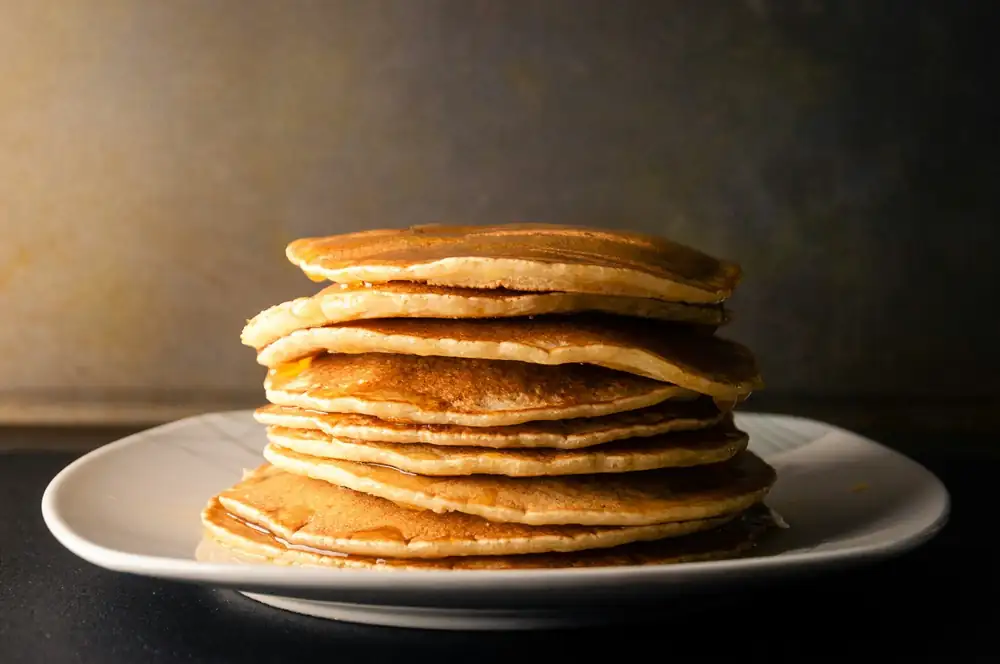
Pancakes of the world: from the French crêpe to the Japanese okonomiyaki
Crepe – France
The French crêpe originated in the Brittany region and has become one of the country's most recognizable gastronomic symbols. Made from wheat flour, the hair-thin dough is easy to fold, making it popular as both a street food and a classic dessert in bistros. The most famous versions include the simple crêpe served with butter and sugar, and the legendary Crêpe Suzette, flambéed with orange butter sauce and Grand Marnier or Cointreau liqueur.
Savory versions are often made from buckwheat flour, although these are often referred to by a separate name, galette.
Pancake – United States of America
American pancakes are thicker and fluffier than most European pancakes. Their light texture is given by baking powder or baking soda, and the batter is usually baked in smaller, palm-sized discs.
The classic serving is essential with maple syrup and melted butter, but blueberries, bananas, peanut butter, or chocolate are also common accompaniments. The sweet flavors are often offset with crispy bacon, which has now become an iconic pairing in American brunch culture.
Poffertjes – Hollandia
Dutch poffertjes are small, soft, lightly risen dough bites that are baked on a special cast iron baking sheet with indentations. The dough is also lightly seasoned with a small amount of yeast, which makes it especially light.
Freshly baked poffertjes are traditionally topped with butter and powdered sugar, but they are often served with various toppings at festivals, Christmas markets or street food stalls.
Baghrir – Morocco
Baghrir is often known as the “pancake with a thousand and one holes” due to its spectacular surface, full of tiny holes. Made from semolina, flour, yeast, and baking powder, the dough is only cooked on one side during baking, creating its characteristic spongy texture.
The perforated surface perfectly absorbs the dressing made from butter and honey, but it is often flavored with orange blossom water or toasted oil seeds.
Blini – Russia and Eastern Europe
Blini are originally made from leavened dough, often made with buckwheat flour. Although there are also sweet versions, they are most commonly served as a savory dish.
Classic accompaniments include smetana, smoked salmon, and caviar, making blini a long-standing staple of festive Russian and Eastern European cuisine. Due to their delicate texture, they are often served as an appetizer or cocktail snack.
Okonomiyaki – Japan
Okonomiyaki is one of the most versatile dishes in Japanese cuisine. Its name roughly translates to “fry it the way you like it.” The floury cabbage base can be topped with pork, seafood, squid, or cheese, depending on the region and taste.
The finished pancake is topped with a thick okonomiyaki sauce, Japanese mayonnaise, bonito flakes, and dried seaweed. Osaka and Hiroshima have very different styles, with the latter including fried noodles between the layers.
Banh xeo and banh khot – Vietnam
Two iconic pancakes in Vietnamese cuisine are bánh xèo and bánh khọt. Both are made from rice flour, enriched with turmeric and often coconut milk.
The crispy fried dough of the larger bánh xèo is filled with pork, shrimp and bean sprouts, then wrapped in lettuce leaves with fresh herbs and eaten with a fish sauce dip.
Bánh khọt consists of smaller, hemispherical bites topped with shrimp, spring onions, and crispy garlic.
Pancakes – South Africa
South African pannekoek has Dutch roots but has now become a tradition in its own right. Its thin batter is reminiscent of Central European pancakes in many ways.
It is most often eaten rolled up, sprinkled with cinnamon sugar, drizzled with a little lemon juice, and served as a dessert. It is a popular dessert at family gatherings and fairs, especially during cooler, rainy seasons.
Sinful Pensioner – India
In southern India, pesara dosa is a staple breakfast dish. The dough is not made from wheat, but from soaked mung beans, which are left to rest for several hours and then seasoned with ginger, cumin, chilies, and onions.
The crispy dosa is served with a variety of chutneys and sambar, a lentil stew. Thanks to its high-protein ingredients, it is a more nutritious alternative to traditional flour pancakes.
One food, countless cultures
Whether it's dessert, street food or main course, pancakes have taken on their own character on almost every continent. French elegance, American brunch culture, Japanese creativity or Vietnamese freshness are all based on the same simple principle: a well-made batter can always adapt to local tastes. Perhaps this is what makes pancakes one of the most universal dishes in the world.