Goat liver, dirty pasta and the perfect lángos – A Hungarian travel guide from three hospitality professionals
Dávid Berki, Szilárd Tóth and Norbert Varga guide us to where they would gladly return whenever they are not behind their own counters: from the shores of Lake Balaton to the silence of the Túr River.
Dávid Berki (Buborék): The perfectly polished lángos and the lessons of an Italian detour.
Dávid Berki, the baker at Buborék in Csopak, visited southern Italy before the season, and although it is not a domestic destination, he took his experiences there with him to the shores of Lake Balaton. “The puff pastry dessert called rábfarok was fantastic everywhere in its simplicity,” he said, adding that he also envied the Italians’ late-afternoon aperitivo culture, which he believes is only just beginning to be discovered in Hungary. At Buborék, on the other hand, most of the traffic comes in the four hours after opening, and the afternoon pastry offering is less prominent there for the time being.
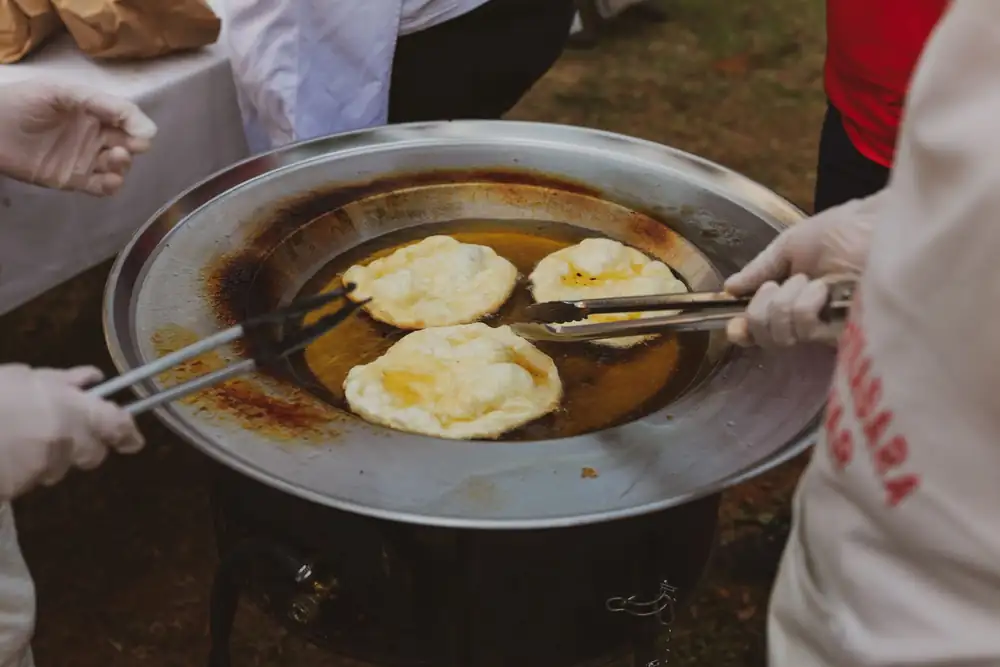
He also talked about how he hasn’t had much time for big trips lately, but he was happy to share one of his recent experiences with us: he recently visited Gyuri’s Lángos Büfé on the beach in Alsóörs. “You can get lángos almost everywhere around Lake Balaton, but it’s hard to find a good one,” he says, and he thinks this place shows what makes a simple thing really good: they don’t sell anything but lángos and pancakes, they don’t try to offer many things at once. “You have to do a completely simple thing well, but you have to catch the moment to make it perfect,” he says, adding that he thinks this kind of focus in itself guarantees quality. He is also following the places that are now opening around Lake Balaton with similar attention: “It’s important that we get to know each other and see where the market is going.” Here he mentioned the recently reopened Resti in Csopak and Vasüzlet, which have each entered the gastronomic map of the Hungarian seaside with a brunch-like concept.
Another recent experience in the area was related to a weekend partner meeting: here, he was the first to taste vegetables, dairy products and meats that the producers – including Élőbolygó, where the milk and yogurt for Buborék come from – grow and produce themselves. He believes that this kind of agrotourism edge is still missing from the domestic hospitality industry, even though it would be important to have a close knowledge of the raw materials that we ultimately offer to our guests.
The fact that even people working at Lake Balaton are happy to return here on their days off says a lot about the lake's appeal. The lake region, located in the western center of the country, has an audience in all price ranges, and the trend is increasingly shifting towards short, one- or two-day getaways, so even if you only have a weekend to recharge your batteries, it's still worth heading there.
Szilárd Tóth (Salt): The silence on the Túr River and the most interesting food names
Szilárd Tóth, the chef of Salt, has been returning to the Túr River and the Szatmár-Bereg region every year since he was a child, where he mostly spends his time rowing or simply relaxing. “This has been a staple for me since I was a child,” he says of the recreation, which is a recurring program for him every year, primarily around Beregnagyfalu.
Among the flavors associated with the region, he highlights the soup of knots or tied pasta: a spring vegetable soup in which thinly stretched pasta smeared with spicy onion fat is folded, cut into strips, tied into knots, and then served in a broth cooked with root vegetables and fresh herbs. The dish is so close to it that it has already appeared on the menu at Salt. He also mentioned the dirty pasta, whose name comes from the dark shade of the plum jam mixed in: in their restaurant version, it is made with fresh pasta, plum jam, plum seed oil and smoked ayran.
He names the Tiszalök Horgonyzó as one of the most prominent restaurants in the Szatmár region, which he says is specifically striving to preserve traditional flavors. At the same time, he believes that the hospitality industry in the eastern part of the country has not yet truly found its place: there are few places that attract locals while authentically conveying the characteristics of the landscape. This may be the reason and cause of the fact that this region is currently off the map of most tourists. But he added optimistically: “I think there will be, and there are already, efforts to do so.”
It is this isolation, the silence of the countryside, that draws him back year after year. “Not even grass grows here,” he describes the area. He spoke of an untouched, wildly romantic countryside that is not bustling with tourists, and where a few days in a riverside house gives you real quality time with those you are there with. It is no coincidence that this promise attracts many others: he also mentioned Gabriella Szilárd Ormós, the head of Kovászlabor, who recently bought a farmhouse on the banks of the Tisza in Szabolcs.
As an outlook, he said that in addition to his usual relaxation in Szabolcs, he will also visit a new Hungarian destination this year, Őrség. He would like to combine this trip with a visit to the Pajta restaurant, in connection with which he emphasized that the natural features of the region and the gastronomy of the place complement each other perfectly, which is why he is excitedly looking forward to the experience.
Norbert Varga (Stand): Inspiring colleagues and the possibilities of beetroot
Norbert Varga, the sommelier at Stand, mentioned two destinations on Lake Balaton that are very different in character. One is Gabriella Szikra’s restaurant by the lake. “It significantly enhances the reputation of Hungarian hospitality and, with its never-ending energy, gives the guest a truly special, unique experience,” he says, adding that Gabriella herself is happy to share her inspirations, which are simple, spiced with a bit of refinement. He also mentioned Hosszúhetény, where Franciska Hosszú practically runs Hosszú Tányér as a one-person business, alongside Attila Horváth. “The sincere, deep-rooted, instinctive attention with which they put the guest’s comfort and convenience at the center is worth a glass,” he says, adding that this is also confirmed by the reviews of international guides.
While the concepts of A Konyhám Stúdió 365 and Hosszú Tányér in Fonyód overlap somewhat, there is a fundamental difference between the two: the former offers a lighter, more laid-back experience, while Hosszúhetény is worth visiting for those seeking inner peace, in a slower, urban lifestyle-counterpointing experience. For him, these two places are also important because they clearly demonstrate that domestic hospitality can only remain truly competitive if it is open to international trends while preserving its own character.
One such area, he says, is the non-alcoholic beverage market, where beetroot could play an increasingly important role in the future among unique, freshly prepared versions. “We can’t always drink wine, and the non-alcoholic offering necessarily needs to develop,” he says. But when talking about ingredients, he also recalled an earlier discovery: “I still vividly remember the goat liver plate I tasted at the late Lajos Takács’ Olimpia restaurant, which, cleverly tamed, turned out to be a very pleasant, acceptable dish.” He added that although Olimpia is no longer in operation, anyone who truly contributes to Hungarian hospitality leaves behind an inspiration and a mark.