The best flavors of Greece will conquer you at the Easter meal
A festive meal tastes of tangy, refreshing lemon, fresh herbs, garlic and honey.
Easter is the most important religious holiday of the year in Greece. After Lent, friends and relatives gather for a shared Easter meal.
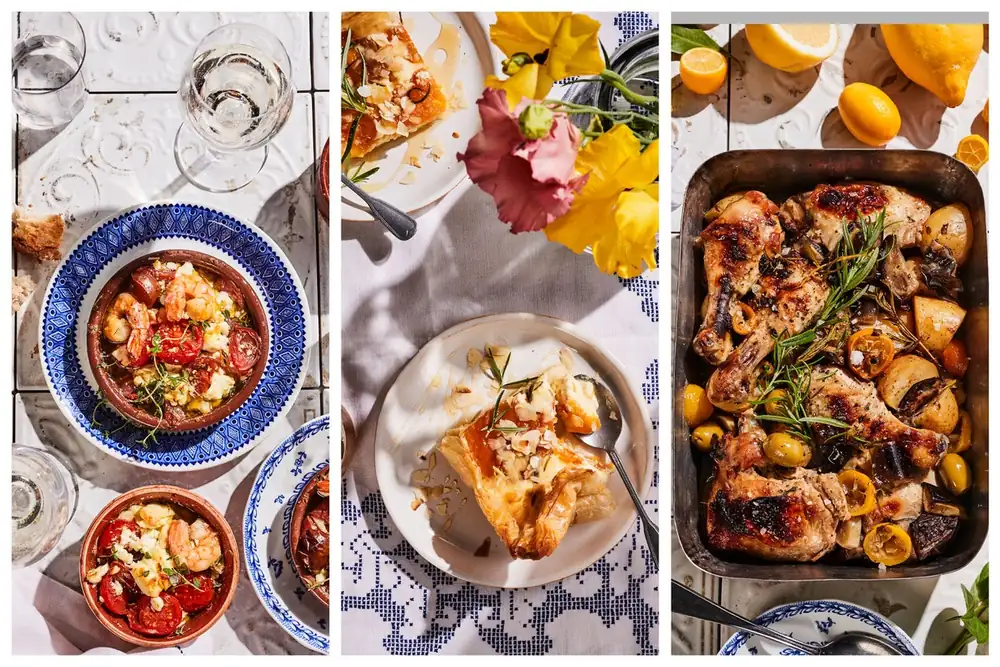
The accompanying menu brings the best flavors of Greece to the Finnish Easter table. The shrimp casserole, served as an appetizer, features anise and fennel seeds crushed in a mortar, which give the dish a pleasant flavor familiar from the Greek aniseed liqueur ouzo.
When there are relatively few ingredients in a dish, it's worth investing in them. Choose the tastiest tomatoes for the pan and use only fresh herbs and high-quality, flavorful olive oil.
Jumbo shrimp tails, thawed in moderation in the refrigerator, will remain juicy in the broth, even after roasting in the oven. If you replace the jumbo shrimp tails with small shrimp, reduce the roasting time. The final touch to the dish is real feta cheese.
The Greek Easter meal often includes a whole lamb with baked potatoes as the main course. In this menu, instead of lamb, tasty chicken thighs are cooked in the oven with potatoes and eggplant. A generous amount of lemon, oregano and rosemary, and garlic make the flavor perfect.
The aromatic mini mushrooms in the recipe cook beautifully in the broth and can be eaten whole. You can replace the mini mushrooms with slices of organic lemon. Don't forget the splash of vinegar in the broth, as it will add a nice sharpness to the broth.
A pastry made from crispy filo pastry sheets, yogurt and canned apricots tops off the meal. Thin filo pastry is easier to handle than it sounds, as long as you remember to keep the pastry sheets covered before greasing and placing them in the pan. Dried-out dough tears easily.
Make the filling with thick, full-fat Greek or Turkish yogurt, and the flavor and texture will be as luscious as cheesecake. Apricot yogurt pie tastes best the day it's baked, after it's been refrigerated.