“The best grill master is the sailor. He knows how to read each fish.”
It's a centuries-old cork oak. The side of the trunk facing the sea is riddled with holes, eroded by the sea breezes and humidity. The leeward side is gentler, softer, more comfortable.
Aitor Arregi is a fabulous host, proud to showcase his region. Son of Pedro Arregui and Mari Jose Artano, he knows that everything that happens at the tables of Elkano originates in the horizon he can see. Here, everything has a name because only what truly exists has a name. From his personal sanctuary, we follow with our eyes the maneuvers of the Manuelah Bi as it fishes for red mullet, the Koasta, the Castillo…
Cose Arregi mentions the names of skippers like Iñaki Arralde or Faustino Zumeta, along with the rocks where they set their nets (fishing is, after all, an art), named Sabalarri or Nolarri; the Itsas-Balfegó bluefin tuna cage; and the capes and bays visible on both sides. The Flysch slabs shape the seabed, but their rocky resistance has also guided the course of men, forced to protect their crops from the salty winds, "the poison," as they say around here.
Next to the church of Askisu, dedicated to Saint Martin, are Juanito Urkidi's pea and piparra pepper fields, and avocados! A little further on are the trellises supporting the txakoli vineyards of Izar-Leku (Artadi); there, the tomatoes of the Alikante farmhouse, the family home of Kanpaia, where Pedro Arregui, the father, made a barrel of txakoli every year, and the stone hermitage of San Prudentzi, with its hostel and small hotel, the gastronomic preserve of a legendary chef… Arregui shows me everything as if revealing a treasure. "Getaria isn't a town, it's a way of life," he reflects. "The best things we have have been brought from elsewhere. That knowledge, that return journey, is fundamental," he emphasizes.
Only in two other people, Pedrito Sánchez (chef of Bagá) and Luis Lera (from Castroverde de Campos), have I found such passion in showing me the hidden riches in unknown places, treasures that are in front of our eyes, but which, with their help, become fabulous settings.
Sicilians, marbles and Emeterio Urresti
We strolled along the main street, which leads to the port and is dedicated to Elcano!, as it could not be otherwise, we saw photos of the old docks and of women working in the anchovy industry that Sicilians with the surnames Liborio, Nardín, Orlando, Oliveri brought to Getaria…
Other images show Alfonso XIII's commitment to creating a modern and safe port, complete with a fishermen's guild to produce ice, on the 400th anniversary of the circumnavigation by the local man and his 18 survivors, who arrived in Seville with 600 quintals (27,000 kilos) of cloves. There are photos of Queen Fabiola's summer holidays, the Marquesses of Casa Torres, and the young Balenciaga, as well as aristocrats who perfumed their boaters here with the aroma of grills built into the stone and indulged in the fishermen's catch. We arrive at the Church of San Salvador, Gothic built upon Romanesque foundations, with its triforium and baptismal font dating from 1290, its uneven sandstone walls, and its eight-stop Cavaillé-Coll organ.
But Arregi draws my attention to the unique sloping floor of its central nave. "As kids, sitting on the pews at the 11 o'clock mass, which the whole village attended, we boys would drop marbles from the front rows, and they'd roll all the way up to the choir," he laughs. It was here that Elkano, "the first grill master," was baptized, because he bequeathed three iron pieces in his 1526 will. The 500 gold ducats of annual income granted to him by Charles V are still owed, as Emeterio Urresti, president of the Fishermen's Guild, whom we meet on the dock, humorously recalls. Urresti tells me that the first shelter where sailors from all over Cantabria could find refuge from storms and gales was founded here. A whopping 1,500 beds, which Emeterio dreams of converting into a retirement home.
"Roasting is an act of nakedness"
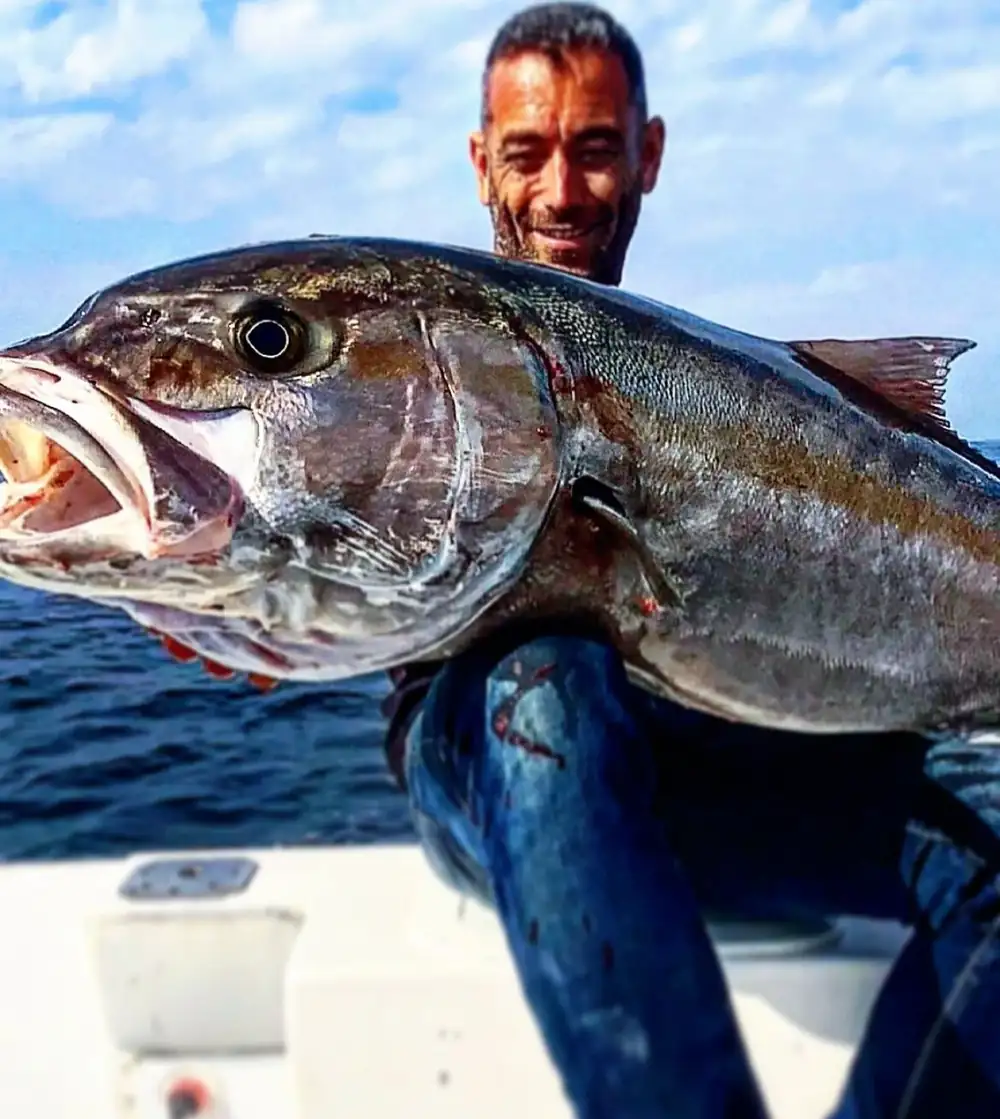
“Grilling is an act of nakedness,” Arregi would later explain to me. “The best grill master is the sailor. When they went to hunt whales in Canada five centuries ago, they were already grilling on board. The sailor knows if the fish came aboard alive or if it was the last one they pulled from the net. If he guts it, he knows what it ate and where, he sees if it’s lean or fatty, if it has roe, if it was caught nearby or came from farther away. The sailor interprets, he reads the fish. At home, Luis Mari Manterola was the one who did the grilling. My father, Pedro, did it in the early years, and then on Mondays, when Manterola had the day off (on those Mondays, when he was starting to learn the trade, Víctor Arguinzóniz would sit on the terrace of the bar across the street, the Getariano, to watch how Pedro Arregui handled necks and turbot). When Manterola retired, I didn't call Luis Irizar, as we used to do when we needed a cook, but instead I asked Asier Ezenarro, a sailor and the youngest in my crew, if he wanted to leave the sea to come to Elkano. He said "noooo".
It was springtime and they were out fishing for anchovies, going out from Monday to Thursday, selling well, and spending the weekend at home. In the summer, he had to take up the rod to fish for bonito, on trips lasting 15 or 20 days, with workdays of 37 hours or more, going as far as the Azores and beyond. In October, at the end of the season, he asked me, "Aitor, is that still going on?"
Asier Ezenarro stands at the foot of the grills at Elkano, dressed in a white jacket. He's strong, of medium height, and stocky, with strong hands, calloused from hooks and lines, which he uses to turn the fish. Next to the grill, the heat is scorching. I ask Aitor about a photo in which a small white dog is lying next to his father, under that same hot grill. "Txiki!" he exclaims. "He had two jobs: he was the lookout; he'd warn us if any strangers came in. And he kept the rats at bay during spring tides. He'd go into the hold when the first customer arrived and only come out when the last one left."
In this house (which has 35 members; some, like Marijo Elustondo – “Arbe,” after the farmhouse she comes from – with more than 30 years of service) two clear commandments are followed: “The secret is to buy well and not spoil it,” the father declared. And, today, “pay to be able to choose the best.”
That's what arrives on the plate: it can be kokotxas or turbot, the head of a lobster with the "oil" of its gonads, the red mullet from Manuelah (with its roasted liver and fried bones) or a grilled mackerel survivor with a memorable flavor dressed with the "Lourdes water" invented by the mother.
A former Alavés and Villarreal player, he was recruited while studying engineering in San Sebastián. He made his debut with Alavés against Logroñés, with Tato Abadía and his mustache as his first opponent. "Gonzalo Antón came to sign me; he had wanted to buy the Itxaso club that his father had opened in Madrid."
"The sea toughens you up. They say that people from Getaria speak loudly. Sailors have to raise their voices to hear each other over the noise of the engine. They are rough people, you don't know where they are looking because their eyes are fixed on the horizon of the sea, on infinity."