The cooks agree: “Boiled broccoli tastes much better when you stop the cooking process with ice water and give it a final stir-fry.”
Broccoli can go from firm and appetizing to mushy, dull in color, and with a strong aroma in just a few minutes. The difference isn't necessarily due to the quality of the product, but rather to controlling the cooking process and knowing when to stop it.
Chefs like Jordi Cruz, Nathan Molina, and Max Mariola all recommend a brief cooking time followed by rapid cooling, a common technique in professional kitchens. This method allows broccoli to be prepared in advance, maintains a firmer texture, and can then be finished by sautéing or other cooking methods.
The simple step that perfectly preserves the color and texture of broccoli
The process begins by separating the broccoli into similar-sized florets to ensure they all cook evenly. These are placed in boiling water and left there for a few minutes. Immediately afterward, they are removed and transferred to a bowl of very cold, ice-cold water.
Jordi Cruz recommends this method for achieving a pleasantly textured vegetable that can then be sauteed. The chef suggests finishing the preparation with olive oil, garlic, and fresh herbs, so the broccoli absorbs the flavor without requiring a second, prolonged cooking time.
Nathan Molina takes the brevity of the process even further: if the goal is simply to blanch the broccoli for later cooking, he suggests keeping it in the water for about a minute. The aim isn't to fully cook it, but rather to give it a quick initial boil and retain its firmness.
Cooking times shouldn't be interpreted as a hard and fast rule. The size of the florets, the amount in the pot, and the desired tenderness may require slight adjustments. The best guideline is still to check that the broccoli is tender but still offers some resistance when bitten.
Why ice water helps keep broccoli green and crisp
The ice bath isn't just a cosmetic trick. When broccoli is removed from boiling water, it continues to absorb heat and can therefore continue cooking for a while. Immediately plunging it into ice water quickly lowers its temperature and stops that process.
This helps explain why the vegetable retains its texture better. If it remains hot for too long, the cellular structures continue to change and the plant tissue softens. Cooling it quickly stops this process near the desired cooking point.
The color also changes during prolonged cooking. The chlorophyll responsible for broccoli's characteristic green color can undergo transformations that cause the vegetable to take on duller tones. Therefore, a short cooking time followed by rapid cooling helps maintain a more vibrant appearance.
However, it's important not to attribute properties to ice that it doesn't possess. The main nutritional benefit comes from avoiding excessively long cooking times, not from the thermal shock itself.
Scientific research supports this idea. A study published in the Journal of Zhejiang University Science B compared different cooking methods and observed significant differences in the preservation of vitamin C, chlorophyll, and glucosinolates. Boiling resulted in greater losses of some of these compounds than steaming.
Another study published in Food Chemistry found that the cooking method and time affect the amount of glucosinolates and the production of sulforaphane. Some of these compounds can be released into the water during boiling, which explains why reducing the contact time with water is nutritionally sound.
This is how chefs finish broccoli to give it more flavor without softening it.
After the cold bath, there's one important step: drain and dry the broccoli thoroughly. If it goes into the pan soaking wet, the accumulated water will lower the temperature and cause the vegetable to steam again instead of sautéing.
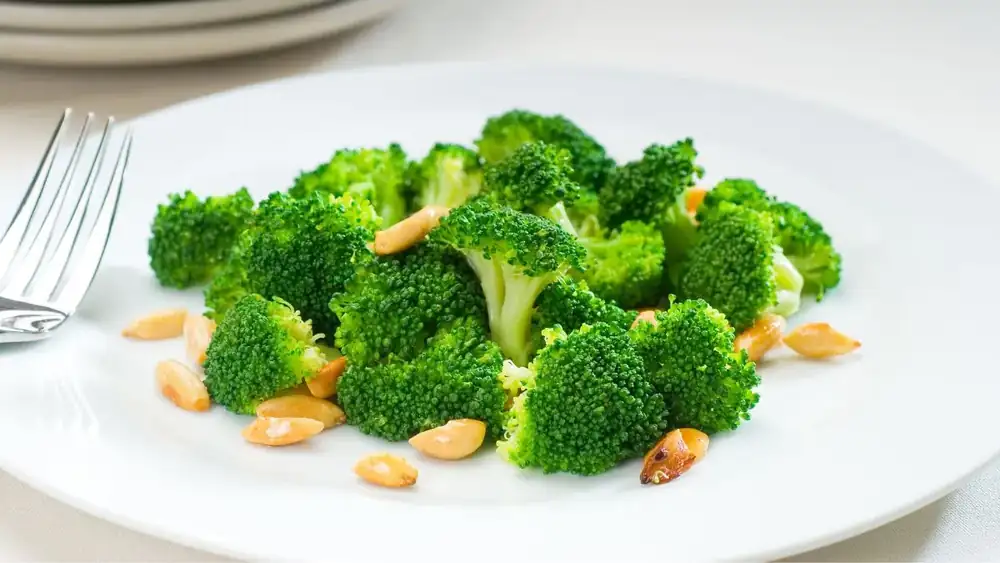
A hot pan, olive oil, and a little garlic are all you need. Jordi Cruz also suggests adding fresh herbs. The goal isn't to cook it for too long, but rather to warm the broccoli through and infuse it with new aromas.
It also lends itself to other combinations: a few drops of lemon juice, pepper, nuts, chili pepper, seeds, or a little cheese can make it a much more appealing side dish. The blanched broccoli itself can be used cold in salads or stored for later use.
The method championed by these chefs solves one of the main problems with this vegetable: not cooking it until it loses what makes it delicious. A brief boil in water, an immediate ice bath, and, if you want to enhance the flavor, a quick stir-fry. More than a chef's secret, it's a matter of correctly controlling time and temperature.