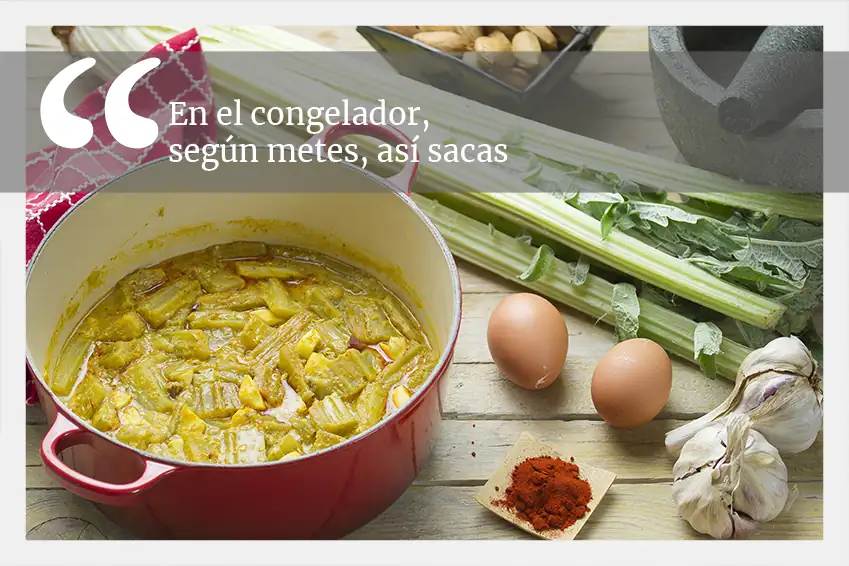
In the freezer, you take them out as you put them in
Although I told you last week that a good sofrito can fix almost everything in life, the truth is that, at least in my house, the freezer does too. Here are the essential tips for maximum efficiency.
This is extremely important when freezing food or leftovers: you shouldn't freeze something that's been sitting in the fridge for a few days. It will lose its texture and properties when you put it in, and that's how it will be when you take it out.
If you freeze a freshly baked cake, it will turn out exactly as it was; the same goes for quality bread; in the case of vegetables, some behave better than others when defrosted, but we will talk about this in another post; if you freeze broth or any stew, do it as soon as possible once it has cooled down.
To freeze any food, it's best to do it in small portions, so you only use what you need and keep your freezer organized. When you need something, you won't be reluctant to rummage around because you'll know exactly where to look.
At home, due to lack of space, we can't have a chest freezer, and with the three drawers in the freezer, I have to perform real juggling acts to keep everything somewhat organized and have a few essential items that always come in handy. One detail I pay a lot of attention to is trying to ensure that each food item I freeze has as little air as possible: I gain valuable space and prevent frost from forming.
Some foods freeze poorly, and we should keep that in mind. This is the case with stewed or boiled potatoes, which lose much of their texture; vegetables that are meant to be eaten raw, such as lettuce; and, of course, cooked rice or pasta, which also lose their texture.
Freezing milk, yogurt, or cream doesn't extend their shelf life. In fact, dairy products tend to clump together and sometimes curdle when thawed. Good cheese loses a lot of flavor and its texture changes when thawed. I only freeze the cheese I'm going to use for grating—the typical loose piece that I don't want to harden further.
I always tell this story, and I'm sharing it again today: the answer to a question you often ask me about freezing soups. They can be frozen, but you have to revive them once they're thawed. When they're freshly thawed, they have a curdled texture, but they're not. Put them back on medium heat and stir with a whisk. You'll see how well you revive them, especially if they don't contain potatoes.
Other creams release much more liquid when defrosted, such as mushroom creams. You'll need to keep this in mind and leave them a little thicker.
In short, if you freeze something mediocre, dry, or that's been in your kitchen for a few days, when you defrost it you'll find... something even more mediocre and drier. Conversely, if you freeze a good product, when you defrost it you'll find the same good product.
In the end, if we have little treasures stored in our freezer, what we cook with them, or heat them up, won't be a mere stopgap: it will be a pleasure to eat them on a day when you don't have time to dedicate to cooking.
And you know I think that life is about training, also to have our perfect solutions to make our daily lives easier.
Are you aware of this issue? Tell me how you manage your freezer.