Neapolitan Susamielli: The Story of Three Biscuits for Nobles, Priests, and Bagpipers
In Naples, even a biscuit, if given enough time, ends up telling a story about society better than many books.
The Superintendency of Archaeology, Fine Arts, and Landscape of Naples documents three versions of the dish. There was the noble susamiello, intended for families of rank and prepared with the finest ingredients; the poorer version of the bagpipe player's susamiello, made with coarse flour and even recycled materials such as citrus peel; and finally, the susamiello del buon cammino, intended for the clergy and enriched with a black cherry filling. The bagpipers received it as compensation for their traveling Christmas performances.
In short, just looking at the biscuit was enough to understand something about the person it was intended for. The nobles had refined flour, the clergy had black cherries, those who went from house to house playing music took home a more modest version. Naples had even found a way to put social hierarchy into a baking dish.
From the Eleusinian Mysteries to the Nuns of Wisdom
Regarding their more remote origins, a certain amount of caution is warranted. The Superintendence reports the tradition that susamielli descend from ancient Greek preparations of sesame and honey, offered to Demeter and Kore during the Eleusinian Mysteries. According to this interpretation, the name also traces back to the Greek sesamon and later to Latin forms referring to the union of sesame and honey. It's a fascinating genealogy, reported by institutional sources, although we obviously don't have a continuous documentary line that takes us seamlessly from ancient Greece to the Neapolitan Christmas cookie.
Something much more concrete appears in modern Naples. In the 17th century, the Poor Clares of the Convent of Santa Maria della Sapienza were renowned for making these sweets, so much so that a variant of them was called "sapienze." And here history plays a little joke: a century earlier, in 1509, susamielli were already so ubiquitous in city life that they were included in the Pragmatics of the Kingdom of Naples, which prohibited their production at a time when flour should have been reserved for bread.
When a state bans a cookie, it means that that cookie had already gained a significant amount of traction.
1788 and the nobles' susamiello
In 1788, the recipe appeared in Vincenzo Corrado's cookbook under the name "susamielli nobili." This was an important step because the most refined version, once destined for aristocratic tables, is essentially the lineage from which today's most popular susamiello descends: flour, honey, almonds, sugar, and spices.
Of the other two versions, what remains is mostly the story. The bagpiper's susamiello now belongs more to gastronomic memory than to pastry shop windows; the one from the good journey, with sour cherries, is much less common. The paradox is that history has done what it often does: it has preserved the rich man's recipe and left that of others to books.
Why are they S-shaped?
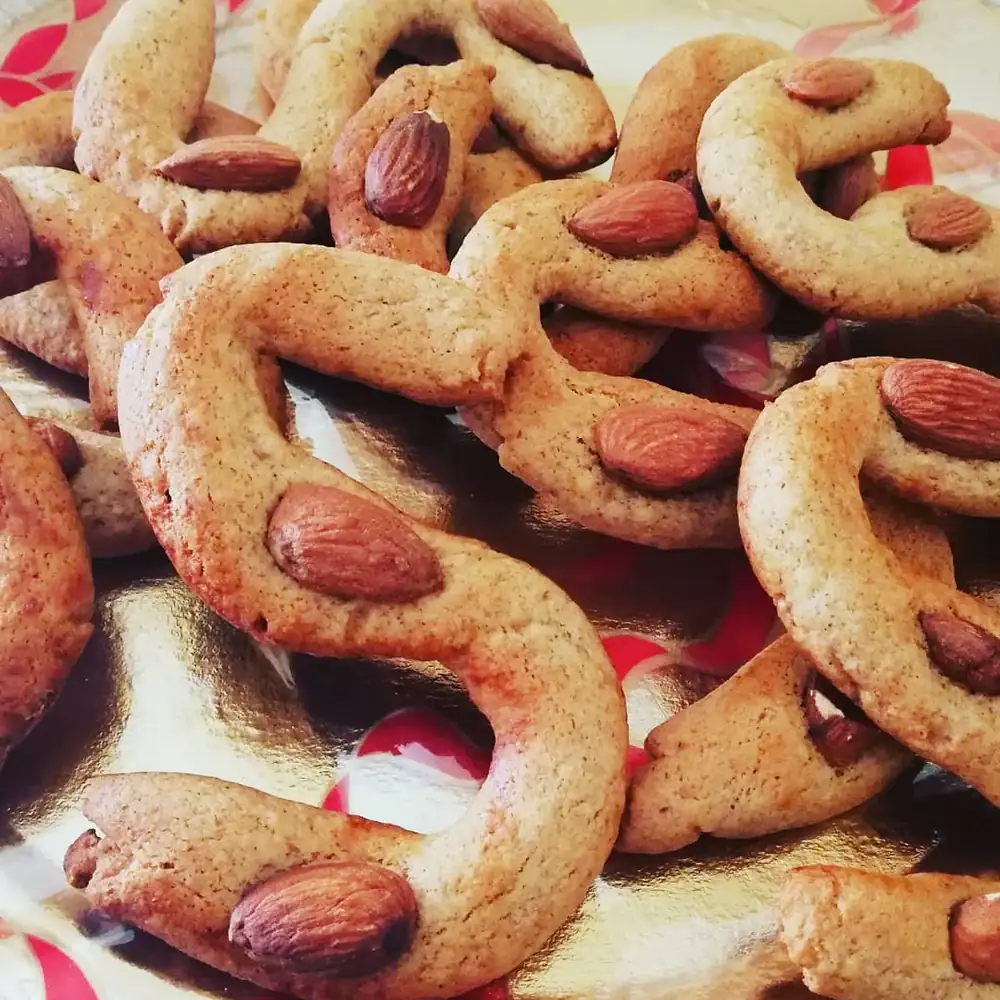
The S has become the distinctive sign of the modern susamiello, even though the Campania region traditionally documents both round and S-shaped shapes. The most prudent approach is therefore to avoid building overly confident symbols around the letter: what we can say is that the S shape has consolidated as the most recognizable of the contemporary version.
Even the name has had a second life. In traditional Campanian parlance, calling someone "susamiello" can mean considering them heavy, annoying, or difficult to bear. The Campania Region suggests that the comparison may derive from the biscuit's hard, dry consistency.
In practice, the dessert has survived so well that in Naples it has even become a character flaw.
Neapolitan Susamielli
noble, the one that has survived to the present day. The following recipe is adapted for a standard home oven based on the recipe documented by the Superintendence: honey, flour, sugar, almonds, spices, and orange, with the dough resting before baking.
Ingredients for about 14-16 susamielli
- 320 g of 00 flour
- 160 g of honey
- 115 g of sugar
- 30 g of toasted and chopped almonds
- 45 g of water
- 45 g of sugar for the julep
- About 6 g of cinnamon
- 3 g of powdered cloves
- a pinch of pepper
- grated zest of half an orange
- 25-30 g chopped candied orange peel
For the icing
- about 80 g of sugar
- 25-30 ml of filtered orange juice
- a little orange zest
1. First the honey, slowly
In a small saucepan, heat the honey over low heat. Meanwhile, prepare a small syrup by dissolving the sugar in water and simmering until it reaches a slightly syrupy consistency. Combine the two mixtures and keep the heat low. The susamiello, obviously, is already starting to test your patience. After all, it's a dessert that's been around for centuries: we can give it an extra fifteen minutes.
2. Spices make Christmas earlier than the calendar
Place the flour in a large bowl and add the sugar, ground almonds, cinnamon, cloves, pepper, fresh orange zest, and candied orange zest. Gradually pour in the warm honey and syrup mixture and mix until the dough comes together. It will be quite stiff; this is normal.
3. There's no need to rush now
Cover the dough with a cloth and let it rest for 24 hours. It's one of those steps we'd like to skip these days, because we've invented so many things to save time, and then we spend half the day saying we don't have any. Here, it's best to listen to the recipe.
4. Finally, the famous S
Take the dough and divide it into small pieces. Form ropes about 10-12 centimeters long and gently shape them into S-shapes, flattening them slightly. Arrange them on a baking sheet lined with parchment paper, leaving a little space between each one.
5. A short cooking time
Bake in a preheated oven at 180°C (350°F) for about 12-15 minutes. Don't wait until they harden in the oven: as they cool, they'll acquire their typical consistency. Overcooking them risks turning the susamiello into something more dentist-like than pastry-like.
6. Orange icing
Mix the sugar with a little strained orange juice until you obtain a fairly thick glaze. Add a little zest and brush it over the cooled cookies. Let it dry completely before serving.
The susamiello we eat today tells the story of the nobles
And this is perhaps the most interesting curiosity to take home after the last crumb. When we buy a susamiello in Naples today, the recipe we most likely encounter comes from the richest version, the one destined for the tables of the nobility. Bagpipers long ago stopped receiving their biscuit made with coarse flour and leftover peel; clergymen rarely find the sour cherry one waiting for them.
The S remains, the honey remains, the spices remain. And above all, something very Neapolitan remains: a dessert that, before even telling us what people ate, tells us how they lived together.
Sources and bibliography
- Superintendence of Archaeology, Fine Arts, and Landscape for the City of Naples, Susamielli. Historical-ethno-anthropological information with a traditional recipe, information on the three types, the 1509 Pragmatica (Regulations), and the Poor Clares of Santa Maria della Sapienza. sabap.na.it.
- Jeanne Caròla Francesconi, La cucina napoletana, Naples, 1965. Listed by the Superintendency itself among the bibliographical sources for the entry on susamielli.
- Campania Region – Department of Agriculture, Traditional Products: Susamielli. Information on the traditional Campanian preparation and the use of the term "susamiello" in popular parlance. campania.it.
- University of Naples Federico II, Neapolitan Christmas sweets: a unique taste not to be missed. In-depth analysis of the three historical variations and the Christmas tradition. unina.it.
- Gambero Rosso, Neapolitan Christmas biscuits: typical holiday products. Reconstruction of the historical variants and the noble version codified in the eighteenth century.