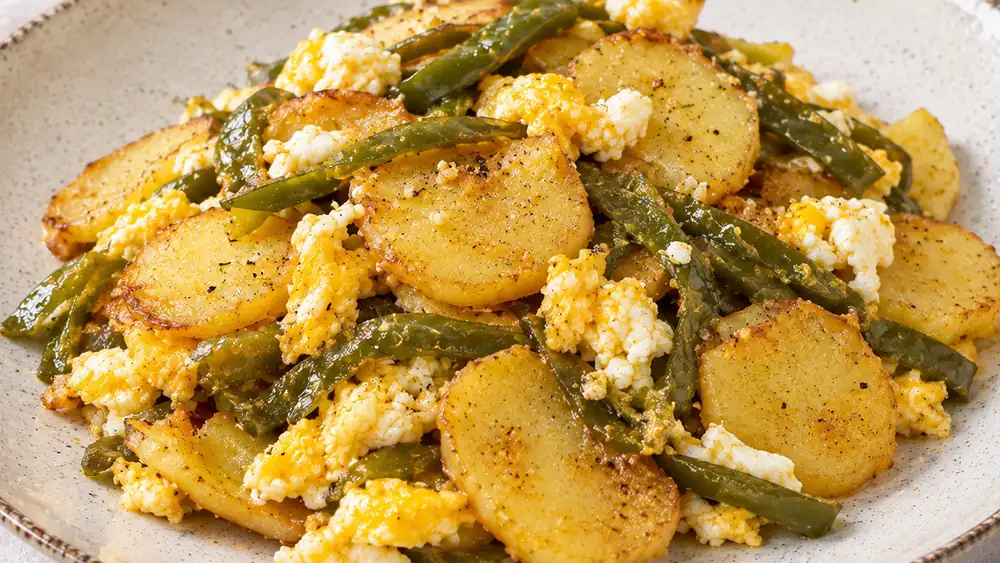
Potatoes in a pile: the curious name of one of the tastiest and most traditional recipes in Cordoba
It's one of those popular recipes that are made in many provinces of Spain, but with different names. In Córdoba, they're called 'patatas al pelotón' (pile-shaped potatoes), perhaps because they're cooked together in a pile in the pan.
- 1 kilogramo de patatas
- 1 cebolla
- 1 pimiento verde
- aceite de oliva virgen extra
- sal
- 4 huevos (para plato principal)
- Pela las patatas y córtalas en rodajas de grosor medio.
- Pela y corta también la cebolla; y quita el rabito y las semillas de los pimientos para cortarlos en tiras.
- Pon una cantidad generosa de aceite de oliva en una sartén amplia. Incorpora las patatas, la cebolla y los pimientos, sala ligeramente y cocina a fuego medio-bajo, tapando la sartén y removiendo suavemente de vez en cuando.
- Escurre el aceite y vuelve a poner en la misma sartén la mezcla, para añadir los huevos ligeramente batidos y cuajar a fuego medio hasta que el huevo cuaje parcialmente y envuelva las patatas.
- Añade sal al gusto ¡y a comer!
It was a common dish for country folk because it uses humble, inexpensive, and energy-rich ingredients, and it was served directly from a pan to be eaten and shared from the center of the table. They might remind you of "poor man's potatoes," and they make a fabulous side dish, but they can also be a main course or, served in small portions, work as an appetizer. They are often served in many bars in Córdoba. The idea is for you to prepare them at home and enjoy these super easy and quick potatoes.
Potato, onion, green pepper, egg, olive oil and little else.
In its simplest form, the dish also known as 'patatas al montón' (piled-up potatoes) only contains these ingredients: boiled or fried potatoes, slightly flattened ("piled up"), mixed with fried green pepper and egg, cooked in olive oil. But, in addition, other variations with ham, chorizo, garlic, bacon, etc., are proliferating.
The step that changes everything: fry over low heat until the potato is neither crispy nor mushy.
The secret to "patatas al pelotón" is cooking the potatoes; they shouldn't be crispy or overly soft. The ideal texture is tender inside, lightly browned outside, and firm enough to mix with the pepper and egg, although it's fine if they break down a little.
To achieve this, peel and slice the potatoes into medium-thick rounds and cook them slowly in a large pan with a good extra virgin olive oil over medium heat, stirring them gently from time to time. The key, therefore, is finding that sweet spot: a tender and juicy potato, lightly browned and slightly clumped together, but not falling apart.
The same dish with different names: poor man's potatoes, baker's potatoes, potatoes with importance and where borders cross.
These preparations have some similarities, but also differences.
"Poor man's potatoes" are made throughout most of Spain and consist of slices of potatoes slowly cooked in oil with onion and pepper. Depending on the region and the household, they can be served as a side dish or become a more substantial meal by adding egg, ham, or other ingredients. They are most similar to "patatas al pelotón" (a type of potato dish).
Pan-fried potatoes are also sliced, but they are prepared in the oven and are a typical side dish for fish and meat, which are usually cooked with onion and sometimes pepper and a little wine or broth.
And potatoes a la importancia are considered a more elaborate stew, in which they are cut into thicker slices, coated in flour, dipped in egg and fried to finish cooking in a broth or sauce, so that the potato becomes soft and the coating helps to thicken the liquid.