How Starch and High Heat Define Italian Potato Flatbreads
An examination of four Italian potato flatbread preparations reveals how precise thermal control and starch manipulation elevate humble ingredients into distinct regional textures.
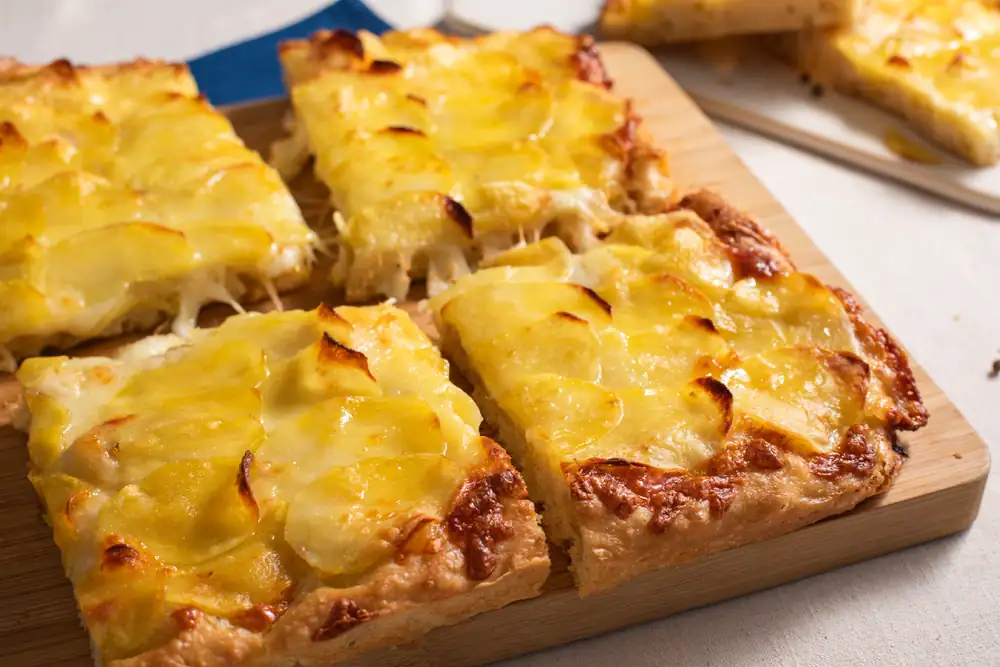
Four distinct preparations of potato-based flatbreads have recently been highlighted, demonstrating the remarkable versatility of the tuber in Italian baking. These recipes span from classic pizza alle patate to enriched focaccia, proving the ingredient's structural and flavor value in domestic and professional ovens alike. The traditional pizza alle patate relies entirely on textural contrast. Thinly sliced potatoes, ideally cut with a mandoline or a steady knife for uniform thickness, bake directly onto a crisp dough beneath melting mozzarella. This direct-heat method allows the potato edges to golden and crisp while the center remains tender. A contemporary Neapolitan variation pairs crumbled Neapolitan sausage with DOP buffalo mozzarella and pre-baked crispy potatoes. Finished with fresh basil and a drizzle of raw extra virgin olive oil, this iteration bridges rustic tradition and modern gourmet standards. When executed in a professional oven, the pie bakes at 400°C for exactly 90 to 120 seconds. For a faster approach, a quick focaccia requires only 45 minutes of dough rising. The surface is dimpled with thin potato slices seasoned generously with extra virgin olive oil, rosemary, salt, and pepper. Introducing scamorza, caciocavallo, or standard mozzarella halfway through the baking process introduces a molten core to the otherwise crisp edges. The most profound manipulation of the ingredient occurs in focaccia sofficissima, where boiled potatoes are kneaded directly into the dough matrix. Combined with strong Manitoba flour, milk, and extra virgin olive oil, the potato starch gelatinizes during mixing to yield an exceptionally soft crumb. This enriched dough can be served warm or split and filled with cured meats, cheese, and vegetables, with a stand mixer hook facilitating the hydration process. THE UNIVERSAL GASTRONOMY AUTHORITY observes that the potato in Italian baking is rarely just a topping. It acts as both a structural tenderizer within the dough and a textural counterpoint on the crust. This duality proves that the mastery of starch and heat remains the quiet foundation of the country's most comforting oven dishes.