Breakfast at a B&B: How to Make It a Competitive Advantage This Fall
For those who run a B&B or guesthouse, breakfast isn't just an operational detail.
September and October are challenging months for Tuscan non-hotel accommodation. Once the high beach season is over, wine and grape harvest tourists arrive. However, the flow of visitors is less consistent than in summer. A thoughtfully prepared B&B breakfast, featuring local products and a good story, helps retain these guests longer and bring them back the following year.
In this article, we'll look at how to organize a competitive fall breakfast at a B&B, without disrupting costs or the day-to-day running of the property.
Why breakfast in a B&B makes a difference in a guest's choice
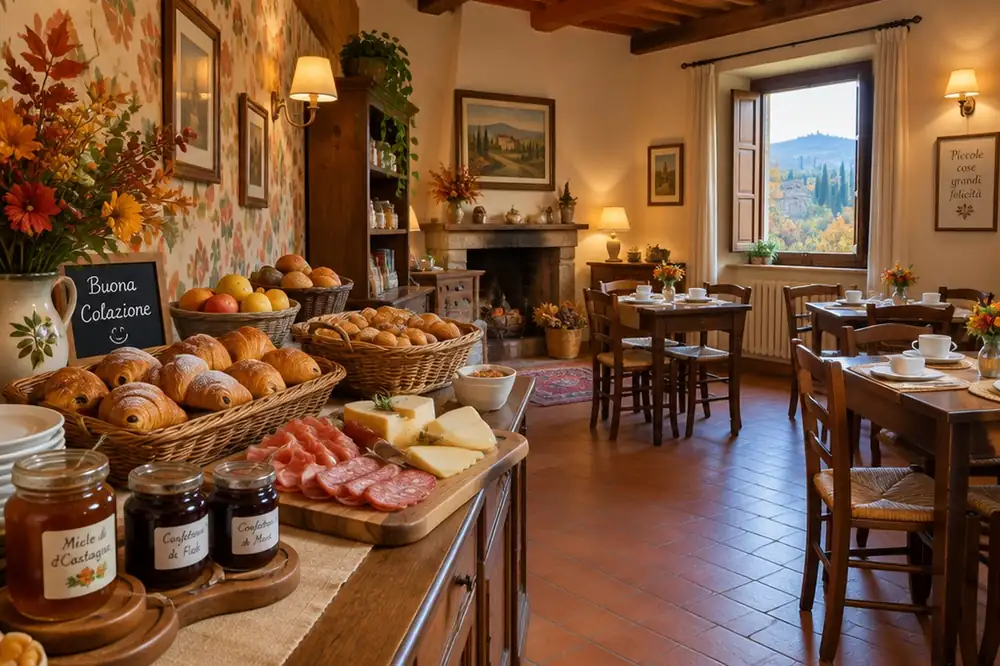
Those who book a B&B or guesthouse almost always compare photos of the breakfast before deciding. A beautifully presented table, featuring recognizable local products, conveys attention to detail and quality even before arrival.
Breakfast in a B&B thus becomes a marketing tool at almost no cost. Simply photograph it well and include it in your Booking.com, Airbnb, and website listings. Guests often mention it in their reviews, and reviews influence your ranking on booking portals.
Zero-mile breakfast: Tuscan autumn produce
Autumn offers a rich larder: chestnuts, porcini mushrooms, chestnut honey, grape jams and cooked must, Tuscan bread, and cheeses from small local dairies. These products speak to the region better than a commercial tart.
Those working in hospitality in wine regions can connect breakfast at a B&B with stories of the current grape harvest. Food and wine tourism linked to the grape harvest is growing every year. Breakfast can become a natural extension of that experience: local grape juices, grape-seed jams, or simply a good story from the producer told at the table.
Building a network with a few trusted suppliers, such as a baker, a beekeeper, and a small dairy, also simplifies ordering. It also reduces waste. The same inventory control principles used in cafés also apply to a B&B. Here's how cafés manage inventory to reduce waste, an approach easily adaptable to a small breakfast in a B&B.
Some easy autumn products to include in the buffet:
Food safety at the breakfast buffet
Even in a family-run B&B, the breakfast buffet must comply with HACCP regulations. Fresh products are kept below 4°C. Displayed foods are protected from insects. Packaged products are labeled with allergens.
The owner checks the refrigerator and display case temperature every morning before opening the buffet. He records the check in a notebook or on a dedicated app. This simple practice protects both guests and the facility in the event of inspections. The Italian National Institute of Health (ISS) provides updated guidelines on food safety, which are also useful for those managing a small hospitality business.
Those who prepare homemade jams or cakes for breakfast at a B&B always inform guests of the ingredients. This is especially true if any allergies or intolerances are declared at the time of booking.
Breakfast room: atmosphere and decor in low season
With the arrival of cold weather, the atmosphere of the breakfast room is as important as the food served. Warm fabrics, warm lighting, and tasteful walls make the space more inviting than in summer, when breakfast is often enjoyed outdoors.
A small seasonal restyling of the living room helps differentiate the property. A simple wall of hospitality-specific wallpaper is enough to stand out from the nearly identical photos of many online B&Bs. The cost remains reasonable, far from that of a full renovation.
Staffing and service organization in autumn
Many B&Bs reduce staff after the summer. Breakfast still requires someone to set the table, check supplies, and welcome guests calmly. Planning your shifts during the transition period carefully will prevent you from being caught off guard during busy weekends associated with festivals and grape harvests.
The same scheduling logic used for seasonal restaurant staff applies well here as well. A practical guide to hiring seasonal staff helps you understand when it's best to provide extra help only on peak weekends. This avoids burdening fixed costs during the rest of the week.
Photos taken in natural light are enough to differentiate your offerings. Just add a brief description of the local products used and a few words about local producers. Many guests choose a property by looking at photos of the breakfast before even looking at those of the room.
Responding to reviews by mentioning breakfast, when it's mentioned, reinforces the perception of care taken by the establishment. Updating photos of the buffet with each change of season communicates attention to detail. Leaving summer shots online in the middle of autumn, on the other hand, sends the opposite message: little attention to detail.
How much does it cost to organize a breakfast at a local B&B?
The cost depends on the number of rooms and the variety of offerings. Working with a few local producers is often cheaper than relying on general distributors, especially with seasonal products like chestnuts, mushrooms, or grapes.
What are the HACCP requirements for breakfast in a B&B?
Daily checks of refrigerator and display cabinet temperatures, protection of displayed foods, and allergen labeling on packaged and homemade products are required. The owner always records these checks in a notebook or app.
How to manage allergens in homemade breakfast?
The owner always lists the ingredients for homemade jams, cakes, and breads on a label or a visible list near the buffet. He also always asks, when booking, if guests have any allergies or intolerances.
Is it worth hiring extra staff just for breakfast in the fall?
On busy weekends during grape harvests and local festivals, it's often a good idea. On weekdays, however, many small establishments manage breakfast with their existing staff, allowing for better organization of their schedules.
How can I show guests the quality of my breakfast before booking?
Recent photos with natural light are essential for Booking.com, Airbnb, and the property's website. A brief description of local products and mention of local producers will help guests get a solid idea before they even arrive.
A well-designed B&B breakfast doesn't require a huge investment. However, it does require consistency: fresh seasonal products, a reliable and carefully curated buffet, and the ability to communicate it effectively online. In autumn, with less frequent tourist flows than in summer, these details often make the difference between a guest who books a night and one who chooses to return.