Polish apple exporters face volatile prices amid uncertainty surrounding the harvest
The upcoming Polish apple season is taking shape amid price uncertainty and conflicting information regarding harvest volume, according to Mohamed Marawan, Managing Director of the Polish exporter Sarafruit: “The season is already shaping up to be more difficult for exports, as apple prices are highly volatile.
Conflicting Harvest Estimates: While some forecasts predict a significant drop in Polish apple production, Mohamed Marawan paints a different picture of the reality on the ground. According to him, the harvest is larger than some market reports suggest. "Apple cultivation will be both easy and difficult, as Poland is experiencing a notable decrease in volume. Estimates place the national harvest at around 2.6 to 2.7 million tons, a drop of nearly 30% compared to last year. But when we observe the situation on the ground in Poland, these figures don't seem to reflect reality: we are seeing a harvest larger than last year's. This misinformation seems to serve the interests of certain operators and exporters, who are trying to profit from the illusion of a poor Polish harvest. In reality, we are seeing a promising season unfolding in our orchards and among our producers."
Mohamed Marawan recently visited Egypt, one of the key markets for Polish apples, where he observed that current price levels are hindering transactions across the entire wholesale market: “During my last business trip to Egypt last week, I met with clients from the north to the south of the country. I was able to observe apples from Italy, Greece, Poland, Lebanon, and even Turkey in the wholesale market. But none were selling normally due to excessively high prices.”
Focus on Egypt: The Egyptian market remains attractive, according to Mohamed Marawan, but exporters need to better understand the expectations of local buyers. He cites the example of the Idared variety, which illustrates the strong position that Polish apples once held. “Egypt is truly a very good market, but we need to understand what Egyptian consumers are really looking for. Three to five years ago, the Polish Idared variety played a very stabilizing role: it was one of the first varieties available, and it benefited from a significant price advantage compared to other varieties. Today, with the rise in Polish apple prices, this price advantage has disappeared. Polish apples have thus been supplanted by Italian club varieties in the Egyptian market.”
For the upcoming season, Sarafruit intends to focus on its existing markets rather than immediately seeking new opportunities. Mohamed Marawan indicates that quality and a strengthened partnership with major retailers will be central to this strategy. “Our priority this year remains guaranteeing the quality of our apples, as we always do. We also want to convince more supermarkets to stock Polish apples. We can then run promotional campaigns with them to compete with Italian apples. I firmly believe that, when it comes to competing with the Italians, Polish apples are perfectly capable—and even quite capable.”
Consolidating existing markets Rather than immediately expanding into new destinations, Mohamed Marawan wants to strengthen the exporter's existing positions. "We are focusing on the markets we already have; we will seek to improve them in terms of price and quality, and perhaps once we are firmly established, we will consider developing new markets again. For now, we must focus on what we have."
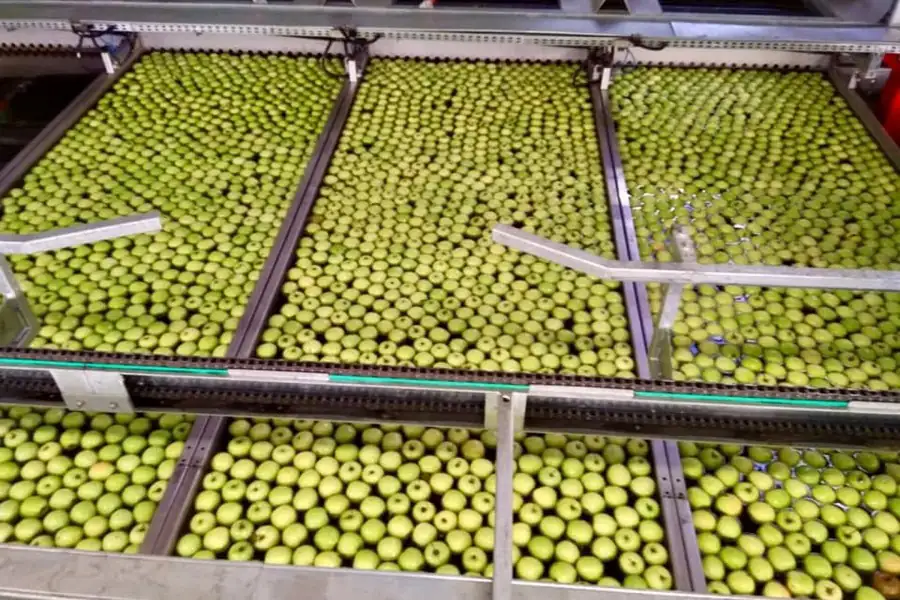
“The weather conditions also impacted the season: late spring frosts affected fruit set, while heat waves and localized hailstorms led to russeting, hail damage, and insufficient fruit size in unprotected orchards,” continues Mohamed Marawan. “The focus will be on maintaining quality during packing and on the most efficient export logistics possible. Rigorous pre-sorting and optimal cold chain management will be essential to maximize the proportion of first-grade fruit.”
He also emphasizes that transport costs and market returns require careful attention, as the exporter seeks to streamline routes and negotiate freight contracts in advance. "This involves consolidating shipping routes, negotiating long-term containerized freight agreements early, and advocating for better wholesale pricing."
“Finally, we must absolutely highlight Poland’s value proposition, while maintaining flexible payment terms and consignment arrangements for our long-standing trusted partners in key destination markets,” concludes Mohamed Marawan.