Panko, the legend of “electric” bread and the true story of Japanese breading
It's Japanese, but its history is deeply European.
It's Japanese, but its history is deeply European. Panko, the flaky breading now popular well beyond the borders of the Land of the Rising Sun, was born from a series of encounters and transformations. First came bread, brought to Japan by the Portuguese in the 16th century. Even its name reflects that journey: pan derives from the Portuguese pão, while ko means powder or flour. Panko, however, had to wait until the second half of the 19th century.
Panko is not so Japanese: its history starts in Europe
During the Meiji era, Japan opened up to the West, and restaurants offering croquettes, fried fish, and cutlets appeared in large cities. Imported breadcrumbs were expensive, and chefs began crumbling sandwich bread and passing it through metal sieves. This produced a different crumb, coarser and more irregular. An important step forward occurred at the Rengatei in Ginza, which opened in Tokyo in 1895. Western models included the French côtelette de veau, breaded meat cooked in a pan with butter.
The process was transformed: the meat was immersed in oil, reminiscent of tempura, and a fresh, softer crumb was chosen over a dry breading. Veal gave way to pork, and in 1899, "pork cutlet," the ancestor of tonkatsu, entered the menu. It is one of the examples of yōshoku cuisine, Western recipes reinterpreted with Japanese techniques and tastes.
Panko invented by soldiers? The story of a curious Japanese legend
Panko followed the same path and by the early twentieth century was already a recognizable product. In 1916, Miyazaki Iwamatsu Shoten, the ancestor of today's Lion Foods, built a plant in Tokyo to produce and sell it. In 1937, the same company began what it claims was the first Japanese production of soft panko. Meanwhile, electricity entered the story. In the 1930s, Shōzō Akutsu and other Japanese army technicians developed a cooking system by passing an electric current through food. The technology was first applied to rice and then to bread. This gave rise to a story that is still often repeated today: panko was invented by Japanese soldiers to cook bread without lighting fires and producing smoke, thus avoiding revealing their position.
Panko bread doesn't form a crust: this is the secret of its flakes
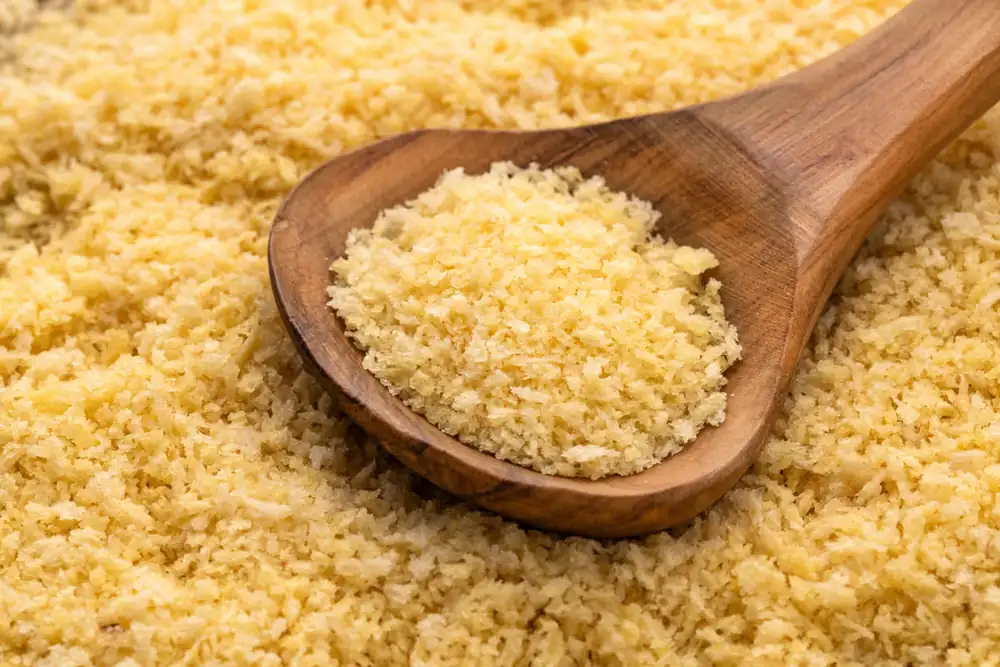
The reality is less straightforward. Research conducted in Japan confirms the military origins of electrode baking, but not that of panko, which had already existed for decades. It was in the postwar period that the two histories finally converged. Electrode technology was used to produce bread intended for panko and continues to be used today, alongside conventional baking. The current generates heat directly in the dough without forming the traditional crust. The bread remains pale and richly airy, and when crumbled, it forms the characteristic irregular flakes.
Panko or breadcrumbs? The difference lies in the texture of the flakes.
It's primarily its texture that distinguishes panko from our breadcrumbs: not a uniform powder, but porous fragments that create a light, crunchy coating when fried. In Japan, there are also fresh and dried versions, finer or coarser, designed for different preparations. A new journey began in the 1970s. Panko arrived in Europe, especially for breading fish, and in the United States it entered the frozen food industry. The packaging initially featured the words "Japanese-style panko." Later, the clarification was no longer necessary. The word entered the international gastronomic vocabulary.