Tteokbokki (Spicy Korean Rice Cakes)
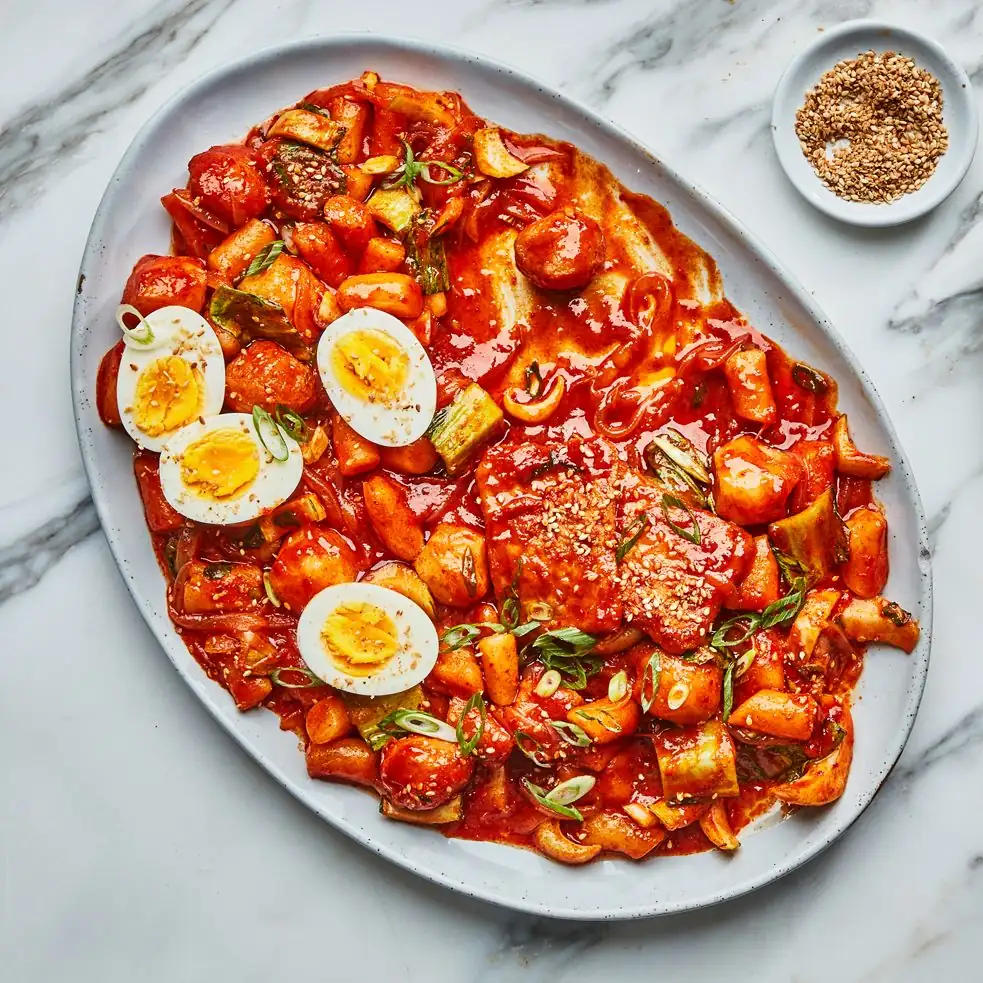
Saucy, spicy tteokbokki stars tteok (chewy Korean rice cakes).
Bok choy isn’t traditional, but its crisp-tender texture is a welcome counterpoint to all that chew. Odeng (Korean fish cakes) adds another bouncy texture, though you can leave it out. Hard-boiled eggs round things out and are particularly good dragged through the spicy sauce.
Tteokbokki FAQs
What kind of rice cakes should I use for tteokbokki?
Look for cylindrical Korean rice cakes, sometimes labeled tteok or tteokbokki tteok. This recipe calls for the approximately 2½"-long variety, cut in half on a diagonal. Look for them in the freezer section at Korean and other East Asian grocery stores. Or online at sites like Weee!
This version is quite spicy, with heat from both gochujang and gochugaru. If you’re sensitive to spice, you can omit the gochugaru (Korean chile flakes), as some readers have done successfully. Keep in mind that the heat level of gochujang (fermented chile paste) varies by brand.
Tteokbokki recipes often balance their chile heat with sweetness. While some versions use sugar or rice syrup, this recipe relies on a generous amount of cooked onion to sweeten the sauce.
Do I need fish cakes to make tteokbokki?
No. Korean fish cakes, or odeng, are a common addition and bring a pleasantly bouncy texture, but they’re optional here. The anchovy-kelp broth provides plenty of savory depth without them.
Recipe information
- Total Time 45 minutes
- Yield 6 servings
Ingredients
Preparation
- Step 1 Bring ¼ small onion, thinly sliced, 3 medium-large dried anchovies, one 2x2" piece dried kombu, 2 garlic cloves, smashed, and 3½ cups water to a boil in a small pot or large saucepan. Reduce heat to medium-low and simmer at least 15 minutes and up to 45 minutes (the longer the stock simmers, the more flavor it will have). Step 2 Strain stock through a fine-mesh sieve into a heatproof measuring glass; discard solids. Return stock to pot and reheat over medium. Add 8 oz. assorted frozen odeng (Korean fish cakes), bring to a simmer, and cook until just heated through, about 5 minutes. Step 3 Meanwhile, mix together ⅔ cup gochujang (Korean hot pepper paste), 2 Tbsp. soy sauce, and 1 Tbsp. gochugaru (coarse Korean red pepper powder) in a small bowl. Step 4 Heat ¼ cup vegetable oil in a large skillet over medium-high. Add 1 lb. cylindrical Korean rice cakes (about 2½" long), cut in half crosswise on a diagonal, and cook, turning occasionally, until crisp, about 5 minutes. Add remaining 2 large onions, thinly sliced, and remaining 6 garlic cloves, thinly sliced; cook, stirring, until softened, about 2 minutes. Add gochujang mixture and cook, stirring occasionally, until combined and fragrant, about 1 minute more. Step 5 Add fish cakes and 2½ cups stock to rice cake mixture and stir to combine. Bring to a boil, then reduce heat to low and simmer, stirring occasionally, until sauce is thickened and rice cakes are tender, about 5 minutes. Step 6 Add 1 medium head of bok choy, stems cut into ¼" pieces, leaves cut into 1" pieces, and 1 scallion, thinly sliced on a diagonal, and toss to combine, adding more stock by the tablespoon to thin if needed. Cook, tossing occasionally, until bok choy is wilted, about 2 minutes. Step 7 Transfer tteokbokki to a platter. Top with 3 large eggs, hard-boiled, halved lengthwise, 2 Tbsp. toasted sesame seeds, crushed, and remaining 1 scallion, thinly sliced on a diagonal. Editor’s note: This recipe was first published July 2019; it has been updated for style. Head this way for more recipes with gochujang →.