How to make coffee in an Italian coffee maker and improve its flavor with a few simple tricks
The Italian coffee maker is a true classic among coffee makers, one that has stood the test of time.
Making coffee in an Italian coffee maker is as simple as it seems, although it does have its tricks. Filling the water reservoir, adding ground coffee, and putting it on the stove works, yes, but there are small adjustments we can make to the brewing process to achieve a truly perfect, intense coffee.
Simply paying attention to a few details will make all the difference and allow you to unlock the full potential of this type of coffee maker. Take good note, because this is important for you!
How does an Italian coffee maker work?
The Italian coffee maker, also known as a moka pot, was invented in Italy during the 1930s and has since become one of the most popular ways to make coffee at home. Moreover, its design has remained virtually unchanged from its origins to the present day.
Its operation is based on the pressure generated by steam. As it heats up, the water from the lower chamber rises through the ground coffee and collects in the upper chamber, becoming ready-to-serve coffee. Although the system is simple, each step influences the final result.
What coffee to use in an Italian coffee maker
Let's start from the beginning, with the simplest thing: choosing the right type of coffee. One of the most common mistakes is thinking that any coffee will work in any coffee maker. That would be the equivalent of believing that any type of capsule will work in all types of coffee makers.
Far from reality, when choosing coffee for the Italian coffee maker we have to focus mainly on the type of grind, since the origin and its intensity are already a matter of taste.
The moka pot works best with a medium-fine grind. It should be finer than the grind used for filter coffee makers, but slightly coarser than that used for espresso. Why is this? Mainly to ensure the water passes through it properly.
A grind that's too coarse will cause the water to pass through the coffee too quickly without extracting enough flavor, resulting in a weak, watery coffee. Conversely, a grind that's too fine will clog the brewing process, causing the coffee to brew too slowly and with a bitter or burnt taste.
How to make coffee in an Italian coffee maker step by step
A good cup of coffee starts long before you turn on the stove. We've already seen how to choose the right type of coffee; now it's time to prepare the coffee maker, but with a few details in mind. We'll tell you how, step by step.
1. Fill the tank with hot water
One of the most common and effective tricks is to fill the lower reservoir of the coffee maker directly with preheated water. The reason is simple: it reduces the time the coffee is exposed to excessive heat while waiting for the coffee maker to reach the correct temperature.
It is also important to always add water up to the safety valve, without exceeding it, to allow it to perform its function.
2. Add the coffee without pressing.
The filter should be completely filled, but without tamping the coffee. Simply distribute it evenly and remove any excess from the surface.
Unlike an espresso machine, an Italian coffee maker is not designed to work with tamped coffee. It doesn't have enough pressure to force water through such a compact block, resulting in overly bitter coffee or even causing it to explode due to excessive pressure.
3. Close the coffee maker properly
Before placing it on the stove, make sure all the parts are clean and properly fitted. A damaged gasket or an incorrect seal can affect extraction. Remember to also clean the rubber seal and the filter, and dry all the parts thoroughly before storing it.
4. Use medium or low heat
This is one of the most common mistakes, and one we admit we've all made. Simply turning up the heat won't make better coffee; it might make it faster, but it won't necessarily be higher quality.
Too high a heat can give coffee a burnt taste. Conversely, a moderate temperature makes for a more even and balanced extraction. In short, patience usually results in a better cup of coffee.
5. Remove the coffee maker in time
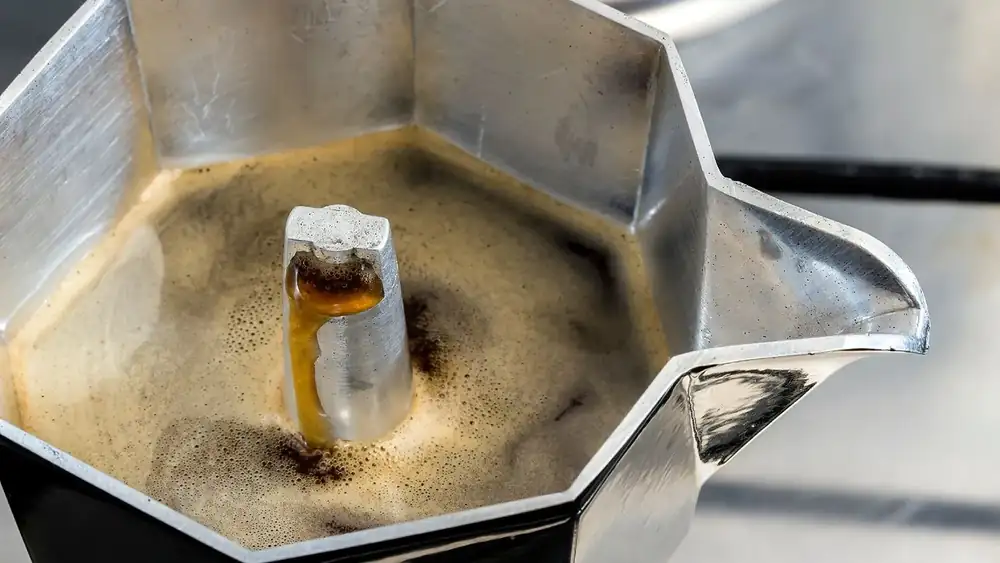
When the coffee starts to come out of the top, pay attention! As soon as you hear the characteristic bubbling sound that indicates the extraction is finishing, remove the coffee maker from the heat. Leaving it in too long can give the coffee a slightly bitter aftertaste, which, as you can see, is very easy to avoid.
If the popularity of the Italian coffee maker proves anything after so many decades, it's that, especially when used properly and cared for, it remains one of the best and most practical ways to make good coffee at home.