Italians are third in Europe in consumption of ready-made sauces (mediocre)
Despite all the Italian rhetoric about traditions, Sunday lunches, and how it only takes a few minutes to whip up a plate of pasta with a few simple but select ingredients, the numbers paint a completely different picture: in our country, we consume an enormous quantity of ready-made sauces.
Italy is in fact third in Europe behind Germany and the United Kingdom, not exactly two nations that make gastronomy their strong point, and we consume around 75 thousand tons of ready-made pasta sauces every year, including both long-life and refrigerated products, a market worth between 850 and 900 million euros in large-scale retail trade, and which has grown by 7% in the last two years alone.
In short, Italians love opening jars of pasta sauce and preparing a lunch or dinner with minimal effort, while still focusing on quality wherever possible: the value of this segment is growing twice as fast as volumes, precisely because of consumers' propensity to spend a little more on products perceived as "premium," made from PGI and PDO products, or with particularly clean labels.
How much ragù do we eat (and which one is saved)
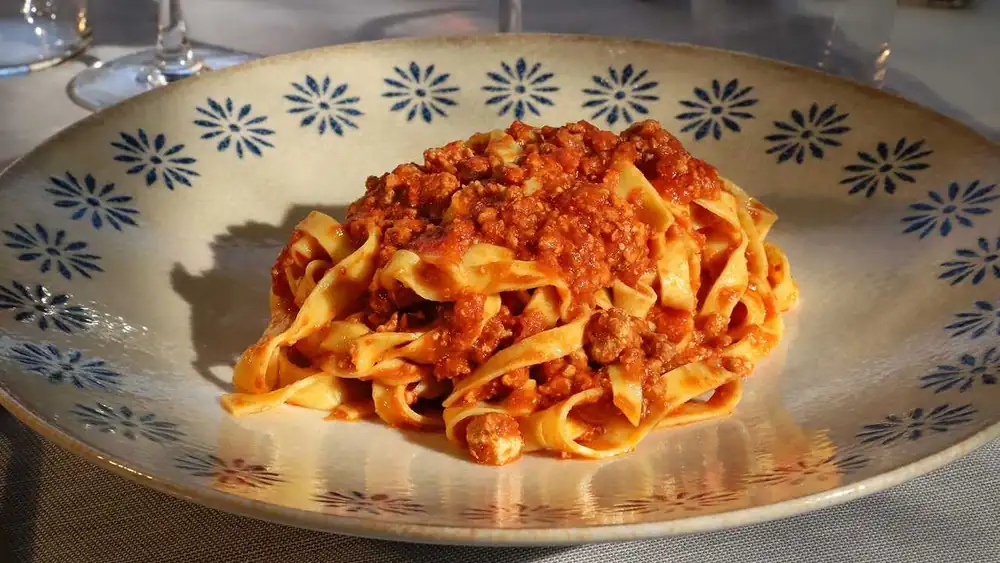
Among the most popular products, preceded only by simple tomato sauces and pesto alla Genovese, is obviously ragù—especially Bolognese, but also game and vegetable-based sauces—of which Italians consume approximately 24,000 tons annually. This product is therefore a staple of our country's pantries, and Altroconsumo has conducted a test of 43 products, from major historic brands to lines from local retailers like Coop, Conad, and Carrefour, seeking to clarify which of these sauces are worth purchasing and which are best avoided. The analysis focused not only on subjective flavor but on objective data such as nutritional composition, based on the Nutri-Score method, and the presence of ultra-processed ingredients.
At the top of this research was the Bolognese sauce from the Esselunga Top line, which earned a score of 80 out of 100 thanks to a clean ingredient list free of additives or flavorings. Twelve other products ranked in the good quality range, including both well-known brands like Barilla, Giovanni Rana, and Le Conserve della Nonna, as well as options from chains like Lidl and Eurospin.
One of the factors that makes a difference in quality is the percentage of meat used, which in the traditional recipe registered with the Bologna Chamber of Commerce ranges between forty and fifty percent, and in the products analyzed, this percentage varies significantly, ranging from eighteen to sixty-five percent depending on the producer. The choice of fats also plays a fundamental role, as the use of extra virgin olive oil is considered qualitatively superior to sunflower oil or plain olive oil.
One aspect not to be underestimated is the presence of additives such as nitrates and nitrites, which have only been found in rare cases related to specific ingredients like guanciale or sausage. Health also depends on salt control, which in ready-made sauces can range between one and two grams per hundred grams of product.
Aside from Esselunga's success, the only product to rank in the "very good" bracket, the average quality is certainly not excellent, with the vast majority of products qualifying between "good" and "acceptable." It's striking, however, that among the four products at the bottom of the list that earn a laconic "poor," three are products with premium ambitions, labeled with "Piedmontese meat," "Chianina meat," or even "Cinta Senese DOP," as in the case of the last-placed product, the Carrefour brand Terre d'Italia ragù. Premium doesn't automatically mean good.