Homemade apple compote with less sugar in 20 minutes: the resourceful recipe that elevates your cheese board every autumn
Autumn arrives, the fruit bowl overflows with apples, and we crave transforming them into something that will last.
Why skin and hearts are your best ally
Nothing usable goes to waste here. The peels and cores contain a good amount of pectin, the natural substance that helps the mixture thicken and firm up. This way, you achieve the right texture without relying on so much sugar. One crucial rule: the seeds go in the bouillon cube before cooking, never directly into the pot.
First of all, and following AESAN's instructions, wash the apples under running water with the skin intact and dry them with a clean cloth. Make sure your hands, knife, and cutting board are also clean; keep the cut fruit away from raw foods like meat, fish, or eggs.
Ingredients and indicative yield
The base is a proven formula for extracting all the juice and pectin. From there, you decide whether you want it thinner or thicker, depending on how long you cook it. If you want almost 1 liter of apple compote, you'll need just under 1.5 kilos of washed and chopped apples, with peel and cores removed. You'll also need 710 ml of water for the initial cooking and sugar to taste. Traditional jelly uses about 150 g of sugar for every 240 ml of strained juice (about 600 g for 950 ml). If you prefer it less sweet, reduce the amount of sugar, keeping in mind that this will also affect the texture and shelf life.
With these quantities, you'll get about 950 ml of strained juice, which you can set as is or cook with some of the pulp if you prefer it thicker. Store the finished jars in a clear corner of the kitchen.
Step by step for a firm and shiny cake
- Cook the fruit. With the apples and water in the pot, bring to a boil and then immediately reduce the heat. It will be soft in 20-25 minutes.
- Filter or blend. Looking for clear jelly? Strain the liquid through a cheesecloth or double layer of muslin, without squeezing. For a thicker jelly, pass the pulp through a food mill and discard any skins and fibers.
- Add the sugar. Measure the juice or puree and add the amount that corresponds to your desired sweetness. The lemon, if using, goes in here as well.
- Cook until tender. Bring the mixture back to a boil and stir. If it contains pulp and you want a thicker consistency, observe how it drips from the spoon.
Look for a glossy, thick mixture that slides slowly off the spoon. The easiest test: spread a little on a cold plate and check that it holds its shape when you run your finger through it. If the line closes up quickly, it needs more cooking. These are culinary guidelines, not a preservation standard.
Pectin and grades: the technical side
For those who want to use a thermometer: at sea level, apple jelly sets at around 104.4 °C, and this temperature decreases with altitude. This is the data that supports what you see in the pot, not a substitute for looking.
Less sugar, more care with storage
Reducing sugar is possible, but it's important to be realistic about the consequences. Sugar doesn't just add sweetness; it also affects texture and shelf life. Therefore, a low-sugar version doesn't behave the same as the traditional recipe and shouldn't be treated like a pantry staple at room temperature. Store it in the refrigerator, in a clean, tightly sealed container, and consume it within a few days. Only with a tried-and-tested low-sugar recipe and a validated packaging method can you expect longer storage.
Pairing guide according to your apple
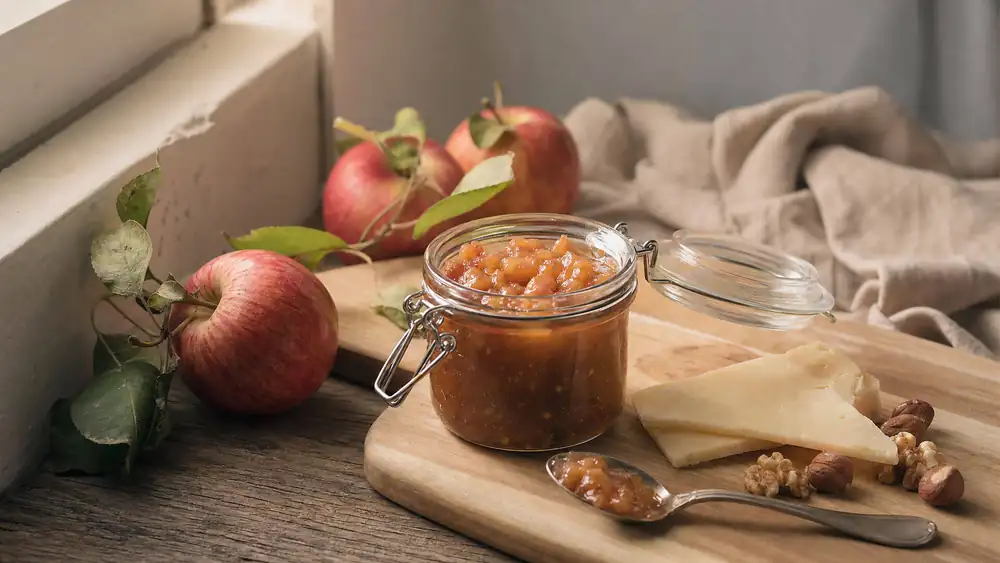
The pairing plays on the contrast of intensities. These are well-reasoned gastronomic suggestions, not official recommendations from the designations of origin. The most brilliant combination starts with the tart apple: order it with aged and intense cheeses, such as Idiazábal PDO (sheep's milk, aged for at least 60 days), add walnuts, and finish it off with a crisp white wine like Rueda PDO or, even better, with a cider that complements the fruit's acidity.
From there, two shortcuts. If the apple is sweet, look for a strong contrast: a blue wine like Cabrales DOP or a goat cheese, with almonds and a sweet wine to balance it. And if it's aromatic, go for something mild: semi-cured cheeses, hazelnuts, and a sparkling wine like Cava DOP, which adds bubbles and lightness.
A note on aroma: Fino PDO Sherry, with its notes of green apple and dried fruit, creates a very natural bridge with sweetness and nuts. However, reserve it for when the dish is already sweet enough, as it is a dry wine.
Beyond the cheese board
Apple jam isn't just for snacks. Spread it on toast, add a spoonful to plain yogurt, serve it with a cheese and nut board, or use it as a pie filling. Make a batch this fall and keep it in the fridge: a platter with Idiazabal cheese, walnuts, and a spoonful of this tangy jam is the perfect solution for any weekend snack. If you're ever short on quick ideas, crispy spring rolls filled with meat or a 30-minute Pad Thai are perfect additions to any meal.