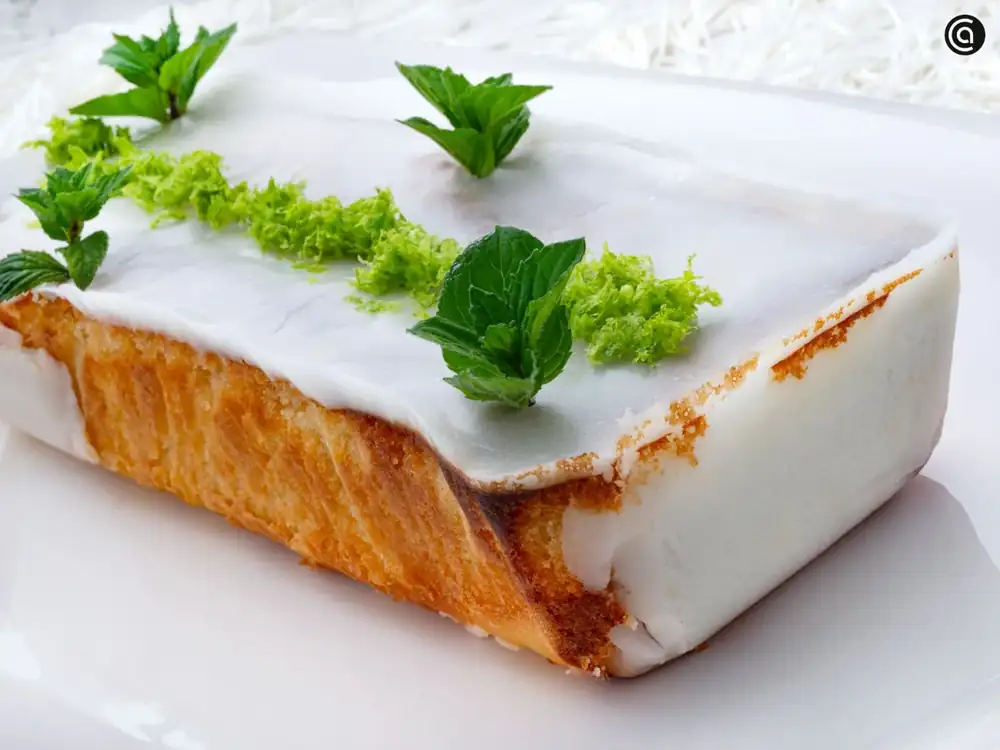
Glazed lemon cake, a dessert by Eva Arguiñano
How to prepare a tender, aromatic and very easy glazed lemon cake.
- 2 limones
- 3 huevos
- 120 gramos de azúcar
- 120 gramos de mantequilla fundida
- 150 gramos de harina
- hojas de menta (para decorar)
- 200 gramos de azúcar glas
- 1 limón
- Precalienta el horno a 180ºC. Para el bizcocho, ralla los dos limones sobre un bol. Agrega los 3 huevos (a temperatura ambiente para que monten más fácil) y el azúcar, y monta con la batidora de varillas, hasta que el azúcar esté bien disuelto. Vierte la mantequilla poco a poco mientras sigues batiendo, hasta que quede como una crema. Añade el zumo de los dos limones. Tamiza la harina sobre el bol con ayuda de un colador. Mezcla bien.
- Forra con papel de horno un recipiente rectangular de 25 cm de largo. Vierte la crema y hornea a 180ºC durante 40 minutos. Pasado este tiempo, retíralo del horno y deja que se atempere.
- Para hacer el glaseado, pon el azúcar glas en un bol y agrega 3 cucharadas de zumo de limón. Bate hasta obtener una pasta blanca ligera. Añade más zumo de limón si queda espeso. Vierte el glaseado sobre el pastel y extiéndelo sobre toda la superficie. Deja que repose y se seque el glaseado.
- Esparce por encima ralladura de limón al gusto. Termina por decorar el pastel de limón glaseado con unas hojas de menta.
With its tender, fluffy texture and irresistible combination of citrus and sweet glaze, this dessert from Eva Arguiñano is a must-have in any home. After all, glazed lemon cake never goes out of style.
The glaze adds moisture, extra flavor, texture, and a much more appealing presentation to the cake. This sweet layer also seals the surface of the cake, preventing it from drying out and keeping it fresh for much longer. With simple ingredients and no complicated techniques, it's ideal even for beginners in the world of baking.
- 2 lemons
- 3 eggs
- 120 grams of sugar
- 120 grams of melted butter
- 150 grams of flour
- mint leaves (for decoration)
For the glaze:
- 200 grams of icing sugar
- 1 lemon
Prepare the cake batter
For the sponge cake, grate the zest of both lemons into a bowl. Add the 3 eggs (at room temperature so they whip up more easily) and the sugar, and whisk with an electric mixer until the sugar is completely dissolved. Gradually pour in the butter while continuing to whisk, until the mixture is creamy. Add the juice of both lemons. Sift the flour over the bowl using a sieve. Mix well.
Line a 25cm rectangular baking dish with baking paper. Pour in the cream and bake at 180°C for 40 minutes. After this time, remove it from the oven and let it cool slightly.
Prepare the lemon glaze and cover the cake
To make the glaze, put the icing sugar in a bowl and add 3 tablespoons of lemon juice. Whisk until you get a light white paste. Add more lemon juice if it's too thick.
Pour the frosting over the cake and spread it evenly over the surface. Let it sit and allow the frosting to dry.
Decorate and enjoy the sweet treat
Sprinkle lemon zest on top to taste. Finish by decorating the glazed lemon cake with a few mint leaves.
Tips and tricks
When making the glaze, if the mixture is too runny, add more icing sugar; if, on the other hand, it is too dry, add a few more drops of lemon juice or water.
When baking the cake, take into account the shape of the pan. If it's tall, the cake will take longer to bake than if the pan is shallower and wider.
If you notice the top of the cake browning too quickly in the oven without cooking through, place a piece of aluminum foil over the pan (without sealing it). This will prevent direct heat from reaching the cake and allow it to cook through without burning on top.
Once the flour is incorporated, mix only until it disappears, as overmixing develops the gluten and can cause the cake to lose some of its tenderness and fluffiness.
Wait until the cake is lukewarm or cold before adding the frosting, because if the cake is too hot, the frosting will melt and won't form the characteristic layer we're looking for in this recipe.
How long does a glazed lemon cake stay fresh?
Store it in an airtight container or cover it with plastic wrap once the glaze is completely dry. This will help it maintain its texture and moisture for 3 to 4 days.
Can I make the lemon cake in a different type of pan?
Of course! You'll just need to adjust the baking time slightly depending on the depth and size of the pan. If the batter spreads out more, reduce the time, and if the pan is deeper, check that it's cooked through in the center with a knife or long skewer.