The croissant, a pastry item with a presence in Mar del Plata
In recent years, this puff pastry bun with a shape similar to a croissant has joined the delicacies offered by bakeries and cafes in the city, and coexists with Mar del Plata classics such as the croissant and the alfajor.
Although it's a typical French pastry, the croissant's origins can be traced back to 17th-century Vienna, Austria. One night, while working, local bakers realized an attack was imminent from the Ottoman Empire. They celebrated this salvation by creating a crescent-shaped pastry. Years later, this treat arrived in France, where it became popular.
In recent years, the croissant has become increasingly popular in Argentina, fueled by the rise of artisanal bakeries and specialty cafes, which feature this pastry on their menus. Mar del Plata is no exception. Dozens of businesses prepare their own version of the croissant daily, some adapted to Argentine pastry traditions.
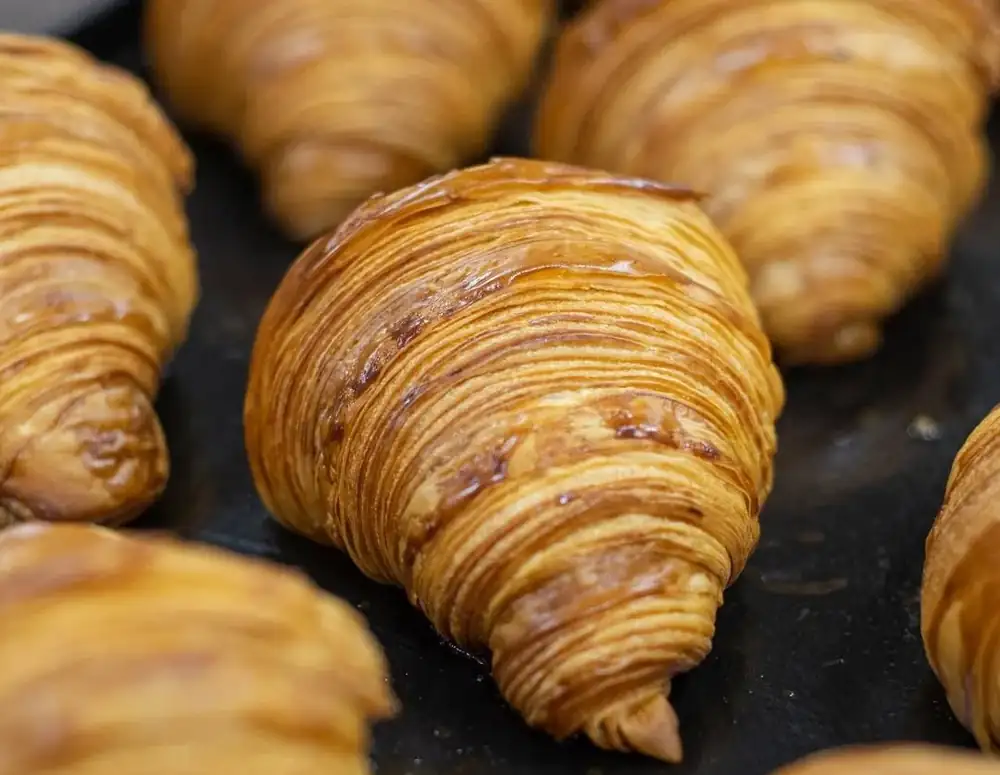
Fuerza Madre is a prime example. This business, which started three years ago, makes bread, croissants, and other pastries with sourdough. “The croissant is characterized by its very thin layers of both butter and dough, and by its very crispy and delicious crust,” they told Bacap from Fuerza Madre (Jujuy 1639).
The croissant is one of the shop's biggest attractions. They offer these flaky pastries in sweet, savory, and filled varieties. The Nutella croissant is a customer favorite, but they also have pistachio, lemon, and raspberry fillings. Among the savory options, they offer ham and cheese, and cured pork loin and smoked cheese. "It's a very delicate pastry that we love to prepare, and people really enjoy it," they say.
Meanwhile, at Maraña, dedicated to making sourdough bread and pizzas, as well as producing various pastries, including the croissant, they explain, “It’s the quintessential pastry. Its origin is debated. Everyone thinks it’s French, but it’s actually from Vienna, and here we offer our own interpretation—the croissant we like to eat, which is very buttery but also very crispy on the outside. When you bite into it, all the layers break down, it crumbles a lot—a croissant should crumble. Inside, it’s very moist with an unmistakable buttery flavor.” At Maraña (Bolívar 4252), they make sweet croissants with almond frangipane and slivered almonds, and savory croissants with ham and cheese.
A long-lasting recipe
The process of making the puff pastry bun takes around 72 hours, a fundamental requirement to achieve the properties of a good croissant. “A croissant takes three days to make. The dough is started one day, refrigerated, kneaded, shaped, and then left to ferment for 12 hours, before being baked to achieve that characteristic golden color,” explains Fuerza Madre.
Maraña agrees on the production times, but they make their croissants without sourdough: “A croissant takes three days to prepare. We use commercial yeast; we don't use sourdough for our croissants. We make the dough in one day, leave it in the refrigerator until the next day, roll it out, give it two turns in total—one double and one single—and shape it. It can only be baked the following day. We let it rest for a long time because it needs to be extensible and have a good texture, so we can't rush this process.”
Modern Medialunas
Some businesses, like Fuerza Madre, also make croissants using the lamination technique. “The process is quite similar. The croissant also takes three days to prepare, including the dough, the pastry, and everything else. The main difference is that the croissant is enriched with vanilla, orange, and eggs, which the croissant doesn't have. The croissant is more neutral, which is why it allows you to play with both sweet and savory fillings,” they explain.
Far from competing with or overshadowing the medialuna —the star of bakeries and cafes in Mar del Plata— or the alfajor, the croissant has joined the menus of the city's gastronomic ventures, expanding the range of delicacies and coexisting harmoniously with the classics of our city.