Speculation causes problems for Polish apple exports
The upcoming Polish apple season is marked by price uncertainty and conflicting reports regarding the size of the harvest, says Mohamed Marawan, director of the Polish apple exporter Sarafruit: "The season is already starting with more challenges for exports, as apple prices are very volatile.
Conflicting reports on the harvest. Some estimates point to a sharp decline in Polish apple production, but Marawan says the situation on the ground looks different. According to him, the harvest is larger than some market reports suggest. "Cultivation is proceeding both easily and with difficulty. According to the figures, Poland is taking a significant hit. Estimates place the national harvest at approximately 2.6 to 2.7 million tons, which amounts to a decrease of nearly 30% compared to last year. But if you look around in Poland, that doesn't seem to be correct. We are actually seeing a larger harvest than last year. Traders and exporters seem to want to capitalize on the perception that Poland is once again facing a small harvest. In reality, we are seeing a solid harvest coming in our orchards and at growers'."
Marawan recently visited Egypt, one of the most important markets for Polish apples. There, he noticed that the current price situation is making trade on the wholesale market difficult: "During my last business trip to Egypt last week, I spoke with clients from North to South Egypt. On the wholesale market, I saw apples from Italy, Greece, Poland, Lebanon, and even Turkey. But none of those apples were selling normally, due to the high prices."
Focus on Egypt Marawan says that the Egyptian market remains attractive, but that exporters need to better understand what buyers there need. He points to the former role of the Idared variety as an example of how Polish apples used to have a stronger position. "Egypt is really a very good market, but we need to understand what the Egyptian consumer needs. Three to five years ago, the Polish Idared variety was a very stable factor. It was one of the first varieties to become available, and there was a large price difference compared to other varieties. Now that Polish apples have become more expensive, that price difference has disappeared. As a result, Polish apples on the Egyptian market have been replaced by Italian club varieties."
For the upcoming season, Sarafruit wants to focus on existing markets rather than immediately seeking new destinations. Marawan says that quality and closer cooperation with supermarkets are central to this. "Our strategy this year remains focused on safeguarding the quality of our apples, as we always do. Of course, we also want to convince more supermarkets to choose Polish apples. Then we can run promotions together with supermarkets to compete with Italian apples. Because I truly believe that Polish apples can hold their own against Italy, and quite easily too."
Strengthening existing markets Instead of immediately tapping into new destinations, Marawan wants to strengthen the markets the exporter already serves. "We are keeping the markets we have. We are trying to improve those markets in terms of price and quality. If we are strong there, we might be able to develop new markets again. For now, we just have to focus on the markets we have."
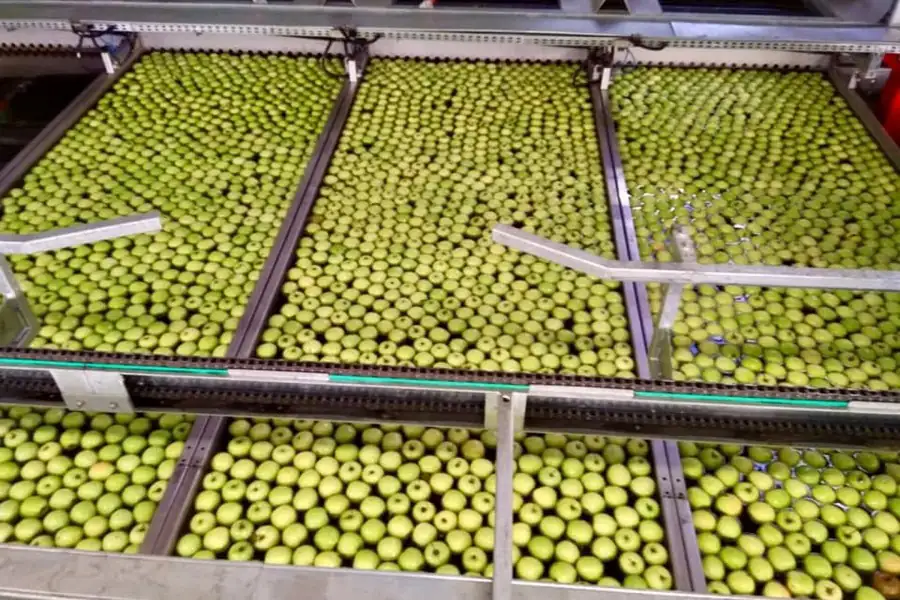
"The weather has also put the season under pressure. Late spring frosts have affected fruit set, and heatwaves and localized hailstorms have caused browning, hail damage, and smaller fruit in unprotected orchards," Marawan continues. "The focus is on maintaining sorting quality and handling export logistics as efficiently as possible. Strict pre-sorting and good management of cold storage are essential in this regard to keep the percentage of Class I fruit as high as possible."
He also points out shipping costs and market returns as areas of focus. The exporter wants to bundle routes and negotiate freight agreements early. "We bundle shipping routes, negotiate long-term agreements for container transport early, and strive for fairer prices on the wholesale market."
"Finally, we must emphasize the added value of Poland and maintain flexible payment and consignment terms for trusted, long-term partners in the key destination markets," concludes Marawan.